






Definition & Meaning
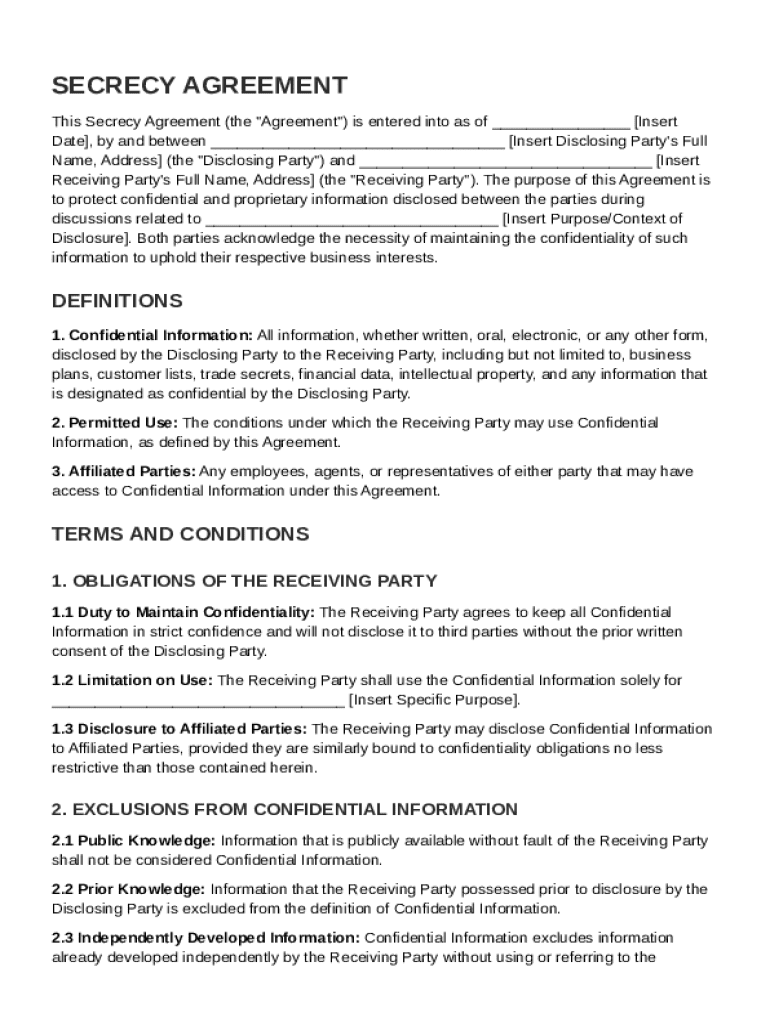
A Secrecy Agreement, often referred to as a Non-Disclosure Agreement (NDA), is a legally binding contract established between a Disclosing Party and a Receiving Party. The primary purpose of this document is to protect confidential and proprietary information that is shared during discussions or collaborations. In a business context, the agreement ensures that any non-public information exchanged remains secure and is not disclosed to unauthorized parties. It clearly delineates what constitutes Confidential Information, which may include trade secrets, business strategies, client lists, or financial data. By signing the Secrecy Agreement, the Receiving Party agrees to maintain the confidentiality of the disclosed information and follow specific protocols to prevent unauthorized access or distribution.
Key Elements of the Secrecy Agreement Template
A comprehensive Secrecy Agreement Template should include several essential components to be effective:
-
Parties Involved: Clearly identify the Disclosing Party and Receiving Party. This establishes who the information belongs to and who will be receiving it.
-
Definition of Confidential Information: Detail what information is considered confidential. This could range from technical data to business practices.
-
Obligations of the Receiving Party: Outline the responsibilities of the Receiving Party in terms of keeping the information confidential and any exceptions to these obligations.
-
Duration of the Agreement: Specify the timeframe that the confidentiality obligations remain in effect, which could extend beyond the active term of the agreement.
-
Exclusions: Define what information does not fall under the scope of confidentiality, such as information that is publicly available or independently developed.
-
Termination Procedures: Describe the process for returning or destroying the shared information once the agreement ends.
-
Governing Law: Indicate which jurisdiction's laws will govern the agreement, crucial for resolving any legal disputes.
Steps to Complete the Secrecy Agreement Template
-
Start with Basic Information: Fill in the identifying details of both the Disclosing Party and the Receiving Party, including names, addresses, and contact information.
-
Detail the Confidential Information: Clearly outline the scope of information considered confidential, ensuring both parties have a mutual understanding.
-
Set the Obligations: Specify how the Receiving Party should handle the confidential information, including limitations on use and distribution.
-
Define Duration and Termination: Agree on the timeframe of the agreement's validity and what happens upon termination, such as the return or destruction of documentation.
-
Include Legal Provisions: Identify governing law and ensure the document includes clauses covering liability, indemnification, and dispute resolution processes.
-
Review and Sign: Both parties should review the document thoroughly and make any necessary adjustments before signing. Legal counsel may be consulted to ensure full compliance.
Legal Use of the Secrecy Agreement Template
Secrecy Agreements are pivotal in safeguarding confidential business information. They carry legal weight, often serving as the backbone for protecting intellectual property and proprietary data. These agreements create clear expectations about how sensitive information will be handled. U.S. laws recognize NDAs as enforceable documents. Under the Economic Espionage Act and various state laws, breaching a Secrecy Agreement can lead to legal action, including injunctions and financial damages. It's crucial for businesses to ensure their agreements are precise and legally compliant to be enforceable in court.
Important Terms Related to Secrecy Agreement Template
-
Confidential Information: Any information designated as confidential or proprietary by the Disclosing Party. This term must be defined clearly to avoid ambiguity.
-
Receiving Party: The individual or entity that receives the confidential information from the Disclosing Party and agrees to adhere to the agreement's terms.
-
Disclosing Party: The individual or entity providing confidential information under the agreement's protection.
-
Non-Disclosure Clause: A statement within the agreement restricting the Receiving Party from disclosing the confidential information to third parties.
-
Return or Destruction Clause: Provides guidelines for what the Receiving Party must do with the confidential information once the agreement expires or is terminated.
-
Residual Clause: May allow the Receiving Party to retain information in their memory but restricts them from using any specific, tangible confidential information.
Who Typically Uses the Secrecy Agreement Template
Businesses and individuals across multiple domains utilize Secrecy Agreements to secure sensitive information. These agreements are particularly common in:
-
Technology and Software Development: Protecting source code, product roadmaps, and project details from competitors.
-
Manufacturing: Safeguarding manufacturing processes and designs.
-
Startups: Securing ideas and early-stage business plans to prevent leaks as they pitch to potential investors and partners.
-
Healthcare: Maintaining confidentiality of patient data and proprietary medical research.
-
Consulting Firms: Ensuring client information and methodologies remain confidential.
Such confidentiality protections are crucial for maintaining competitive advantages and safeguarding innovation.


Examples of Using the Secrecy Agreement Template
Consider a technology startup planning to pitch its groundbreaking software to potential investors. By using a Secrecy Agreement, the startup ensures its proprietary code and business strategies are protected. The investors are allowed insight into the company's inner workings, knowing they are legally bound to confidentiality, minimizing risks of data leaks.
In another scenario, a manufacturing company may engage with suppliers or subcontractors. To ensure the proprietary manufacturing process remains confidential, the company employs a Secrecy Agreement. By doing so, the firm can comfortably collaborate on production processes while safeguarding its innovations from competitors.
State-Specific Rules for the Secrecy Agreement Template
While Secrecy Agreements are generally recognized nationwide, specific states may impose distinct requirements. For instance, states like California emphasize the protection of employee rights and restrict exceedingly broad non-compete clauses within NDAs. Other states may have specific statutes around trade secrets and confidentiality, affecting the enforceability of certain clauses.
Businesses operating in multiple states must tailor their agreements to comply with specific local laws. This could involve adjustments to governing law provisions, duration terms, and any clauses related to employee rights to ensure enforceability across jurisdictions. Legal professionals with regional expertise can provide guidance on crafting agreements that are both comprehensive and compliant with local laws.