






Definition and Meaning
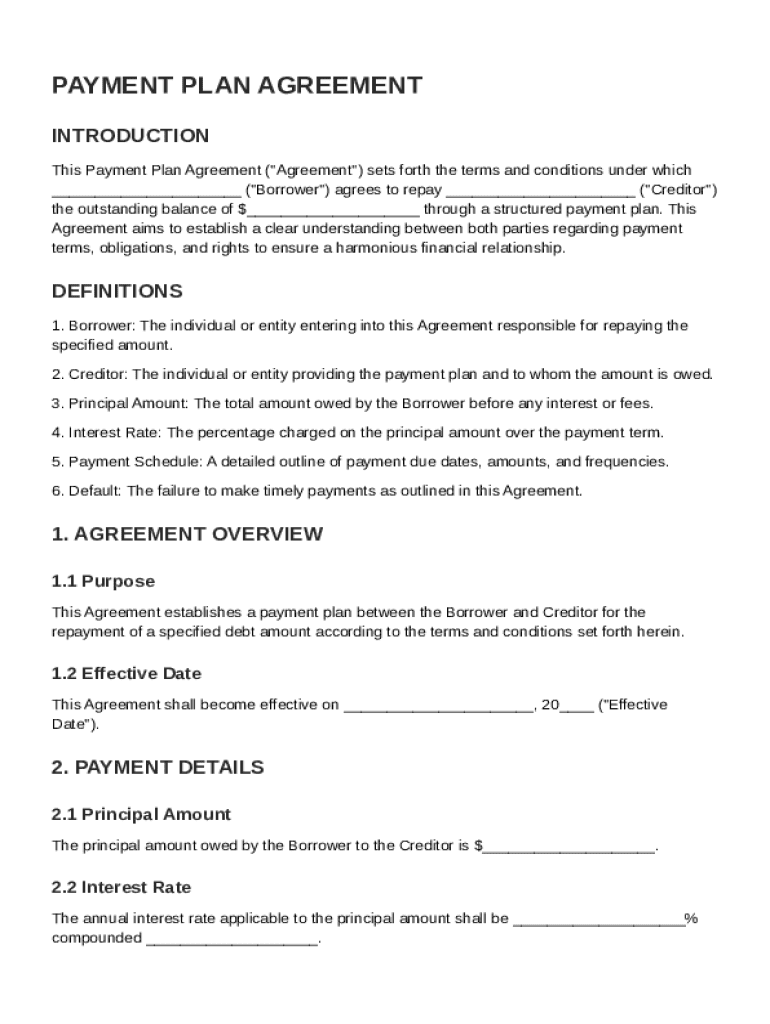
A Payment Plan Agreement Template is a structured document used to outline the terms and conditions between a borrower and a creditor for an outstanding debt. The template serves as a legal tool to define how the repayment will be handled, detailing aspects such as principal amounts, interest rates, payment schedules, and any other conditions pertinent to the agreement. This document is crucial for ensuring that both parties are clear about their obligations and responsibilities, minimizing misunderstandings and disputes in the repayment process.
Key Elements of the Payment Plan Agreement Template
When utilizing a Payment Plan Agreement Template, it's important to understand its components. Key elements typically include:
- Principal Amount: The original sum of money borrowed or owed.
- Interest Rate: The percentage charged on the outstanding balance, calculated over time.
- Payment Schedule: Detailed breakdown of payment amounts, frequencies, and due dates.
- Late Payment Penalties: Conditions and fees applied if payments are not made on time.
- Confidentiality Clause: Assurance that the terms and information within the agreement remain private.
- State Law Clause: Jurisdictional details specifying which state's laws govern the agreement.
These components ensure the document is comprehensive, transparent, and legally enforceable.
Steps to Complete the Payment Plan Agreement Template
Completing a Payment Plan Agreement Template involves several key steps to ensure accuracy and legality:
- Identify Parties Involved: Clearly state the names and contact information of the borrower and creditor.
- Define the Debt: Specify the total amount owed and the scope of the debt.
- Set Interest Terms: Agree on the interest rate and method of calculation.
- Outline Payment Schedule: Detail payment dates, amounts, and methods of transaction.
- Include Penalty Terms: Define late payment fees and repercussions.
- Review and Sign: Both parties should review the agreement thoroughly before signing.
These steps are foundational to creating a clear and enforceable agreement.
Who Typically Uses the Payment Plan Agreement Template
This template is widely used by individuals and businesses needing structured repayments. Common users include:
- Individuals: Those who have personal loans or debts they cannot pay in full immediately.
- Small Businesses: Companies that need to manage outstanding invoices or business loans.
- Financial Institutions: Lenders creating repayment plans for borrowers struggling with regular payments.
By catering to these groups, the template promotes financial management and accountability.


Important Terms Related to Payment Plan Agreement Template
Understanding specific terminology within the Payment Plan Agreement Template can aid in its effective use:
- Borrower: The party that owes the debt.
- Creditor: The party to whom the debt is owed.
- Default: Failure to fulfill the payment obligations as specified.
- Amortization: Process of spreading out a loan into scheduled payments over time.
Knowing these terms helps users navigate the document with clarity and precision.
State-Specific Rules for the Payment Plan Agreement Template
Each U.S. state may have different requirements and regulations related to payment plans:
- Usury Laws: Limits the interest rate that can be legally charged on debt.
- Legal Provisions: Certain states require additional clauses or disclosures in financial agreements.
- Filing Requirements: Some states may require the filing of such agreements with a regulatory body.
Understanding state-specific rules ensures compliance and validity of the agreement.
Legal Use of the Payment Plan Agreement Template
Legally utilizing a Payment Plan Agreement Template requires adhering to applicable laws and statutes:
- Contract Law: Agreements must meet the criteria for a legally binding contract.
- Disclosure Laws: All terms must be clearly communicated and agreed upon by both parties.
- Electronic Signatures: If using digital signatures, they must comply with the ESIGN Act to be legally binding.
The template's legal footing ensures enforceability and protection for all parties involved.
Examples of Using the Payment Plan Agreement Template
Real-world scenarios where the Payment Plan Agreement Template is useful include:
- Debt Consolidation: Simplifying multiple debts into one manageable payment schedule.
- Loan Modifications: Adjusting terms for borrowers facing temporary financial hardships.
- Business Agreements: Structuring delayed payments for outstanding invoices between companies.
These practical examples illustrate the template's versatility in managing different types of debt.