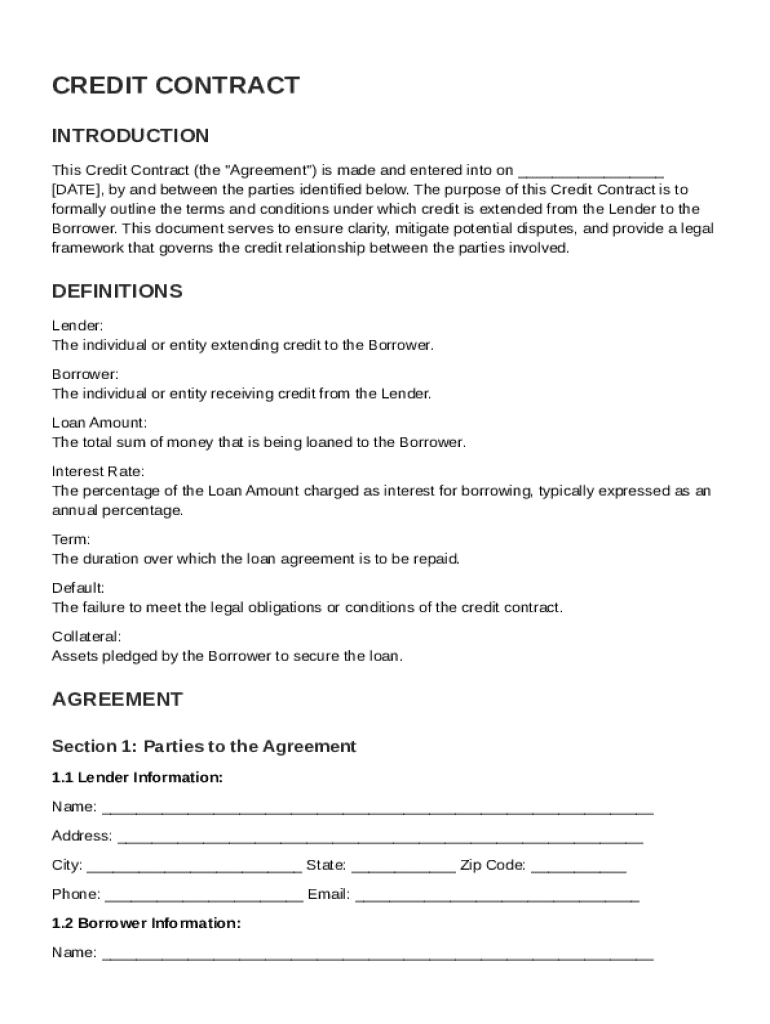







Definition and Meaning
A Credit Contract Template is a standardized document used to outline the terms and conditions of a borrowing agreement between a lender and a borrower. This contract includes critical elements such as loan amount, interest rates, repayment schedule, and collateral requirements. The template serves as a legally binding document that ensures both parties understand their obligations, reducing the risk of misunderstandings and legal disputes. This form is essential in establishing clear communication and providing legal protection for both parties involved in a credit transaction.
The template is particularly beneficial in commercial lending scenarios, personal loans, and real estate transactions. It ensures that the terms of credit are outlined in a manner that complies with legal standards and financial regulations. This template can be adapted for various lending situations, accommodating different types of loans and repayment methods.
Key Elements of the Credit Contract Template
Several critical elements form the foundation of a Credit Contract Template. These components ensure that the agreement is comprehensive and legally enforceable:
- Loan Amount: The total amount the borrower is obligated to repay, including any principal and interest.
- Interest Rate: The percentage charged by the lender on the borrowed amount, which may be fixed or variable.
- Repayment Schedule: Details on how the borrower will repay the loan, including due dates and amounts for each installment.
- Collateral Requirements: Any assets pledged by the borrower to secure the loan, which the lender may claim in case of default.
- Rights and Obligations: The responsibilities and entitlements of both lender and borrower, such as the lender's right to charge late fees and the borrower's obligation to maintain insurance on collateral.
These elements collectively ensure the enforceability of the contract and provide a clear framework for resolving disputes.
Steps to Complete the Credit Contract Template
Completing a Credit Contract Template involves several key steps designed to ensure clarity and comprehensiveness:
- Review Existing Agreements: Understand any pre-existing financial obligations that might affect the new contract.
- Provide Accurate Information: Enter detailed information about the lender and borrower, including legal names, addresses, and contact details.
- Define Loan Terms: Specify the loan amount, interest rate, and repayment schedule in the designated sections.
- Detail Collateral Requirements: Clearly outline any collateral offered, including descriptions and valuations of assets.
- Outline Legal Obligations: Ensure all legal rights and responsibilities are addressed, and both parties understand their commitments.
- Obtain Legal Review: Have the contract reviewed by a legal professional to ensure all provisions comply with applicable laws.
- Signatures: Both parties should sign and date the document, indicating agreement to all terms and conditions.
Following these steps helps create a legally sound document that mitigates potential disputes and confusion.
How to Use the Credit Contract Template
Using a Credit Contract Template effectively requires understanding its purpose and functions within a lending process. It allows users to:
- Document Loan Details: Record precise terms and conditions under which the loan is provided and repaid.
- Ensure Compliance: Adhere to state and federal lending regulations, avoiding legal pitfalls.
- Provide Transparency: Present clear and consistent information to all involved parties, enhancing trust and cooperation.
- Facilitate Amendments: Offer a framework for adjusting terms if both parties agree, such as altering interest rates or payment dates.
This template is ideal in streamlining loan setups, ensuring all parties have access to comprehensive, understandable contract terms.
Who Typically Uses the Credit Contract Template
A diverse group of individuals and organizations benefit from using a Credit Contract Template:
- Financial Institutions: Banks and credit unions use templates to standardize loan agreements while ensuring regulatory compliance.
- Corporate Lenders: Businesses providing financing options to similar entities or individual consumers streamline their processes with templates.
- Private Lenders: Individuals extending personal loans utilize templates to formalize agreements and protect their interests.
- Legal Advisors: Attorneys incorporate these templates when drafting agreements to ensure all legal elements are covered.
These users rely on templates to create enforceable credit contracts that provide security and clarity for all parties involved.


Legal Use of the Credit Contract Template
The legal use of a Credit Contract Template involves ensuring that the document adheres to all relevant laws and regulations. This includes state lending laws, federal regulations such as the Truth in Lending Act, and any specific legal conditions pertinent to the transaction. Legal use ensures that the template:
- Meets Compliance Requirements: Conforms to industry standards and statutory requirements.
- Enhances Enforceability: Provides clear terms that are defendable in court should disputes arise.
- Protects Both Parties: Outlines obligations and rights to minimize potential legal conflicts.
Consideration of these legal aspects is crucial to the integrity and legality of the credit contract.
State-Specific Rules for the Credit Contract Template
While a Credit Contract Template provides a standardized approach, state-specific rules can impact its application. These variations often involve:
- Interest Rate Limitations: Usury laws in some states cap the interest rates that can be charged.
- Collateral Regulations: Differences in how collateral can be seized or valued in the event of default.
- Disclosure Requirements: Mandatory information that must be included in credit contracts to comply with state laws.
Understanding these variations helps ensure that credit agreements comply with state laws, reducing the risk of legal challenges and fostering fair lending practices.
Digital vs. Paper Version
The choice between a digital and a paper version of the Credit Contract Template involves examining convenience, security, and user preference:
- Digital Version: Offers easy editing, sharing, and storage, often with additional features like e-signature compatibility and real-time collaboration.
- Paper Version: Provides a tangible record that some parties may prefer for archiving or due to limited digital access.
Both versions have their own advantages and considerations, and the choice often depends on the specific needs and capabilities of the involved parties.