






Definition and Meaning of a Credit Line Agreement Template
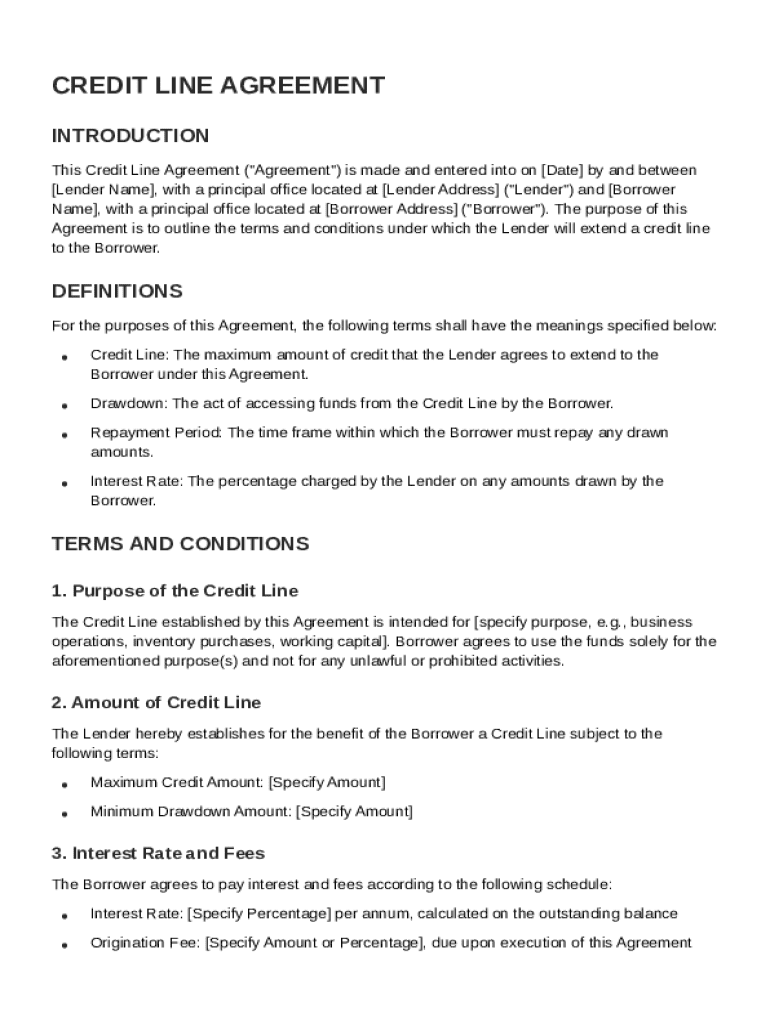
A Credit Line Agreement Template serves as a foundational document detailing the arrangement between a lender and a borrower concerning the extension of a credit line. This agreement specifies the terms under which credit is made available, including the maximum amount, interest rates, and repayment obligations. It standardizes the communication of essential financial and legal terms, ensuring that both parties have a mutually understood framework for their financial relationship.
Key Features
- Interest and Fees: Specifies the applicable interest rate and any associated fees for accessing the credit.
- Repayment Terms: Outlines how and when payments are to be made.
- Drawdown Procedures: Details how funds can be accessed by the borrower.
Practical Example
For instance, a business might use this template to secure a revolving credit line from a bank, allowing them to borrow as needed up to a set limit. The agreement specifies each term clearly, including scenarios of default and remedies available to the lender.
Steps to Use the Credit Line Agreement Template
Using the Credit Line Agreement Template involves several structured steps to ensure all terms are clear and agreed upon:
-
Identify Parties Involved: Begin by listing the lender’s and borrower’s full legal names and addresses.
-
Define Credit Limit: State the maximum amount of credit available to the borrower.
-
Specify Interest Rates and Fees: Include applicable interest rates, any annual fees, and penalty charges for late payments.
-
Set Repayment Schedule: Clearly define installments, due dates, and acceptable payment methods.
-
Outline Default Provisions: Describe what constitutes a default and potential consequences.
-
Finalize and Execute: Review the completed template for accuracy, then sign the document in the presence of any required witnesses or notaries.
Common Practices
- Customization: Tailor clauses to suit specific industry needs or business circumstances.
- Legal Review: Ensure the document complies with local legal requirements through a legal professional’s review.
Important Terms Related to Credit Line Agreement Template
Understanding key terminology is crucial for effectively using the Credit Line Agreement Template.
Common Terms
- Credit Limit: The maximum amount a borrower can access.
- Grace Period: Timeframe after the deadline before penalties apply.
- Draw Period: The time during which the borrower can use the credit line.
Detailed Explanations
For example, during the "draw period," a business might make frequent withdrawals to manage cash flow. However, exceeding the credit limit can trigger penalties or a freeze on the account until appropriate arrangements are made.
Legal Use of the Credit Line Agreement Template
Credit Line Agreement Templates must adhere to specific legal guidelines to ensure enforceability.
Legal Compliance
- Governing Law: Typically identifies the jurisdiction governing the contract, which is critical when disputes arise.
- Regulatory Requirements: Certain template inclusions might be mandated by state or federal laws, such as disclosures regarding interest rates and penalties.
Practical Guidance
This legal framework should be checked regularly against updated legislation to avoid legal pitfalls or non-compliance penalties that could invalidate the agreement or result in litigation.
Key Elements of the Credit Line Agreement Template
The template contains several critical components that structure the agreement comprehensively.
Essential Clauses
- Repayment Conditions: Describes the terms regarding payment installments, including timing and amount.
- Representations and Warranties: Statements and promises by both parties ensuring the accuracy of information and financial health.
- Amendment Procedures: Specifies how and under what conditions the terms can be modified.
Clause Example
For instance, a common clause might stipulate that any desired changes to the credit terms must be presented in writing and agreed upon by both parties within a certain period.
State-Specific Rules for the Credit Line Agreement Template
Laws governing credit agreements can vary significantly state by state.
Variations by State
- Usury Laws: States may have different cap rates on interest charges, affecting what a lender can legally set as the interest rate.
- Filing Requirements: Certain states might require credit agreements to be filed or recorded with a local authority to be enforceable.
Case Study
If a business operating both in California and New York wants to draw a credit line, they must ensure that the agreement complies with the stricter regulations to avoid potential discrepancies or legal issues.
Examples of Using the Credit Line Agreement Template
There are various scenarios where a Credit Line Agreement Template is effectively utilized.
Real-World Applications
- Small Business Financing: Enables small businesses to manage cash flow by accessing funds as needed without seeking a lump-sum loan.
- Real Estate Development: Developers might use a credit line to finance ongoing construction projects, drawing funds as milestones are achieved.
Business Scenario
For example, a seasonal business can use a credit line in its off-peak months to cover operational costs, repaying it during peak revenue periods, thus maintaining liquidity and operational stability.
Digital vs. Paper Version of Credit Line Agreement Template
The Credit Line Agreement Template can be utilized in both digital and paper formats, each with its merits.
Advantages of Digital Versions
- Efficiency: Easily edit and store electronically, reducing physical storage costs.
- Traceability: Digital signatures provide a secure audit trail.
Benefits of Paper Versions
- Tangibility: Some stakeholders prefer having a physical document as evidence of terms.
- Accessibility: Not reliant on technology or internet access.
In summary, choosing between digital and paper versions often depends on the convenience it offers related to documentation management and ease in accessing necessary technology.