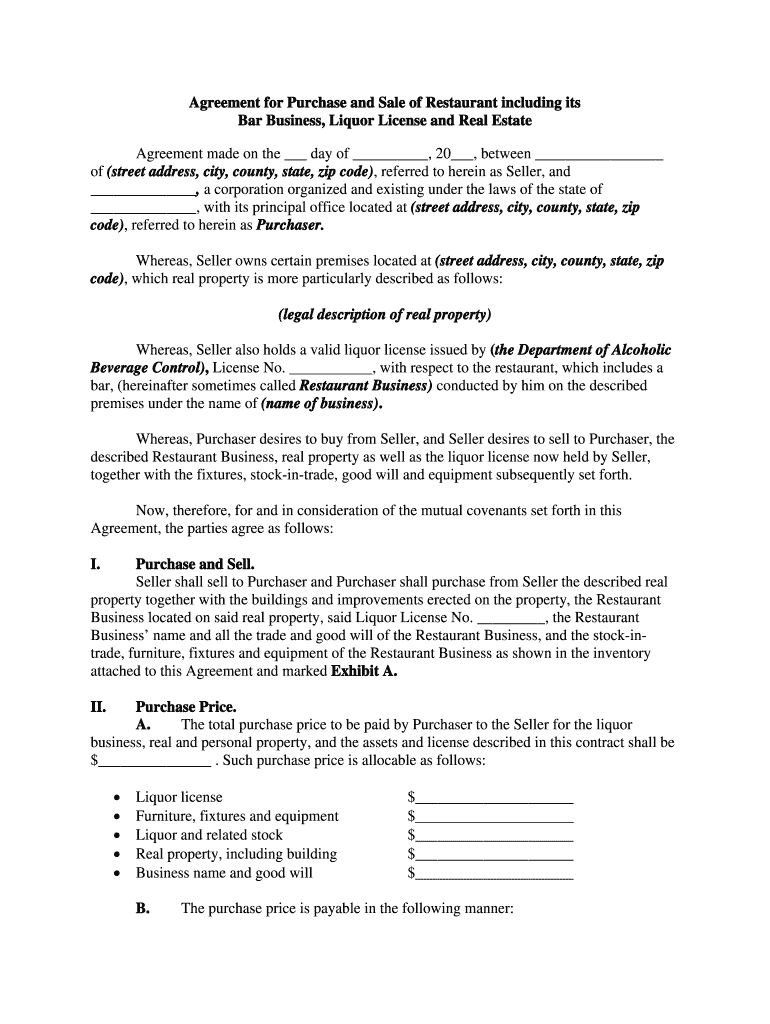







Definition and Key Components of a Restaurant Sale Agreement
A restaurant sale agreement is a legally binding document that outlines the terms under which a seller transfers ownership of a restaurant and its assets to a buyer. This agreement typically encompasses not only the business itself but also additional elements such as the liquor license, physical property, equipment, and inventory.
Key components of the restaurant sale agreement include:
- Purchase Price: Clear stipulation of the total financial consideration for the sale, often detailed with an allocation amongst various assets.
- Assets Included: Specification of what is included in the sale—this may encompass the restaurant's physical premises, liquor licenses, and operational equipment like kitchen appliances.
- Conditions of the Sale: Terms that must be fulfilled for the transaction to proceed, potentially including necessary inspections or financing obligations.
- Assumption of Liabilities: Clarification regarding any liabilities that the buyer will assume after the purchase, such as outstanding debts or contracts.
Steps to Complete a Restaurant Sale Agreement PDF
Completing a restaurant sale agreement PDF involves several precise steps to ensure that all essential details are addressed clearly and legally. These steps are critical for both the buyer and seller to understand their rights and obligations.
-
Identify the Parties Involved: Start by clearly naming the seller and buyer, including their contact information and legal representatives if applicable.
-
Detail the Assets and Purchase Price: List all assets included in the sale and specify the purchase price. This section may require detailed appendices for asset descriptions.
-
Outline Terms and Conditions: Include all relevant conditions such as financing arrangements, environmental assessments, or property inspections that must be completed before the sale can close.
-
Address Warranties and Representations: Include any warranties associated with the business's operations, financial status, and compliance with laws, protecting both parties.
-
Sign and Date the Agreement: Both parties must sign and date the document in the presence of any required witnesses or notaries to ensure the agreement is binding.
Important Terms Related to Restaurant Sale Agreements
Understanding essential terms in the restaurant sale agreement PDF is critical. It allows parties to comprehend their legal rights and responsibilities better.
- Due Diligence: The process undertaken by the buyer to investigate the business, including its financial records, zoning regulations, and operational compliance.
- Earnest Money: A deposit made by the buyer to demonstrate committed intent to purchase; this deposit may be forfeited if the buyer fails to follow through without valid cause.
- Contingencies: Conditions that must be satisfied before the sale can close, often tied to financing, inspections, or permits.
- Closing Date: The date on which the final transaction occurs, including the transfer of ownership and payment.
How to Use a Restaurant Sale Agreement PDF Effectively
Utilizing a restaurant sale agreement PDF effectively requires attention to detail and adherence to legal standards. Consider the following steps:
-
Customization: Ensure that the provided template or form is tailored to fit the unique aspects of the restaurant sale, including specific terms relevant to the business's operational needs.
-
Review the Regional Laws: Each state may have specific regulations regarding the sale of alcohol or business operations. Review these laws to guarantee compliance.
-
Consult Professionals: Engage an attorney familiar with restaurant acquisitions for legal guidance. This assistance can prevent overlooked legal ramifications or disputes.
-
Establish Clear Communication: Maintain clear and open communication regarding all terms and updates during the negotiation process to prepare all parties for final agreements and changes.
Examples of Using the Restaurant Sale Agreement PDF
Real-world scenarios provide context on how a restaurant sale agreement PDF is utilized.
-
Example 1: Independent Restaurant Owner: An independent restaurant owner seeks to retire and wishes to sell the restaurant along with its liquor license and real estate. They engage a real estate broker to obtain buy offers, with the sale agreement detailing the purchase price and included assets.
-
Example 2: Franchise Purchase: A buyer looking to purchase an existing franchise location typically uses a restaurant sale agreement that complies with franchise law. The agreement would stipulate specific operational requirements dictated by the franchisor.
-
Example 3: Asset Sale: If a seller opts to sell only the assets of the restaurant (not the property), the agreement must reflect this and specify what assets are included, such as machinery and inventory, while excluding real estate.
Comprehending these functions ensures effective use of the document and better negotiation between both parties involved in the sale.