






Definition and Meaning of the Bill and Hold Agreement
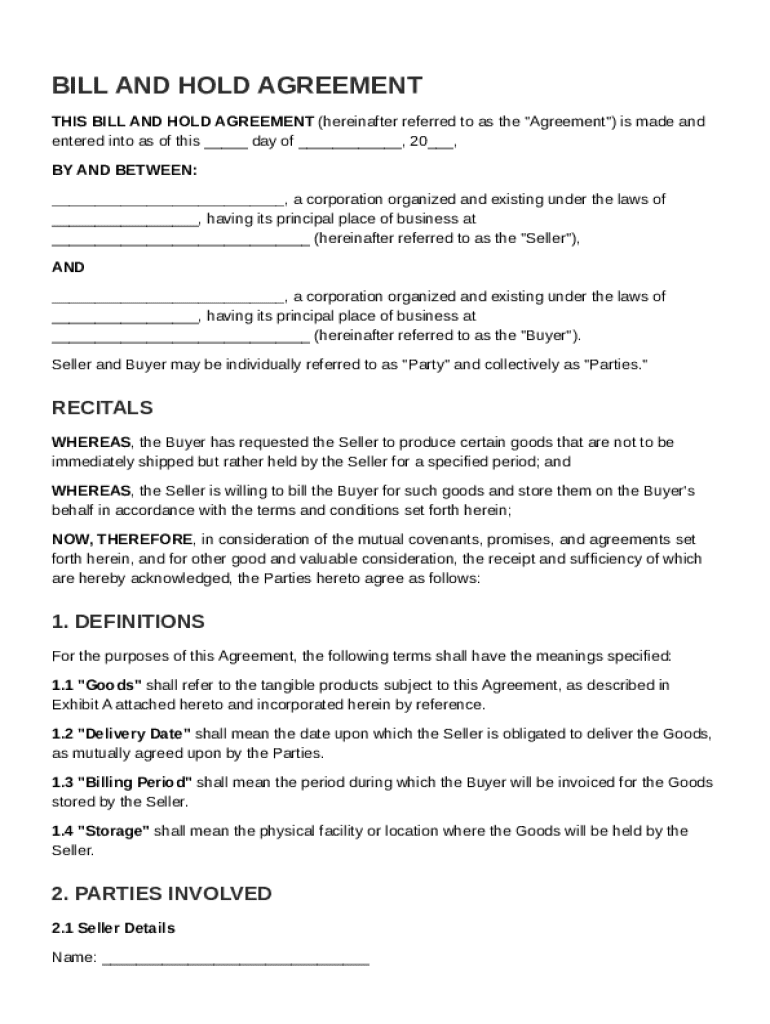
The Bill and Hold Agreement is a legal document that defines the relationship and obligations between a seller and a buyer, where goods are produced by the seller and stored without immediate delivery to the buyer. This arrangement becomes necessary when the buyer needs the products ready but is not ready or able to take possession due to various reasons. It outlines comprehensive explanations on storage responsibilities, payment terms, and the process of transfer of ownership while ensuring the buyer is billed for the goods. This agreement provides a seamless process that delineates risk management, ensuring both parties understand delivery arrangements and risks of loss.
Key Elements of the Bill and Hold Agreement
A well-drafted Bill and Hold Agreement must include several essential components to ensure clarity and legal soundness:
- Definitions and Terms: Clearly defines the essential terms used throughout the agreement, such as "Seller," "Buyer," "Goods," and "Storage Facility."
- Responsibilities and Storage Terms: Details the duties of each party relating to the storage conditions and the care of the goods while they remain with the seller.
- Payment Terms: Specifies the pricing, payment due dates, and any credit terms extended to the buyer while the goods are held in storage.
- Transfer of Ownership: Outlines when and how ownership of the goods shifts from seller to buyer, even though the physical possession remains with the seller.
- Warranties and Indemnification: Provides assurances regarding the goods' quality and offers conditions under which the seller or buyer indemnifies the other party.
- Governing Law and Jurisdiction: Establishes which state laws will govern the agreement and where disputes will be resolved.
How to Use the Bill and Hold Agreement Template
To effectively apply the Bill and Hold Agreement Template, users should understand its structure and contents and adapt it to their specific needs:
- Review and Customize: Begin by thoroughly reviewing all sections. Tailor each section, especially the terms about responsibilities and storage conditions, to fit your particular circumstances and industry requirements.
- Identify Parties: Clearly identify both the seller and buyer, including their full legal names, addresses, and contact information.
- Detail Goods Specification: Provide a detailed description of the goods involved, including quantity, condition, and packaging details.
Steps to Complete the Bill and Hold Agreement Template
Completing the agreement requires diligence and attention to legal and business specifics:
- Populate with Accurate Information: Enter the accurate details of the buyer and seller, along with an exact description of the goods.
- Specify Storage and Handling Terms: Clearly define how the goods will be stored and the obligations of both parties.
- Confirm Payment and Ownership Terms: Ensure payment terms are explicit, and specify when ownership will legally transfer.
- Signatures and Execution: Both parties should sign the agreement, after which it becomes legally binding.
Important Terms Related to Bill and Hold Agreement
Understanding the specialized terminology in a Bill and Hold Agreement is crucial for clear communication and effective execution:
- Risk of Loss: Refers to which party bears the risk of damage or loss of goods while in storage.
- Bill of Sale: This document accompanies the agreement to effectuate the transfer of ownership without physical delivery.
- Indemnity Clause: Protects the parties from potential liabilities arising from the agreement.
Legal Use of the Bill and Hold Agreement
The legal framework of the Bill and Hold Agreement helps protect the interests of both sellers and buyers, ensuring compliance with state-specific laws and contractual obligations. The agreement is often used in industries where buyers may order goods in advance, but storage constraints prevent them from receiving shipments immediately.
Business Types that Benefit Most from the Bill and Hold Agreement Template
Several business sectors commonly rely on these agreements to optimize operations and cash flow:
- Manufacturers: Often use these agreements to manage large-scale production and inventory.
- Retailers: May prefer this approach to optimize seasonal stock management.
- International Trade: Businesses engaged in cross-border transactions find these agreements helpful for managing customs and logistics issues.
Software Compatibility with the Bill and Hold Agreement Template
The digital era demands compatibility with document management and financial software:
- DocHub: Offers seamless integration for editing, sharing, and signing agreements digitally.
- Accounting Software: Systems like QuickBooks or Xero can be used to align the financial terms stated in the agreement.
- Document Management Systems: Cloud services like Google Workspace or Microsoft OneDrive enhance collaboration and accessibility.
Examples of Using the Bill and Hold Agreement Template
Various scenarios demonstrate the widespread applicability of these agreements:
- Delayed Shipping Requirements: When a buyer requires goods to arrive at a future date, this agreement ensures goods are produced and ready according to schedule without premature delivery.
- Production Overflow: Sellers who produce goods on demand or according to limited production runs may store goods until the buyer has capacity to receive them.
- Custom Orders: Customers who place bespoke orders benefit by having items produced and stored to assure availability.
Why Use the Bill and Hold Agreement Template
Employing a Bill and Hold Agreement Template can facilitate many advantages:
- Efficiency: Streamlines inventory management and cash flow by eliminating unnecessary shipments.
- Legal Security: Provides a structured legal framework to resolve potential conflicts and liabilities.
- Flexibility: Offers customization for diverse business needs and practices without compromising the transaction integrity.