




01. Edit your makeup artist contract template online
Type text, add images, blackout confidential details, add comments, highlights and more.

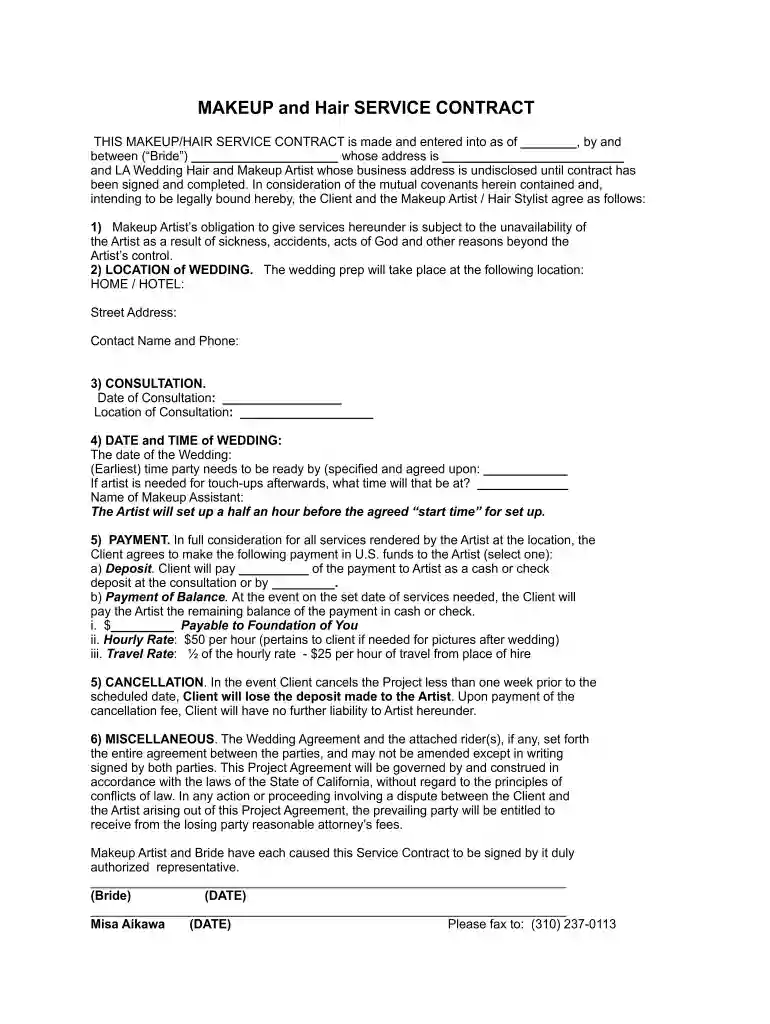
Type text, add images, blackout confidential details, add comments, highlights and more.

Draw your signature, type it, upload its image, or use your mobile device as a signature pad.

Send makeup artist contract via email, link, or fax. You can also download it, export it or print it out.
A makeup artist contract template is a vital document that outlines the agreement between a makeup artist and their client. It serves to protect both parties by detailing the terms and conditions under which services will be performed. Here are the key components included in a typical makeup artist contract.
This section clearly defines the services to be provided by the makeup artist. It includes specifics about:
Outlining these details ensures that both the client and makeup artist have mutual understanding and expectations regarding the service.
Payment details are crucial in a makeup artist contract template. This section usually includes:
Clarity in payment terms helps avoid misunderstandings and ensures that both parties are in agreement regarding financial obligations.
Both parties should understand the cancellation terms. This section typically outlines:
A well-defined cancellation policy prepares both parties for unexpected changes and establishes the protocol for cancellations or rescheduling.
This segment addresses the liability issues and includes:
This clause is important in protecting the artist from potential legal issues stemming from reactions to their work, allowing them to perform their job with peace of mind.
The contract should specify any legal implications, including:
Clarifying the governing law ensures that both parties are aware of their rights and responsibilities under the applicable state regulations.
To make the contract legally binding, it must include a section for signatures and dates. This section typically requires:
These components formalize the agreement and reinforce the commitment of both parties to the outlined terms.
Beyond the basic components, additional considerations may enhance the contract’s utility.
Travel Expenses: If the job requires travel, the contract should define whether the client will cover travel costs or if they are included in the overall fee.
Trial Makeup Sessions: The contract may highlight whether trial sessions are included, their cost, and how they relate to the final service agreement.
Emergency Procedures: This can cover what happens in case of unexpected events such as illness or emergencies that prevent the makeup artist from providing services.
Paying attention to these additional details can create a more comprehensive contract that serves the needs of both the artist and the client effectively.
At DocHub, your data security is our priority. We follow HIPAA, SOC2, GDPR, and other standards, so you can work on your documents with confidence.


1 O.Contract data will show. aU necessary Information pertinent to this specific ,contract as to type of contract ~. cost plus fixed fee, fixed price, etcRead more
The contract acts as a legal document, protecting the makeup artist from non-payment and the bride from unmet expectations. Key Elements Included in a BridalRead more
Our template is tailored specifically for wedding makeup artists, making it easy to outline services, payment terms, and expectations in a clear, professional


