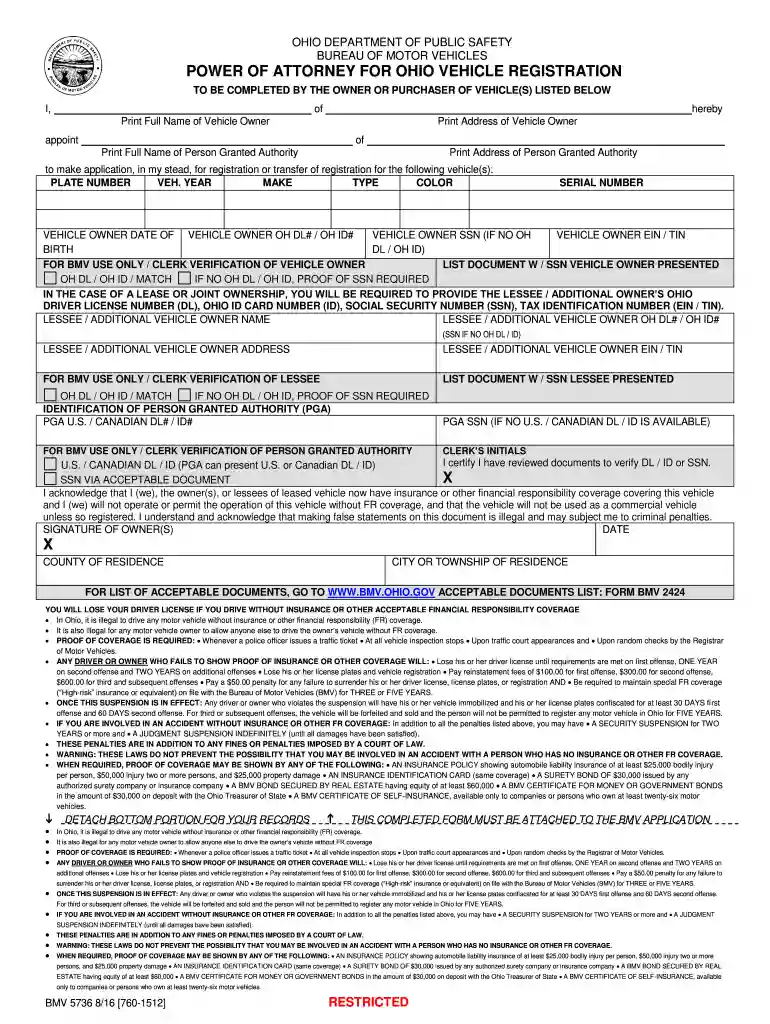
Does a car have to go through probate in Ohio after?
You dont have to have will to transfer your car after you die. A Transfer on Death (TOD) is a legal document that can transfer your car without a will. This means that your car will not have to go through the probate court. Going through the probate court can cost your loved ones time and money after you are gone.
How to transfer car title after death of owner in Ohio?
As the sole owner of a motor vehicle, watercraft, or outboard motor, an individual may designate a beneficiary or beneficiaries to an Ohio title with a signed and DocHubd Affidavit to Designate a Beneficiary (form BMV 3811) submitted to a County Clerk of Courts Title Office.
How do you transfer a car title when the owner is deceased in Ohio?
A Transfer on Death beneficiary needs to bring: Original Ohio title. Certified copy of the death certificate. Application(s) for Certificate of Title to a Motor Vehicle (Form BMV 3774) A government-issued driver license or identification card. Payment for title fees.
What should I study for my temps test in Ohio?
To study for the Ohio Temps test (TIPIC permit test), focus on the Ohio Driver Manual (Digest of Motor Vehicle Laws), use the official Ohio BMV Sample Test, and practice with online simulators covering traffic laws, signs, and safe driving, especially sections on alcohol/drugs, right-of-way, and lane changes. The 40-question multiple-choice test requires a 75% (30/40) score to pass and covers essential driving knowledge, with resources available in multiple languages. Key Study Materials Resources: Ohio Driver Manual (Digest of Motor Vehicle Laws): The official study guide from the Ohio BMV, available online. Ohio BMV Sample Knowledge Test: Practice questions mirroring the actual test format. Online Simulators: Websites like Zutobi and Driving-Tests.org offer practice tests with explanations. Audio Versions: Audio versions of the handbook are available for listening. Key Topics to Study: Traffic Signs Signals: Meanings of various signs, signals (flashing red/yellow, green arrows), and pavement markings. Rules of the Road: Right-of-way, speed limits (e.g., 25 mph in residential areas), stopping requirements, and turning rules. Safe Driving Practices: Blind spot checks (shoulder checks), following distances, lane changes, and handling icy conditions. Alcohol Drugs: Effects on driving and related laws. Child Restraints: Requirements for child safety seats. Pedestrians: Rules for pedestrians and their identification (white canes). Test Format Passing: Format: 40 multiple-choice questions. Passing Score: 30 correct answers (75%). Retakes: Can retake the next business day if you fail; no limit on attempts, but only one per day. AI can make mistakes, so double-check responsesOhio Driver Manual, Digest of Motor Vehicle LawsOhio Department of Public Safety (.gov)Driver License ID Cards - Ohio BMVApplicants must pass both the knowledge test and vision screening to obtain a temporary instruction permit identification card (TIOhio BMV (.gov)
How long can you drive a deceased persons car?
You can generally drive a deceased persons car for a short grace period (often 30-60 days or the remainder of the registration), but it depends on your state laws, the cars insurance status, and the probate process; however, driving before the title and insurance are officially transferred carries DocHub risks, as the estate and driver could be liable in an accident, so its best to check with the insurance company and a probate attorney. Key Considerations: Insurance: The policy usually remains active briefly (e.g., 30 days or until the estate is settled), but you must notify the insurer promptly with the death certificate to confirm coverage and understand the terms. Registration/Title: The car is part of the estate. Driving it without proper transfer exposes the estate and you to liability if you have an accident or damage the vehicle, as it might not be covered or could decrease the inheritance. State Laws: Rules vary; some states (like Pennsylvania) allow continued use and renewal for the estates representative for a period, while others (like California) require surrender or updates within a set time. Probate: Driving is safest once a personal representative is appointed and the vehicle is re-titled and insured in the estates name or transferred to you, which often happens after the probate court approves. Recommended Steps: Contact Insurer: Inform them immediately for guidance. Contact DMV/MVA: Understand state-specific requirements for temporary use and transfer. Consult an Attorney: A probate lawyer can explain your risks and the correct procedure in your state. In summary, while you might be able to drive it for a little while under existing insurance/registration, its risky; the safest route is to get the title and insurance officially updated to the estate or your name first, possibly with a temporary permit. AI can make mistakes, so double-check responsesWhat Happens to Car Insurance When the Policy Holder Dies? | The GeneralJun 24, 2024The General InsuranceIs It Legal to Drive a Deceased Parents Car in GA? - JustAnswerSep 27, 2024 Estate Law: The car is considered part of the estate and should not be used until it is properly transferred through pJustAnswer