






Definition and Purpose of the Kaiser Information Form
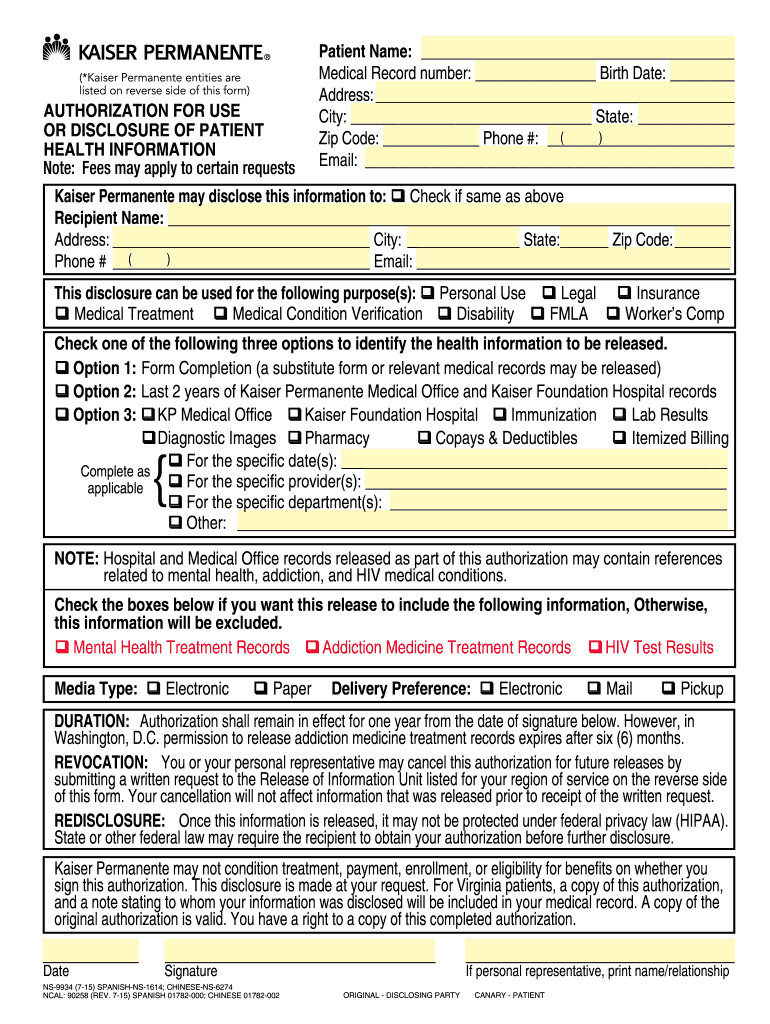
The Kaiser Information Form is a critical document used primarily for the authorization and disclosure of patient health information. Specifically designed for Kaiser Permanente members, this form serves to facilitate the sharing of sensitive health data among various stakeholders, including healthcare providers and insurance entities. One of the key aspects of the form is its ability to outline the specific information that can be released, ensuring compliance with regulations such as HIPAA.
- Patient Details: This section typically requires the patient's full name, date of birth, and other identifying information. Accurate completion ensures that the right person’s information is accessed or released.
- Recipient Information: The form specifies who will receive the disclosed information. This could include healthcare providers, family members, or insurance carriers. Clear identification helps prevent unauthorized access to sensitive data.
- Type of Information: The Kaiser Information Form categorizes various types of health information for disclosure. This might include medical records, mental health records, or specific treatment details, enabling targeted communication pertaining to a patient’s care.
How to Properly Complete the Kaiser Information Form
Completing the Kaiser Information Form requires careful attention to detail to ensure all necessary information is accurately provided. This section outlines a step-by-step approach to filling out the form.
- Fill in Personal Information: Start by entering the patient's complete name, membership ID, and other requested demographic details.
- Select Recipients: Identify who will receive the information by checking the appropriate boxes or filling in the names and contact details of authorized recipients.
- Specify Information to be Shared: Clearly indicate what type of health information is to be disclosed. This may include specific medical records or general health summaries.
- Purpose of Disclosure: State the reason for sharing the information. It is important to be transparent to ensure compliance with legal standards.
- Signature and Date: Finally, the patient or their legal representative should sign and date the form to validate the authorization.
Following these steps minimizes the potential for errors and delays in processing the document, ensuring a smoother experience for all parties involved.
Legal Considerations for the Kaiser Information Form
Understanding the legal implications of the Kaiser Information Form is essential for both patients and healthcare providers. This form operates under stringent compliance regulations to protect patient privacy.
- HIPAA Compliance: The Health Insurance Portability and Accountability Act (HIPAA) sets standards for sensitive patient information. This form must comply with HIPAA regulations, ensuring that disclosures are only made with explicit patient consent.
- Revocation of Authorization: Patients have the right to revoke their authorization at any time. The form should include clear instructions on how to do so, including any necessary contact information.
These legal considerations are crucial in maintaining trust between patients and healthcare providers, as they underpin the ethics of information disclosure.
Practical Scenarios for Using the Kaiser Information Form
Various situations necessitate the use of the Kaiser Information Form, each illustrating the document's importance in managing healthcare processes effectively.
- Transitioning to a New Provider: When a patient switches healthcare providers, they may need to authorize the provision of their medical history to ensure continuity of care. The Kaiser Information Form enables this transfer efficiently.
- Request for Insurance Verification: Patients applying for insurance benefits might need to share specific medical information with their insurer. Using the form facilitates this interaction while ensuring that only relevant details are disclosed.
- Family Involvement in Healthcare Decisions: In cases where family members are involved in a patient's decision-making process, the Kaiser Information Form allows for the sharing of necessary information, ensuring that family members can effectively participate in care discussions.
These examples underscore the diverse applications of the Kaiser Information Form in real-world healthcare settings.
Requirements for Completing the Kaiser Information Form
To ensure the Kaiser Information Form is valid and accepted, certain requirements must be met during its completion.
- Valid Identification: Proof of the patient's identity may be required alongside the submission of the form. This protects against unauthorized disclosures.
- Signature Verification: The signature must be that of the patient or their legally designated representative, accompanied by proof of representation when applicable.
- Date of Authorization: The form must include the date on which the authorization was granted, which is critical for determining the duration of consent.
Attention to these requirements is essential for the smooth processing of the form.
Features of the Kaiser Information Form
Several key features distinguish the Kaiser Information Form, making it a vital tool for both patients and healthcare providers.
- Tailored Sections: The form is structured to address various aspects of patient health information, from personal details to specific health data types.
- Authorization Scope: Patients can choose which aspects of their health information they wish to disclose, allowing for selective sharing based on individual preferences.
- Comprehensive Instructions: The document usually includes clear guidelines on how to fill it out, enhancing user-friendliness and reducing errors during completion.
These features highlight the form’s adaptability and user-centric design, facilitating better patient-provider communication.
Conclusion on the Importance of the Kaiser Information Form
The Kaiser Information Form stands as a pivotal document in managing the flow of patient health information within the healthcare system. Through its structured design and rigorous legal compliance, it ensures that patient privacy is protected while facilitating the necessary exchange of information among all parties involved in healthcare delivery. Understanding its features, usage, and legal context is vital for patients navigating their healthcare options through Kaiser Permanente.