






Definition and Meaning of IRS Form 56
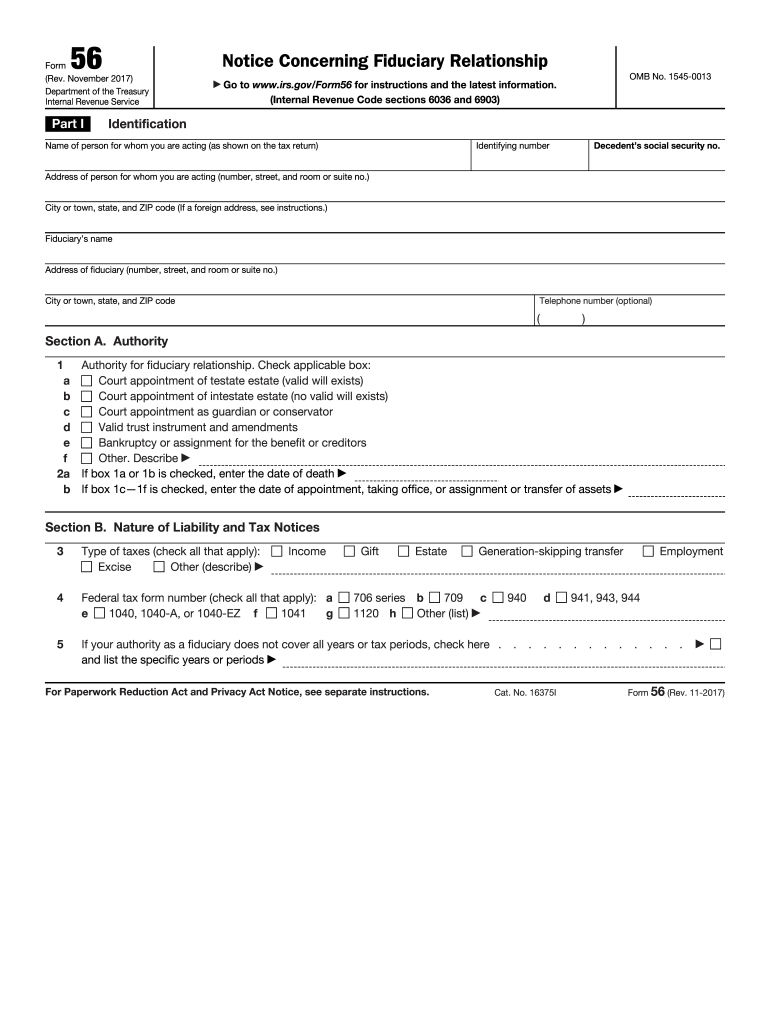
IRS Form 56, also known as the "Notice Concerning Fiduciary Relationship," notifies the Internal Revenue Service of the establishment of a fiduciary relationship for a taxpayer. It plays a crucial role in the fiduciary process, ensuring that the IRS is aware when an individual or entity is acting in a fiduciary capacity, such as a trustee, executor, or administrator. This form is used to identify both the taxpayer and the fiduciary, and to detail the authority under which the fiduciary acts.
Components of IRS Form 56
- Taxpayer Identification: Contains personal and tax identification details of the taxpayer.
- Fiduciary Identification: Required information about the fiduciary, including their relationship to the taxpayer and how they assumed fiduciary responsibility.
- Authority and Legal Basis: Describes under what legal authority the fiduciary position was assumed.
- Taxes Involved: Lists applicable taxes related to the fiduciary responsibilities, such as income or estate taxes.
- Revocation or Termination: Provides details on the termination or change of a previously appointed fiduciary relationship.
How to Use the Downloadable IRS Form 56
To effectively manage fiduciary responsibilities, download IRS Form 56 from IRS.gov, fill it out accurately, and submit it to the IRS. This process ensures proper documentation of the fiduciary’s authority and responsibilities, helps manage things like tax liability, and makes sure that official matters are communicated to the correct parties.
Specific Use Cases:
- Establishing Trusts: Trustees use the form to notify the IRS of their role in managing a trust.
- Handling Estates: Executors or administrators submit the form when managing a decedent’s estate.
- Managing Tax Affairs of Minors or Incapacitated Persons: Guardians or legal representatives fill out the form when overseeing another's tax matters.
Steps to Complete the Downloadable IRS Form 56
- Gather Information: Collect all necessary documentation regarding the taxpayer and the fiduciary relationship.
- Complete Identification Sections: Fill in taxpayer and fiduciary details, ensuring accuracy to prevent processing delays.
- Detail Fiduciary Authority: Explain the legal basis for your fiduciary role, citing any official documents or court orders.
- Specify Tax Types: Indicate applicable taxes you're responsible for handling under the fiduciary relationship.
- Include Termination Details: If replacing a previous fiduciary, include details of any revocations or terminations.
Common Mistakes to Avoid
- Incomplete Information: Double-check that all sections are filled and accurate.
- Incorrect Taxpayer Identification Numbers: Ensure you correctly enter Social Security or Employer Identification Numbers.
Who Typically Uses the Downloadable IRS Form 56
Typically, individuals or entities involved in fiduciary roles utilize Form 56:
- Estate Executors: Individuals managing an estate after a person passes away.
- Trustees: Administrators of trusts for tax-related duties.
- Legal Guardians: Managing finances for minors or adults incapable of handling their own financial matters.
These parties use the form to officially inform the IRS of their responsibilities and ensure proper tax management on behalf of the taxpayer.


Important Terms Related to IRS Form 56
Understanding specific terminology simplifies the completion process:
- Fiduciary: An individual entrusted with managing the tax affairs of another.
- Taxpayer: The individual or entity whose interests are represented.
- Authority: Legal powers granting the fiduciary their role, such as a court order.
- Revocation: The act of officially removing a fiduciary’s responsibility.
Key Elements of IRS Form 56
Key elements ensure comprehensive information on fiduciary roles:
- Appointed Dates: Clearly mention when the fiduciary relationship begins and ends, if applicable.
- Roles and Responsibilities: Cite specific duties concerning the taxpayer’s finances.
- Communication Preferences: Detail how the IRS can contact the fiduciary and taxpayer.
Filing Deadlines and Important Dates
Timely submission of Form 56 is critical in fiduciary management:
- Upon Assumption of Role: File Form 56 promptly upon beginning any fiduciary duties.
- Before Tax Filing Season: To avoid complications with the taxpayer's annual returns, file the form before the relevant tax season.
Timely filings help ensure that all fiduciary responsibilities are recognized and that there are no interruptions in tax management.
Penalties for Non-Compliance
Ignoring the necessity of filing Form 56 could result in serious repercussions:
- Tax Penalties: Responsibility for missed or incorrect filings may fall on the fiduciary due to inadequate notification to the IRS.
- Legal Consequences: Failing to notify the IRS of fiduciary duties could lead to legal disputes or challenges regarding estate or trust management.
Being aware of these penalties underscores the importance of timely and accurate filing of this form.