



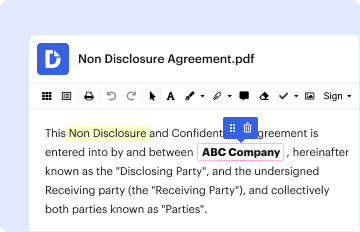
01. Edit your blank subordination agreement online
Type text, add images, blackout confidential details, add comments, highlights and more.

Type text, add images, blackout confidential details, add comments, highlights and more.
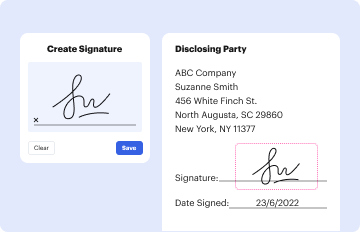
Draw your signature, type it, upload its image, or use your mobile device as a signature pad.
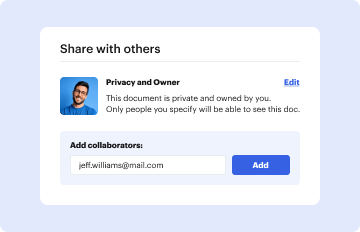
Send subordination agreement via email, link, or fax. You can also download it, export it or print it out.
A subordination agreement is a legal document that outlines the priority of claims against a debtor's assets, explicitly stating that one party's claim, typically the lender, is ranked behind the claim of another party, such as a property easement holder. In the context of real estate, this agreement often involves subordinating the lien of a deed of trust to a perpetual conservation easement, ensuring the easement's priority. This form is crucial when multiple claims or interests are associated with a single property, and it helps to establish a clear hierarchy of rights. Subordination agreements are binding on all parties and may require further instruments to implement their terms.
Subordination agreements typically encompass several critical elements to ensure their effectiveness:
These elements form the core structure of the agreement, facilitating clarity and enforceability among all involved parties.
To complete a subordination agreement, various steps must be meticulously followed:
Following these steps diligently helps facilitate the validation and enforceability of the agreement, making it an integral part of property management and financial planning processes.
Subordination agreements are fundamental in various legal contexts to manage the intricacies of creditor-debtor relationships:
These agreements are frequent in real estate and corporate financing, providing a structured approach to prioritizing claims on debt or property.
Utilizing subordination agreements involves strategic planning and legal comprehension:
Effectively using a subordination agreement helps in reorganizing debt structures, enabling smoother financial operations.
Various parties commonly use subordination agreements to manage interests and liabilities:
Recognizing which parties employ subordination agreements assists in understanding their application and importance in multiple settings.
Understanding specific terminology is vital for navigating subordination agreements:
Having a grasp of these terms supports effective and accurate interpretation of agreements.
Subordination agreements follow different legal stipulations depending on state jurisdiction:
Familiarity with state-specific rules ensures adherence to legal standards and averts any complications related to enforceability.
At DocHub, your data security is our priority. We follow HIPAA, SOC2, GDPR, and other standards, so you can work on your documents with confidence.
A subordination agreement is a contract that guarantees senior debt will be paid before other subordinated debt if the debtor becomes bankrupt.
Apr 3, 2001 THIS SUBORDINATION AND INTERCREDITOR AGREEMENT (AGREEMENT) is made to be effective as of March 30, 2001, by and between NATIONAL BANK OF


