






Definition & Meaning
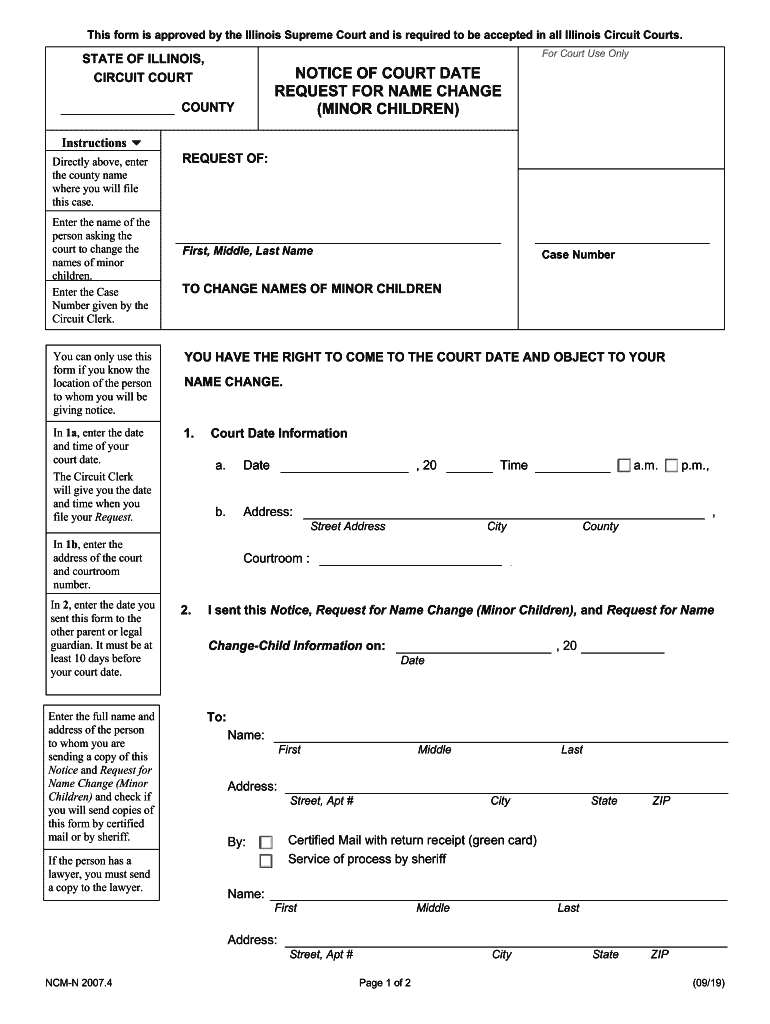
The Illinois Statewide Forms - Approved - Notice of Court Date is an official legal document used in the Illinois Circuit Courts system. Its primary purpose is to formally notify involved parties about a scheduled court date. This notice ensures that all parties are informed about the upcoming court proceedings, allowing them to prepare and appear as required. The form includes crucial details such as the date, time, and location of the court session. This legal notification is essential for maintaining the integrity of the judicial process, ensuring all parties have the opportunity to participate and present their cases.
How to Use the Illinois Statewide Forms - Approved - Notice of Court Date
Using the Notice of Court Date involves several critical steps. Begin by obtaining the form from the Illinois Supreme Court's website or a local Circuit Court office. Carefully complete each section of the form, ensuring all information is accurate. This typically includes the case number, names of the involved parties, and specific details of the court session. Once completed, the form needs to be served to all relevant parties. Service can be accomplished via personal delivery, mail, or a third-party process server. Retaining proof of service is important as it may be required during court proceedings.
How to Obtain the Illinois Statewide Forms - Approved - Notice of Court Date
Accessing the Notice of Court Date form is straightforward. The Illinois Supreme Court provides downloadable versions on its official website. Alternatively, physical copies can be obtained from any Circuit Court clerk's office throughout Illinois. When accessing the form online, ensure that you have the necessary software, such as a PDF reader, to view and complete the document. It is vital to download the latest version of the form to ensure compliance with any recent updates or changes in legal requirements.
Steps to Complete the Illinois Statewide Forms - Approved - Notice of Court Date
- Obtain the Form: Retrieve from the official Illinois Supreme Court website or a local Circuit Court clerk's office.
- Fill Out Details: Enter the assigned case number, court date, time, and venue accurately. Include parties' names and addresses.
- Review: Double-check the completed form for any mistakes or omissions.
- Serve the Notice: Deliver copies of the completed form to all parties involved. Select an appropriate method of service, such as certified mail or personal delivery.
- Proof of Service: Obtain a service receipt or affidavit that confirms the notice was sent and received.
Who Typically Uses the Illinois Statewide Forms - Approved - Notice of Court Date
The form is primarily used by legal professionals, including attorneys and legal assistants, representing clients in civil or family court cases. Individuals involved in self-representation, also known as pro se litigants, frequently utilize the form to ensure procedural compliance. Additionally, court clerks and administrative staff may be involved in issuing and managing these notices as part of their responsibilities within the judicial system.


Important Terms Related to Illinois Statewide Forms - Approved - Notice of Court Date
- Case Number: The unique numeric identifier assigned to a legal case.
- Service of Process: The legal procedure of delivering court documents to involved parties.
- Affidavit of Service: A sworn statement confirming delivery of a court notice or document.
- Pro Se Litigant: An individual who represents themselves in court without attorney assistance.
Legal Use of the Illinois Statewide Forms - Approved - Notice of Court Date
The legal utility of this form lies in its ability to function as an official court-issued notice. It provides a formal record that parties have been accurately informed about court dates, which is crucial for upholding due process. The form's correct use can prevent default judgments and ensure fair trial procedures by notifying all parties in advance. It is indispensable in establishing that adequate notice was given, a requirement under Illinois law.
Key Elements of the Illinois Statewide Forms - Approved - Notice of Court Date
- Title and Form Number: Clearly visible at the top of the form for identification.
- Parties Involved: Includes plaintiff and defendant names and addresses.
- Court Details: Specifies the court's name, address, and assigned judge.
- Date and Time: Provides the specific date and time of the scheduled hearing or trial.
- Response Instructions: May include information on required actions by the recipient.
State-Specific Rules for the Illinois Statewide Forms - Approved - Notice of Court Date
Illinois has specific regulations governing the use and submission of court notices. These regulations ensure that both parties have adequate time and information before court hearings. Notices must be issued within a specified timeline before the scheduled date, typically not less than a certain number of days, according to Illinois procedural rules. Non-compliance with these regulations can result in the postponement of hearings or other procedural issues.
Examples of Using the Illinois Statewide Forms - Approved - Notice of Court Date
- Family Court Scenario: A parent serves a notice of court date to the other parent in a child custody modification case.
- Civil Litigation: A plaintiff notifies a defendant of a pre-trial meeting scheduled to discuss settlement options.
- Traffic Violation Case: An individual receives a court date notice concerning a traffic ticket dispute.
Filing Deadlines / Important Dates
Ensuring the timely submission of the Notice of Court Date is crucial. In Illinois, the notice must often be served a specific number of days before the court date, usually ranging from seven to 30 days. This period allows adequate preparation time for all parties. Missing these deadlines can result in delays or require rescheduling, potentially affecting case outcomes.
Required Documents
Alongside the Notice of Court Date, several documents may need to be attached, depending on the case type. These can include affidavits of service, case motions, or previous court orders relevant to the hearing. Verifying the specific requirements for your case type with court clerks can prevent submission errors or omissions that could delay proceedings.