01. Edit your form online
Type text, add images, blackout confidential details, add comments, highlights and more.

Type text, add images, blackout confidential details, add comments, highlights and more.

Draw your signature, type it, upload its image, or use your mobile device as a signature pad.

Send it via email, link, or fax. You can also download it, export it or print it out.
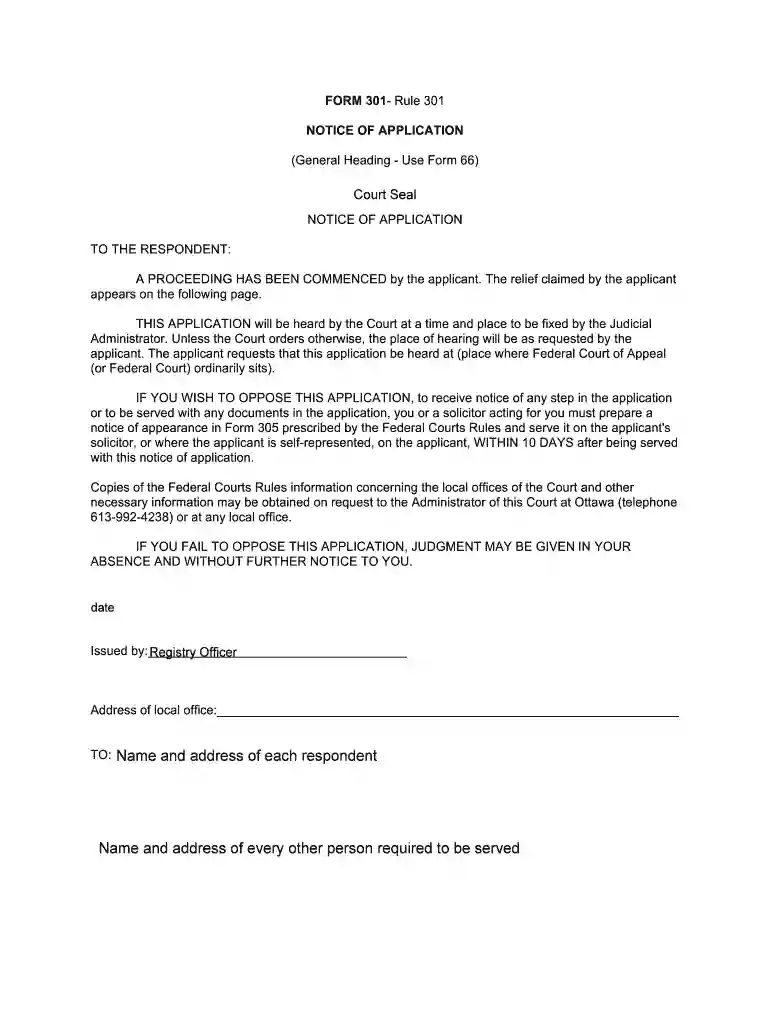
A "Notice of Application" typically refers to a formal document submitted to inform a respondent about an application filed for judicial review or other legal proceedings. This notice serves to provide clarity on the nature of the application, the legal grounds, and the intended relief sought by the applicant. The term often indicates that a legal process involving review, objection, or approval is underway, necessitating the respondent's awareness and potential participation to protect their interests.
Using a Notice of Application involves several steps aimed at ensuring legal compliance and effective communication. The process is integral to formalizing legal actions and requires careful preparation.
Obtaining this form typically involves accessing court websites or legal resources specific to your jurisdiction. Each court may have its guidelines and versions.
Completing a Notice of Application is a meticulous task that demands precision. Each section of the form has specific requirements that need attention.
The Notice of Application is crucial for formally notifying parties involved in legal proceedings about an application. It ensures transparency and compliance with judicial procedures.
Various individuals and entities may find themselves in need of a Notice of Application. Understanding who typically uses this form can help in grasping its wide-ranging applicability.



Understanding the terminology used in a Notice of Application is essential for accurate completion and processing.
The legal framework surrounding the Notice of Application ensures its application and misuse are clearly delineated. Knowing these uses promotes lawful engagement with the judicial process.
We've got more versions of the NOTICE OF % % APPLICATION form. Select the right NOTICE OF % % APPLICATION version from the list and start editing it straight away!
At DocHub, your data security is our priority. We follow HIPAA, SOC2, GDPR, and other standards, so you can work on your documents with confidence.