







Definition & Meaning
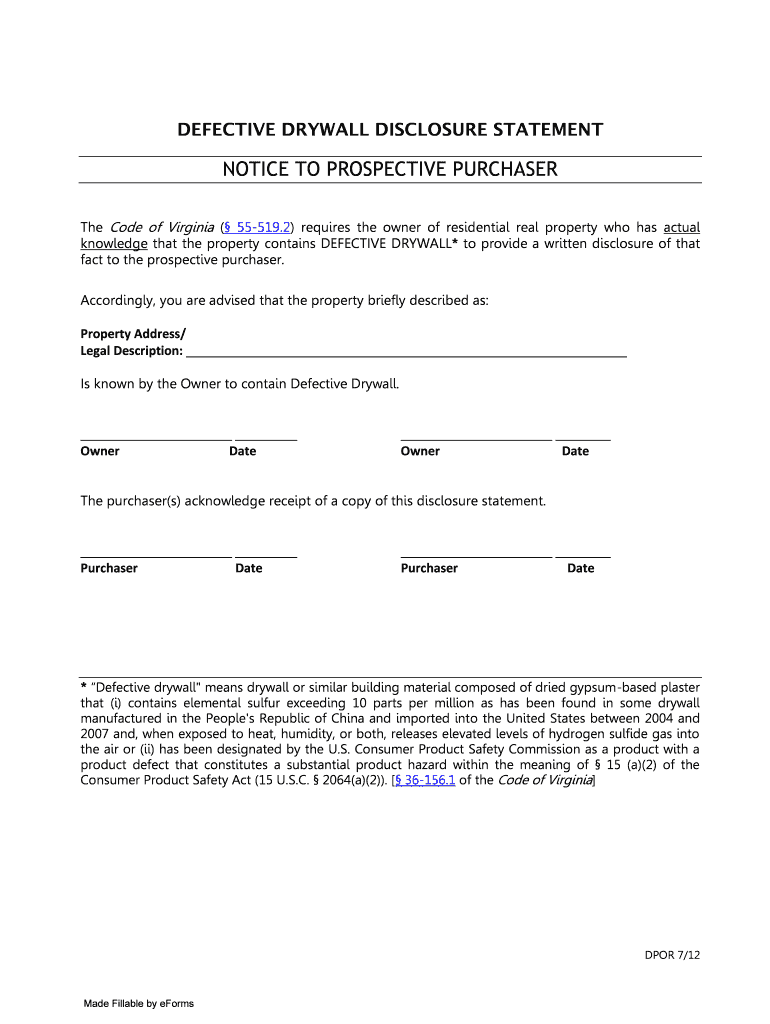
The Defective Drywall Disclosure Statement - DPOR is a legally required document mandated by Virginia law for property transactions. It is designed to inform potential buyers about the presence of defective drywall in a property. Defective drywall is material that can release harmful gases due to specific manufacturing issues. This disclosure statement obligates the property owner to notify purchasers about this condition to ensure transparency and protect consumer safety during real estate transactions.
How to Use the Defective Drywall Disclosure Statement - DPOR
The proper use of the Defective Drywall Disclosure Statement is crucial for compliance and protecting all parties involved in the property transaction. The document should be filled out by the property owner or an authorized representative. It must accurately reflect the condition of the property regarding the presence of defective drywall. After completion, the document should be shared with the prospective purchaser, who must acknowledge receipt by signing the statement. Retaining a copy of the signed statement is recommended for future reference and proof of compliance.
Steps to Complete the Defective Drywall Disclosure Statement - DPOR
- Gather Information: Collect all relevant details about the property, including any reports or findings concerning defective drywall.
- Complete the Form: Fill out the form with property details, specifying the presence and location of any defective drywall.
- Owner’s Acknowledgment: The property owner must sign to confirm the accuracy of the information provided.
- Purchaser’s Acknowledgment: The prospective buyer should review and sign the statement to confirm they've been informed.
- Retain Copies: Both parties should keep copies for their records, ensuring proof of disclosure in case of future disputes.
Legal Use of the Defective Drywall Disclosure Statement - DPOR
The legal use of this document serves as part of due diligence in real estate transactions within Virginia. By informing buyers about defective drywall, it helps to prevent legal disputes post-purchase. Non-compliance or falsification of the disclosure may lead to legal repercussions, including lawsuits for damages caused by unreported defective drywall. Proper execution of this statement safeguards both the seller, by meeting legal requirements, and the buyer, by providing essential property condition information.
Key Elements of the Defective Drywall Disclosure Statement - DPOR
- Property Information: Includes address and specific areas affected by defective drywall.
- Description of Defective Drywall: Details regarding the type and extent of drywall defects.
- Signatures: Required from both the property owner and purchaser to validate the disclosure process.
- Dates: Accurate completion and acknowledgment dates are crucial for establishing a timeline of disclosure.
- Additional Comments: Optional section for notes or clarifications regarding the defective drywall situation.
Important Terms Related to Defective Drywall Disclosure Statement - DPOR
- Defective Drywall: Drywall that releases harmful gases due to defects in its manufacturing process.
- Disclosure Statement: A document providing essential information about property conditions to potential buyers.
- DPOR: Virginia Department of Professional and Occupational Regulation, governing real estate regulations.
- Acknowledgment: The purchaser's signed confirmation of receipt of the disclosure information.
State-Specific Rules for the Defective Drywall Disclosure Statement - DPOR
Virginia law mandates this disclosure under specific real estate and consumer protection regulations. The disclosure requirements may differ slightly from those in other states, emphasizing the necessity of understanding local laws for accurate compliance. In Virginia, failure to disclose known defective drywall can void a transaction or incur penalties. Property owners should consult legal advice to ensure they meet all state-specific obligations accurately.
Penalties for Non-Compliance
Non-compliance with the requirement to provide a Defective Drywall Disclosure Statement can result in significant legal penalties. These can include financial damages, restitution costs, and potentially voided sales agreements. Property owners may also face legal actions from buyers, leading to further financial and reputational consequences. Ensuring full compliance by accurately completing and providing this disclosure is essential to mitigating potential legal and financial risks.




