
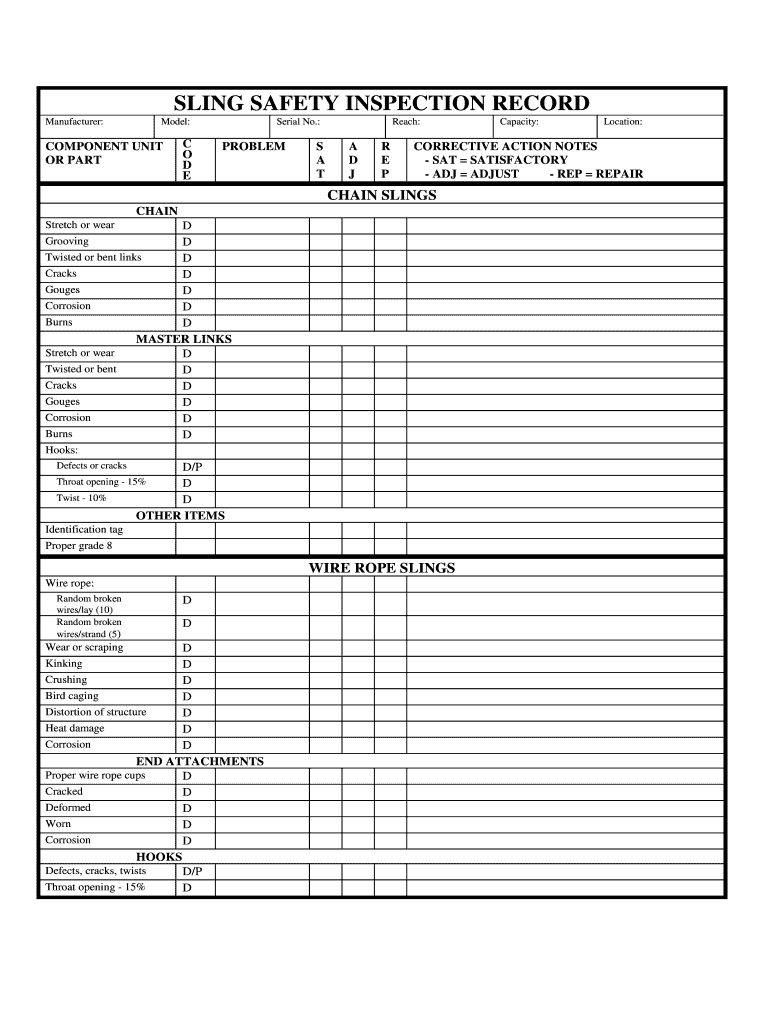







Overview of Sling Inspection Checklist Template
A sling inspection checklist template is a critical tool used to ensure compliance with safety standards when working with lifting slings, which include chain slings, wire rope slings, and synthetic slings. Regular inspections help to identify wear and tear, ensuring that slings are safe for use in lifting operations. This document typically contains sections for recording vital information about the sling being inspected, such as manufacturer details, inspection results, and corrective actions needed.
Importance of Regular Inspections
Regular inspections are vital for maintaining safety in workplaces that utilize lifting slings. Inspections should be conducted:
- Before Use: Each sling should be examined visually for signs of damage such as fraying, cuts, or rust before it is used.
- Periodic Inspections: Established schedules for routine checks should be determined based on frequency of use and environmental conditions.
- After Incidents: Any sling that has been involved in a lifting incident or has been subjected to excessive loads should be inspected before reuse.
These inspections ensure compliance with OSHA and industry-specific regulations, protecting workers from potential hazards.
Key Components of a Sling Inspection Checklist
A comprehensive sling inspection checklist template should include the following essential elements:
- Sling Information: Document the sling type, manufacturer, model, and serial number, providing a complete identity for tracking purposes.
- Inspection Criteria: Clearly outline the criteria for inspection, which may include checking for:
- Cuts or abrasions
- Signs of corrosion (for metal slings)
- Stretched or damaged fibers (for synthetic slings)
- Proper identification tags
- Condition Assessment: Designate columns for recording the condition of the sling, which should indicate if it is satisfactory, requires adjustment, or should be repaired.
- Corrective Actions Needed: Include a section for detail on the necessary actions if defects are identified, ensuring clear procedures on how to handle compromised slings.
- Inspector Details: Space for the inspector’s name, signature, and date of inspection to maintain accountability.
Ensuring Compliance with OSHA Regulations
When creating or utilizing a sling inspection checklist, it is essential to adhere to OSHA guidelines, which dictate that all slings must be inspected routinely and after any incident that could compromise safety. Key regulations include:
- 1926.251: Proper rigging equipment must be used and maintained.
- 1910.184: Slings must be inspected regularly to ensure they are in safe working condition.
Consulting OSHA regulations while developing a sling inspection checklist can enhance safety protocols and reduce the likelihood of mishaps.
Types of Slings and Specific Inspection Requirements
Different types of slings have unique inspection criteria and common issues. The sling inspection checklist should differentiate between these types:
-
Chain Slings:
- Check for cracks and elongation in links.
- Ensure hooks are not damaged or bent.
-
Wire Rope Slings:
- Look for broken wires or kinks.
- Inspect for rust or corrosion that may weaken the sling.
-
Synthetic Slings:
- Examine for cuts, melting, or discoloration.
- Ensure there are no knots that may indicate improper storage or use.
By specifying these criteria within the checklist, inspectors can focus on the most pertinent aspects of each sling type, ensuring tailored and effective inspections.
Form Variants and Digital Templates
Sling inspection checklist templates may come in various formats, such as:
- Printable PDF: Offers a straightforward option for manual inspection.
- Digital Templates: Available for platforms like Google Drive or specialized software like DocHub, which allows real-time collaboration and secure storage of inspection records.
Digital templates can enhance efficiency, allowing teams to share inspections and track corrections without the need for physical paperwork.
Filling Out the Sling Inspection Checklist
To effectively utilize the sling inspection checklist template, follow these steps:
- Download the Template: Acquire a digital version that fits the specific requirements of your operation.
- List Sling Types: Identify each sling type to ensure comprehensive coverage.
- Conduct Inspection: Use the checklist to evaluate each sling against the outlined criteria.
- Document Findings: Record the status, noting any issues to ensure transparency and accountability.
- Follow-Up Actions: Determine corrective actions for any issues found, ensuring that defective slings are either repaired or removed from service.
By adhering to these steps, users can ensure a thorough inspection process, maintaining sling safety and compliance with industry standards.
Conclusion on Using the Sling Inspection Checklist
The sling inspection checklist template serves as a crucial tool for workplace safety regarding lifting operations. By systematically implementing regular inspections and adhering to OSHA guidelines, organizations can significantly mitigate risks associated with sling use. Proper documentation and follow-up on corrective actions ensure that lifting systems remain effective, reliable, and safe for all personnel involved.




