




01. Edit your 2020 1040 v online
Type text, add images, blackout confidential details, add comments, highlights and more.

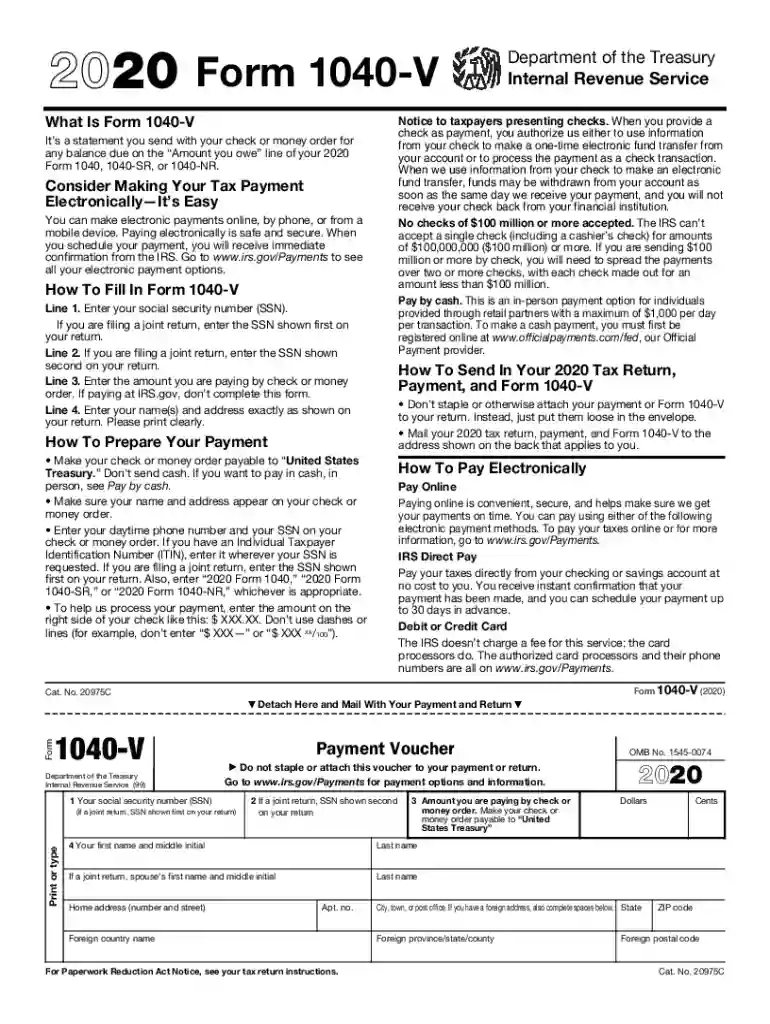
Type text, add images, blackout confidential details, add comments, highlights and more.

Draw your signature, type it, upload its image, or use your mobile device as a signature pad.

Send 2020 form 1040 v via email, link, or fax. You can also download it, export it or print it out.
"Irs payable" generally refers to the amount of money a taxpayer owes to the Internal Revenue Service (IRS) as a result of taxes due on income, employment, or other tax liabilities. This term is used frequently in U.S. tax discussions, indicating the necessary payments that must be made by either individuals or entities to stay compliant with tax obligations. An accurate understanding of IRS payable amounts is essential for maintaining good standing with the IRS and avoiding potential penalties or interest due to underpayment.
To effectively manage IRS payable amounts, taxpayers must regularly review their income and deductions to accurately estimate their total tax liability for the year. This can be done by using tax preparation software or consulting with a tax advisor for an in-depth evaluation of financial activities. Paying the IRS payable amount by its deadline involves the selection of a suitable payment method, such as electronic payment systems available on the IRS website, mailing a check, or paying in-person at authorized locations. Ensuring timely payment can prevent unnecessary financial complications.
The IRS provides robust guidelines to ensure taxpayers know how to determine their payable amounts accurately. These instructions cover applicable deductions, credits, calculation methods, and advice on filing returns. It is crucial to stay informed about changes in tax laws each year, as these can impact the IRS payable amounts. The IRS website is a valuable resource for accessing these guidelines and staying up-to-date with any modifications or new initiatives introduced by the IRS.
Key dates related to IRS payable include the standard tax filing deadline on April 15, or the next business day if it falls on a weekend or public holiday. For those making estimated tax payments, these are due quarterly, generally on April 15, June 15, September 15, and January 15 of the following year. Being aware of and meeting these deadlines is critical to avoid penalties and interest on unpaid taxes.
Failure to pay the IRS payable amount on time can lead to significant penalties and interest. The IRS imposes a late payment penalty of 0.5% of the unpaid tax per month, which can accumulate up to a total of 25% of the unpaid amount. Interest is compounded on a daily basis on unpaid taxes, accruing from the original due date until the amount is fully settled. These penalties underscore the importance of timely tax payment compliance.
Tax preparation software like TurboTax and QuickBooks offers taxpayers convenient options for calculating and managing their IRS payable amounts. These tools automatically integrate financial data to provide real-time tax liability updates, ensuring that taxpayers can track deductions, credits, and potential refunds accurately. Leveraging these technologies helps taxpayers to minimize errors in their tax filings and to efficiently manage payment submissions.
Different business structures have unique tax obligations, impacting how IRS payable amounts are calculated and paid. For instance, LLCs may have pass-through taxation, causing members to pay individual income taxes on profits. Corporations typically face a flat tax rate on profits, while partnerships need to submit individual K-1 forms for partner-specific tax liabilities. Understanding these distinctions is essential for businesses to accurately determine their IRS payable amounts and ensure compliance with federal taxes.
We've got more versions of the 2020 1040 v form. Select the right 2020 1040 v version from the list and start editing it straight away!
| Versions | Form popularity | Fillable & printable |
|---|---|---|
| 2025 | 4.4 Satisfied (30 Votes) | |
| 2024 | 4.3 Satisfied (21 Votes) | |
| 2023 | 4.7 Satisfied (42 Votes) | |
| 2022 | 4.8 Satisfied (43 Votes) | |
| 2021 | 4.7 Satisfied (32 Votes) | |
| 2020 | 4.3 Satisfied (86 Votes) | |
| 2019 | 4.2 Satisfied (62 Votes) | |
| 2018 | 4.2 Satisfied (123 Votes) | |
| 2017 | 4.2 Satisfied (113 Votes) | |
| 2016 | 4.3 Satisfied (186 Votes) | |
| 2015 | 3.9 Satisfied (30 Votes) | |
| 2014 | 4.3 Satisfied (61 Votes) | |
| 2014 | 4.6 Satisfied (48 Votes) | |
| 2013 | 4 Satisfied (22 Votes) | |
| 2012 | 4 Satisfied (26 Votes) |
At DocHub, your data security is our priority. We follow HIPAA, SOC2, GDPR, and other standards, so you can work on your documents with confidence.




Jan 29, 2026 Payments to the Treasury debit/credit card or digital wallet IRS Direct Pay (direct from a bank account with no fee) IRS Individual OnlineRead more
04 A taxpayers method for determining the portion of a success-based fee that facilitates a transaction and the portion that does not facilitate theRead more
Taxpayers can choose to pay with a credit card, debit card or digital wallet option through a payment processor. Processing fees apply. No part of the cardRead more


