



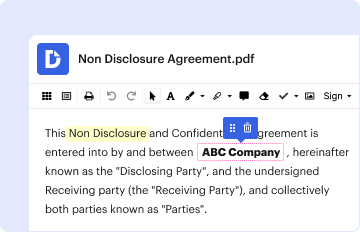
01. Edit your form online
Type text, add images, blackout confidential details, add comments, highlights and more.

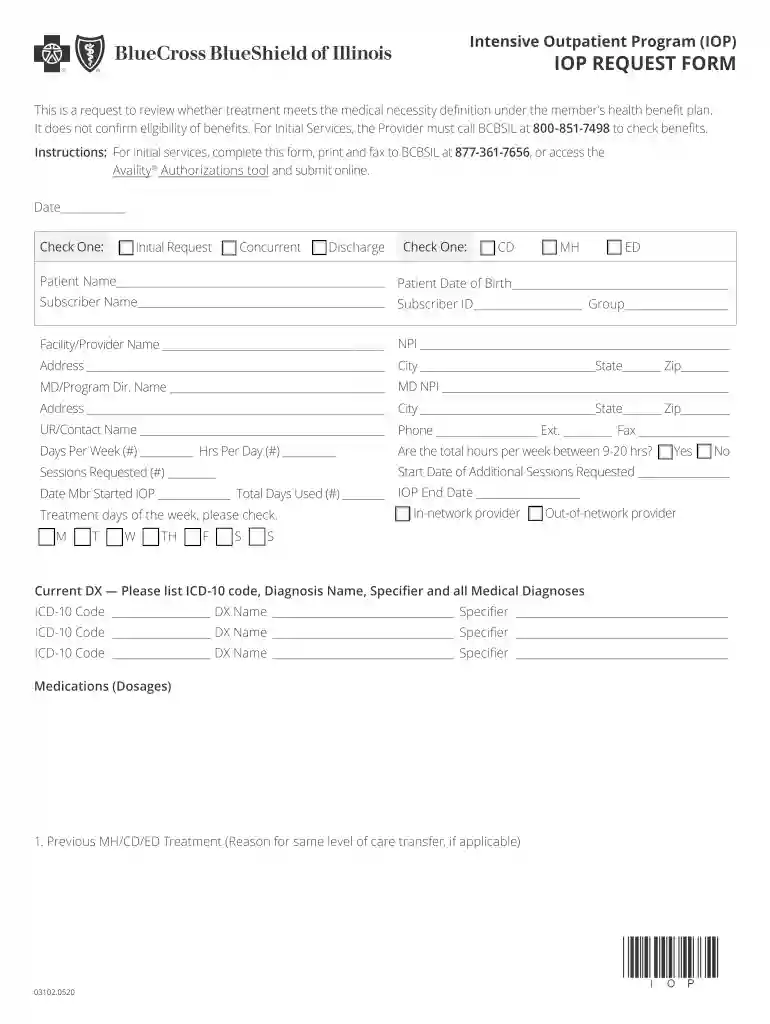
Type text, add images, blackout confidential details, add comments, highlights and more.
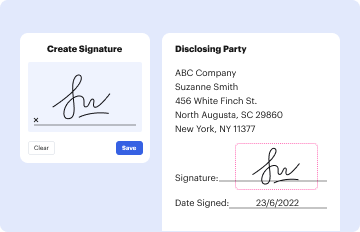
Draw your signature, type it, upload its image, or use your mobile device as a signature pad.

Send it via email, link, or fax. You can also download it, export it or print it out.
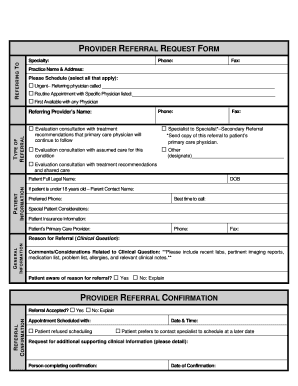
The "IOP Request Form" is a critical document used in the healthcare industry, specifically by the Blue Cross Blue Shield Association. It facilitates requests for Intensive Outpatient Program (IOP) services, which are part of mental health treatment plans. This form is essential for assessing the medical necessity of continued treatment under a member's health benefits plan. It is used to document various aspects of a patient's treatment, including specific medical, psychiatric, and therapeutic details required for approval.
Using the IOP Request Form involves several key steps that healthcare providers must follow to ensure accurate submissions.
Completing the form properly is crucial for the approval of services. Below is a step-by-step guide to ensure accuracy and thoroughness.
The form is composed of several critical components that must be completed with precision.
Various stakeholders in the healthcare industry utilize the IOP Request Form:


Certain states may have additional requirements for the use and submission of IOP Request Forms.
The form serves a legal purpose in establishing the legitimacy and need for intensive outpatient treatment.
The form offers multiple submission channels catering to different technological access and preferences.
Failure to appropriately submit the IOP Request Form can lead to significant consequences.
By carefully understanding and navigating these elements, healthcare professionals can effectively utilize the IOP Request Form, ensuring seamless communication and coordination with insurance providers while safeguarding patients' treatment pathways under mental health plans.
We've got more versions of the IOP REUEST FORM - Blue Cross Blue Shield Association form. Select the right IOP REUEST FORM - Blue Cross Blue Shield Association version from the list and start editing it straight away!
| Versions | Form popularity | Fillable & printable |
|---|---|---|
| 2023 | 4.4 Satisfied (32 Votes) | |
| 2023 | 4.2 Satisfied (49 Votes) | |
| 2022 | 4.8 Satisfied (55 Votes) | |
| 2020 | 4.8 Satisfied (247 Votes) | |
| 2020 | 4.8 Satisfied (101 Votes) | |
| 2020 | 4.4 Satisfied (134 Votes) | |
| 2020 | 4.8 Satisfied (261 Votes) | |
| 2020 | 4.8 Satisfied (117 Votes) | |
| 2020 | 4.3 Satisfied (26 Votes) | |
| 2020 | 4.7 Satisfied (51 Votes) | |
| 2020 | 4.2 Satisfied (36 Votes) | |
| 2020 | 4.1 Satisfied (59 Votes) | |
| 2020 | 4.5 Satisfied (39 Votes) | |
| 2019 | 4.8 Satisfied (130 Votes) | |
| 2019 | 4.8 Satisfied (79 Votes) |
At DocHub, your data security is our priority. We follow HIPAA, SOC2, GDPR, and other standards, so you can work on your documents with confidence.


This Evidence of Coverage and Disclosure Form booklet describes the terms and conditions of coverage of your Blue Shield health plan.
Download the claim form from bcbsglobalcore.com. Or call Blue Cross Blue Shield Global Core at 1-800-810-2583 (BLUE) to request the form. Independent licensee


