







Definition & Meaning
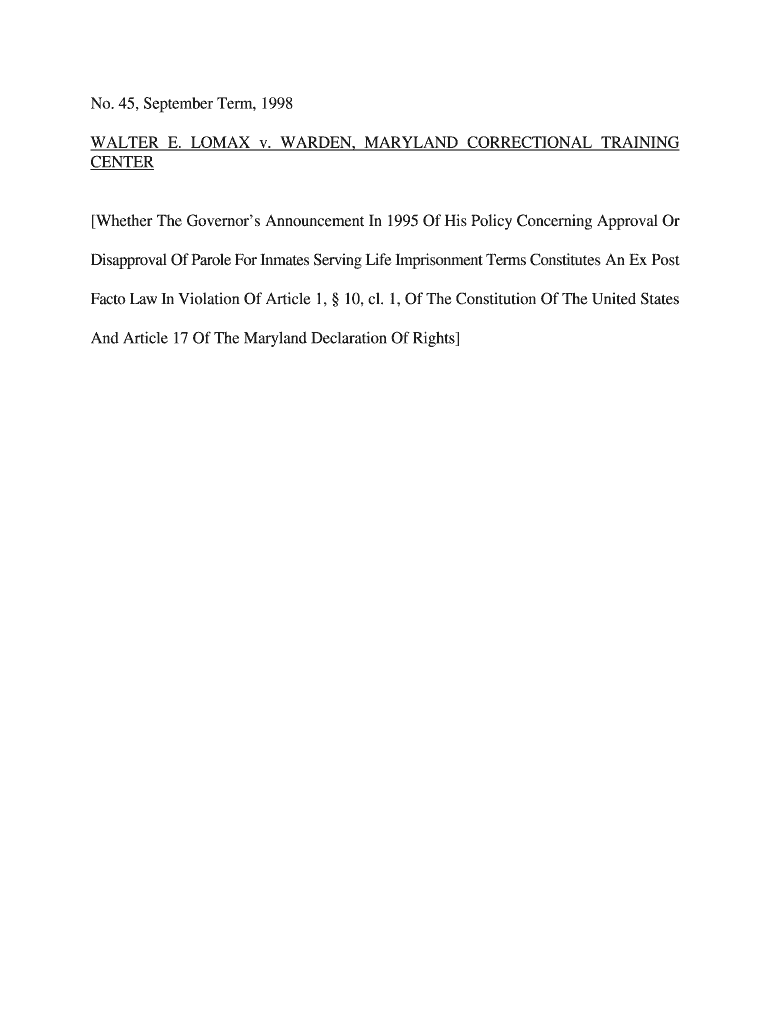
The document "No 45, September Term, 1998 - Maryland Judiciary - courts state md" is a legal opinion issued by the Court of Appeals of Maryland. This specific document deals with the habeas corpus petition of Walter E. Lomax, challenging the 1995 policy imposed by the Governor concerning parole decisions for inmates serving life sentences. The core issue revolves around whether this policy equates to an ex post facto law, violating constitutional protections.
Key Terms
- Habeas Corpus: A legal procedure by which an individual can challenge the legality of their detention.
- Ex Post Facto Law: A law that retroactively changes the legal consequences of actions that were committed before the enactment of the law.
- Parole: The conditional release of an inmate before the end of their sentence, under specific terms.
Legal Use of the No 45, September Term, 1998 - Maryland Judiciary - courts state md
This document is crucial in understanding the judiciary's stance on whether administrative policies constitute binding legal statutes. The Court's conclusion that the Governor's policy on parole was merely a guideline, and not a binding law, affirms its significance in administrative law and constitutional discourse.
Court's Conclusion
- The Court of Appeals determined the policy was a guideline.
- No constitutional violations under the ex post facto clause were found.
- The lower court's decision was affirmed, and Lomax received proper parole consideration.
Who Typically Uses This Form
Legal professionals, scholars, and policymakers are the primary users of this form. It is pertinent for those involved in criminal justice reform, legal precedent analysis, and administrative law.
Potential Users
- Lawyers specializing in criminal and constitutional law.
- Law students studying administrative policy impacts on the legal system.
- Advocacy groups reviewing parole reform policies.
How to Use the No 45, September Term, 1998 - Maryland Judiciary - courts state md
Using this document involves analyzing its content to understand legal precedent and administrative policy's role in judicial decisions. Legal professionals leverage such documents to guide their arguments in court and when advising clients on similar matters.
Practical Applications
- Referencing the document in legal arguments related to administrative guidelines and their legal weight.
- Studying the document for academic purposes, particularly in law courses focusing on constitutional law.
Steps to Complete Legal Analysis
- Research Context: Understand the 1995 policy and its implications on parole decisions.
- Examine Legal Precedents: Analyze the document in relation to other cases under similar constitutional challenges.
- Interpret Judicial Reasoning: Break down the judicial decision to understand the basis for the Court's conclusion.
- Apply Findings: Use the insights obtained in relevant legal or policy discussions.
State-Specific Rules for Maryland Judiciary Forms
Understanding state-specific rules is crucial when dealing with legal documents from Maryland Judiciary as different states have unique judicial processes and interpretations of law.
Maryland Specifics
- Follow state procedures for habeas corpus petitions.
- Recognize the influence of Maryland’s legal precedents in parole decisions.
- Compliance with state-level administrative and judicial guidelines is mandatory.
State-by-State Differences
While this document is specific to Maryland, it is essential to note the variances in how different states handle similar legal issues, particularly in parole policy.
Comparative Insight
- States may vary in their interpretation of administrative policies versus statutory laws.
- Parole regulations differ significantly across state lines, affecting legal outcomes.
Important Terms Related to the Document
This section focuses on legal terminology and concepts relevant to the case and its implications in broader contexts.
Key Legal Concepts
- Judicial Discretion: The flexibility courts have in interpreting laws and policies.
- Constitutional Protections: Legal safeguards provided by constitutional law, such as protection from ex post facto laws.
By adhering to these structured content guidelines, the analysis provides a comprehensive understanding of the document's legal and administrative nuances, fostering a deeper appreciation of its implications for parole policies and constitutional law.




