Type text, add images, blackout confidential details, add comments, highlights and more.
02. Sign it in a few clicks
Draw your signature, type it, upload its image, or use your mobile device as a signature pad.
03. Share your form with others
Send it via email, link, or fax. You can also download it, export it or print it out.
How to use or fill out dr 6597 with our platform
Ease of Setup
DocHub User Ratings on G2
Ease of Use
DocHub User Ratings on G2
Click ‘Get Form’ to open the dr 6597 in the editor.
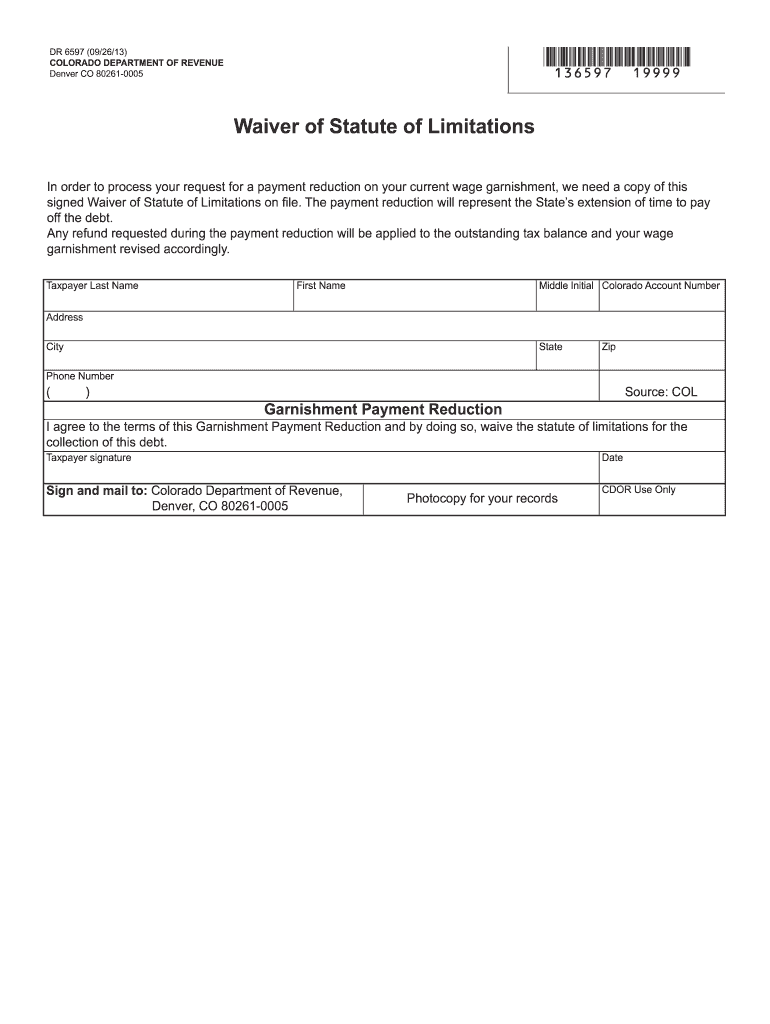
Begin by entering your last name, first name, and middle initial in the designated fields. Ensure that all names are spelled correctly for accurate processing.
Input your Colorado Account Number, followed by your address, city, state, and zip code. This information is crucial for identifying your account.
Provide your phone number in the specified format. This will help the department contact you if needed.
Read through the terms of the Garnishment Payment Reduction carefully. If you agree, proceed to sign in the designated area to waive the statute of limitations.
Finally, add the date of signing and ensure you save a copy for your records before submitting it to the Colorado Department of Revenue.
Start using our platform today to fill out dr 6597 easily and efficiently!
What happens if you dont pay Colorado state taxes?
The penalty is the greater of $15 or 10% of the fee due plus 0.5% for each month the fee remains unpaid not to exceed a total of 18%.
How long can the state of Colorado collect back taxes?
An assessment of income taxes having been made according to law must be good and valid and collection thereof may be enforced at any time within six years from the date of said assessment.
Is there a statute of limitations on collecting back taxes?
The IRS generally has 10 years from the date your tax was assessed to collect the tax and any associated penalties and interest from you. This time period is called the Collection Statute Expiration Date (CSED). Your account can include multiple tax assessments, each with their own CSED.
What is the statute of limitations on taxes in Colorado?
The federal statute of limitations is two years from the date of the payment of tax if this date is after the three-year statute of limitations date. Colorado extends the statute of limitations to three years from the date of last payment (the federal two- year time frame plus one year).
Related Searches
Dr 6597 instructionsDr 6597 pdfDr 6597 formDr 6596Po Box 17087 denver CO 80217Colorado LevyIntegral Recoveries Colorado
The DR 6597 is the Waiver of Statute of Limitations Form. View Download Form DR 6597 Helpful Links Accessibility Statement ADA Digital Services Request
Cookie consent notice
This site uses cookies to enhance site navigation and personalize your experience.
By using this site you agree to our use of cookies as described in our Privacy Notice.
You can modify your selections by visiting our Cookie and Advertising Notice.