




01. Edit your irs form 433 d online
Type text, add images, blackout confidential details, add comments, highlights and more.

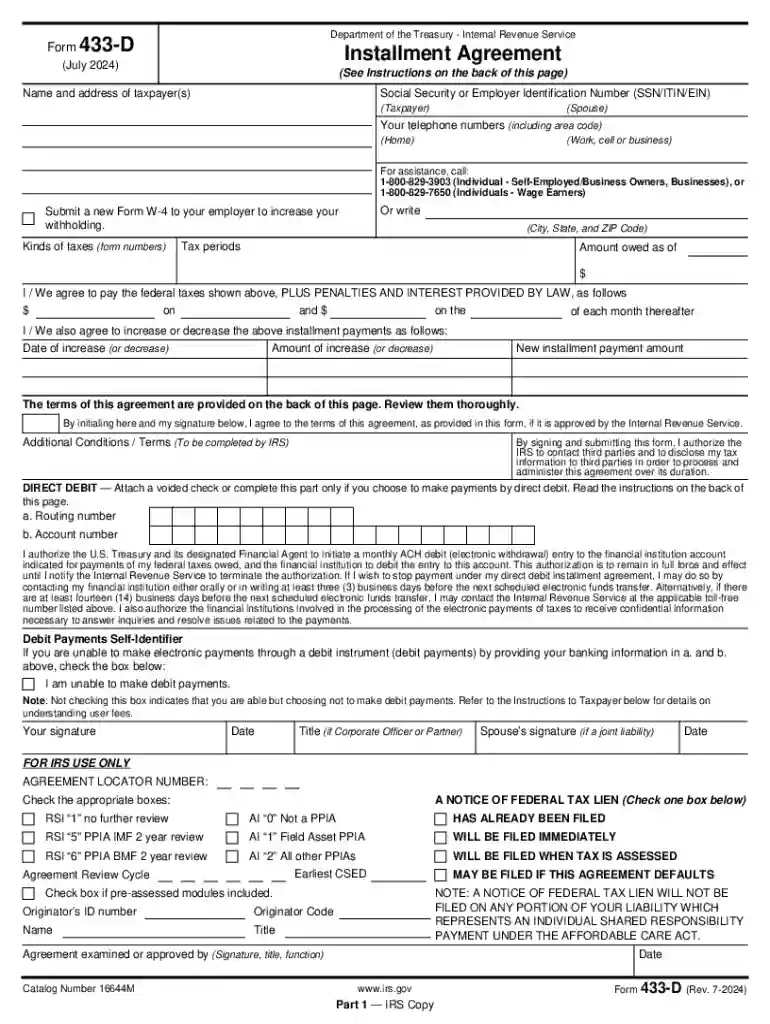
Type text, add images, blackout confidential details, add comments, highlights and more.

Draw your signature, type it, upload its image, or use your mobile device as a signature pad.

Send form 433 d via email, link, or fax. You can also download it, export it or print it out.
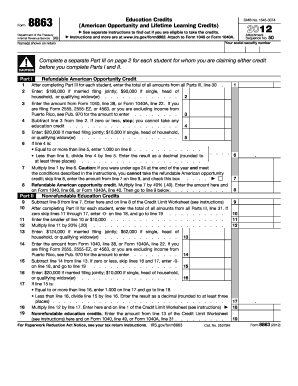
Form 1040 is a standard Internal Revenue Service (IRS) form used by taxpayers in the United States to file an annual income tax return. When this form cannot be processed due to an incorrect Social Security Number (SSN), it means that the SSN provided does not match the records on file with the Social Security Administration. This discrepancy can prevent the IRS from verifying income and tax payments, leading to processing delays or rejection of the form. Ensuring accuracy in the SSN field is essential to avoid complications during tax filing.
To correctly use Form 1040, it is critical to provide accurate personal information, especially the SSN. Here’s how to ensure compliance:
Providing accurate documentation is crucial when filing Form 1040:
The IRS requires that all information on Form 1040 is accurate and consistent with their records. Guidelines emphasize:
Taxpayers must be aware of deadlines related to the Form 1040 submission:
Failure to provide a correct SSN on Form 1040 can result in:
Form 1040 requires accurate SSN information to avoid processing problems and potential penalties. Proper verification and timely correction of errors are essential for compliance.
We've got more versions of the irs form 433 d form. Select the right irs form 433 d version from the list and start editing it straight away!
| Versions | Form popularity | Fillable & printable |
|---|---|---|
| 2024 | 4.9 Satisfied (54 Votes) | |
| 2022 | 4.8 Satisfied (43 Votes) | |
| 2020 | 4.8 Satisfied (53 Votes) | |
| 2018 | 4.4 Satisfied (134 Votes) | |
| 2017 | 4.4 Satisfied (469 Votes) | |
| 2015 | 4.2 Satisfied (56 Votes) | |
| 2013 | 4.3 Satisfied (50 Votes) | |
| 2012 | 4 Satisfied (42 Votes) | |
| 2010 | 4 Satisfied (40 Votes) | |
| 2007 | 4 Satisfied (32 Votes) |
At DocHub, your data security is our priority. We follow HIPAA, SOC2, GDPR, and other standards, so you can work on your documents with confidence.

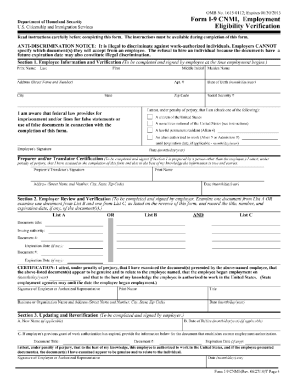

Please allow 16 weeks for Form 1040X to be processed. You may track the status of your amended return at the IRS(opens in new window) website. It can takeRead more
Sep 4, 2025 If the SSN submitted on the original return was incorrect, submit a new return or respond to the math error notice with the correct SSN.


