




01. Edit your iso 9001 internal audit checklist xls online
Type text, add images, blackout confidential details, add comments, highlights and more.

Type text, add images, blackout confidential details, add comments, highlights and more.

Draw your signature, type it, upload its image, or use your mobile device as a signature pad.

Send iso 9001 audit checklist template via email, link, or fax. You can also download it, export it or print it out.
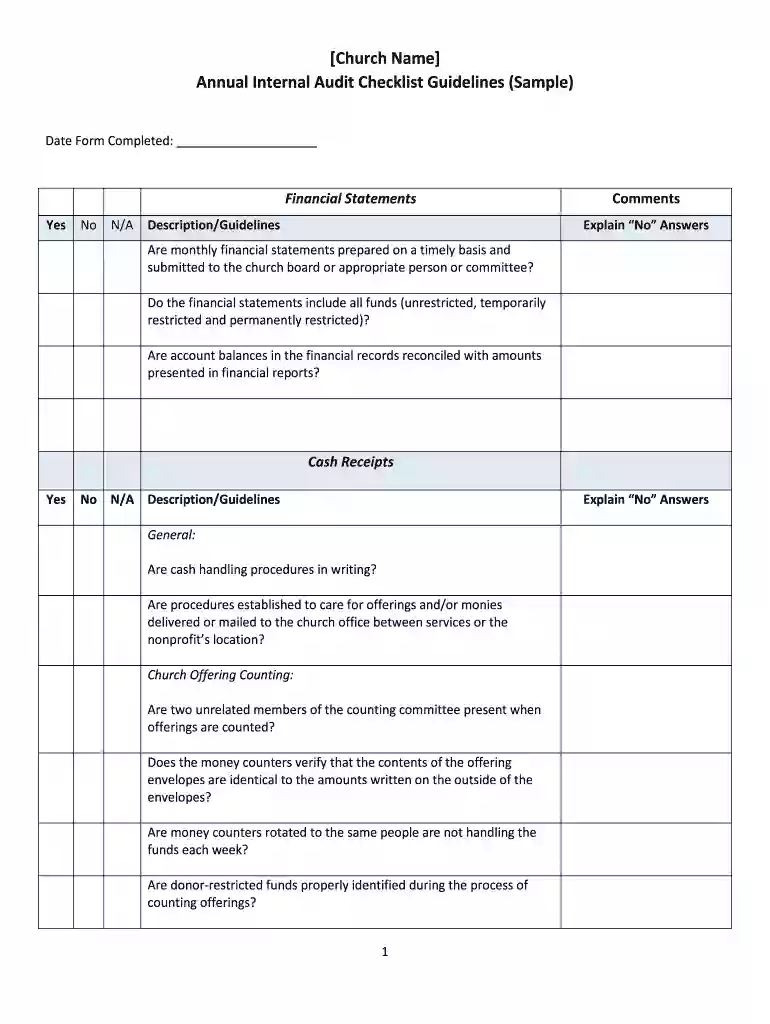
An internal audit checklist is a systematic tool designed to guide auditors in assessing a company's compliance with internal policies and external regulations. It is a comprehensive list of criteria and guidelines used to evaluate the effectiveness and efficiency of an organization's operations, risk management processes, and controls. By utilizing this checklist, auditors can ensure that they cover all critical areas during the audit process, leading to thorough evaluations.
The internal audit checklist typically includes various aspects, such as:
Examples of standard categories within an internal audit checklist may include financial auditing, operational processes, information technology system audits, and compliance audits related to legal and regulatory frameworks.
The internal audit checklist encompasses several key elements crucial for a thorough audit. Each element serves a specific purpose in evaluating various facets of the business operations. Understanding these elements can enhance the effectiveness of the auditing process.
Objective Setting: Clearly defining the objectives of the audit ensures alignment with regulatory requirements and organizational goals.
Scope of Audit: Identifying what will be covered during the audit helps focus efforts on the most critical areas, such as financial statements and operational processes.
Sample Selection: Involves determining what samples of data and processes will be audited to ensure a representative overview of the operations.
Questionnaires and Checklists: Customizable questions that directly relate to each functional area being audited will help auditors gather relevant information efficiently.
Documentation Requirements: Specifies what supporting documents will be necessary during the audit procedure, ensuring that auditors can verify findings against reliable evidence.
Reporting Structure: Clear outline of the reporting process following the audit, including how findings will be communicated to stakeholders.
Each of these elements contributes to a comprehensive evaluation of the organization, ensuring that all areas of concern are addressed systematically.
To effectively complete an internal audit checklist, auditors should follow a series of structured steps. These steps provide a clear workflow that assists in maintaining focus and ensuring accuracy throughout the audit process.
Define the Audit Objectives: Establish clear goals for the audit that align with the organization’s operational and compliance standards.
Gather Necessary Documentation: Collect materials, including policies, financial statements, and previous audit reports that aid in assessment.
Customize the Checklist: Adjust the internal audit checklist to reflect specific operational needs, compliance requirements, and risk factors relevant to the organization.
Conduct Fieldwork: Engage in the actual auditing process, applying the checklist and collecting necessary data through interviews, observations, and review of documents.
Analyze Findings: After data collection, analyze the results to identify strengths, weaknesses, and areas for improvement.
Prepare the Audit Report: Document findings, conclusions, and recommendations in a structured report that clearly communicates results to management.
Follow-up: Establish a process for monitoring the implementation of recommendations and corrective actions from the audit.
These steps provide a systematic framework for conducting internal audits, ensuring that nothing is overlooked during the evaluation.
The internal audit checklist is generally utilized by various stakeholders within and outside an organization. Recognizing who benefits from this tool can help clarify its importance and application across different sectors.
Internal Auditors: They standardize the audit process, ensuring all necessary areas are reviewed consistently and thoroughly.
Compliance Officers: Used to ensure that the organization adheres to laws and regulations relevant to its operations.
Management Teams: Helps organizational leaders identify potential risks and efficiency improvements directly impacting business performance.
External Auditors: May refer to the internal audit checklist to provide context during external audits and assessments.
Regulatory Bodies: Organizations may use the checklist to prepare for external reviews or compliance checks imposed by regulatory authorities.
By understanding the diverse audience for the internal audit checklist, organizations can appreciate its broad applicability and relevance in ensuring sound financial and operational practices.


Several practical examples illustrate how organizations can apply internal audit checklists to enhance their operations and ensure compliance. Each scenario provides insight into specific areas of focus and the benefits of consistent application.
Financial Audit: A manufacturing company may employ an internal audit checklist to verify that financial statements accurately reflect financial performance. They could assess issues such as inventory valuation methods, expense recognition, and compliance with accounting standards.
Operational Efficiency Review: A service-based company can use an internal audit checklist to evaluate the efficiency of their service delivery process. They could create categories to identify bottlenecks, workflow redundancies, and quality control issues, leading to improved service outcomes.
IT Security Audit: Organizations in regulated industries may utilize an internal audit checklist to ensure their IT security protocols are robust. The checklist might include assessments of network security, data protection measures, and compliance with data privacy regulations.
Regulatory Compliance Check: Non-profit organizations may employ an internal audit checklist to evaluate adherence to funding and accounting regulations. This ensures that donor funds are appropriately managed and reported.
Through these examples, organizations can demonstrate the versatility of internal audit checklists across various industries and operational contexts, showcasing their inherent value in maintaining effectiveness and compliance.
Signing documents on a mobile device is fast, easy, and doesn’t require software installation when you have an account with DocHub. Log in from any browser, complete your blank fields with your data, and click on Sign → Create your signature. You can draw your eSignature just as you usually do on paper, add its image to your internal audit checklist for manufacturing company pdf, or type in your name and stylize its look. No matter what option you choose, your documentation will be valid.
It is a no-brainer on a computer or via a mobile phone to complete a iso 9001 2015 internal audit checklist for manufacturing company pdf with DocHub. All you need to do is open any installed browser on your smartphone and proceed to the DocHub website. Once authenticated, add your document and open it in editing mode. Use our toolbar to make your edits and save adjustments. Optionally, keep your document in your files or send it to a recipient immediately.
At DocHub, your data security is our priority. We follow HIPAA, SOC2, GDPR, and other standards, so you can work on your documents with confidence.
Examples are customer complaints, quality control, instrument calibration, checking of consumable materials, staff observations or supervision, test report andRead more
The checklist should be completed by individuals accountable for the particular business process. Most internal control procedures are based on common sense.Read more
Jun 2, 2025 A comprehensive review and update of all the Compleye templates, with focus on increasing efficiency and effectiveness during maintenance.Read more


