
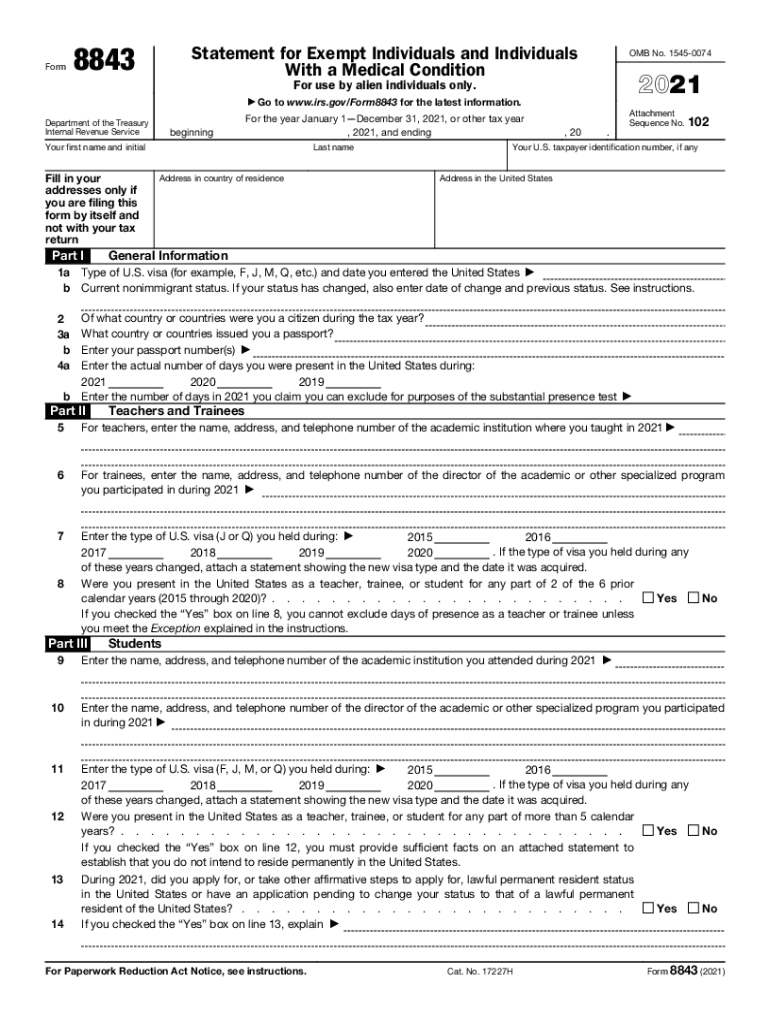







Definition and Purpose of Form 8843
Form 8843, officially titled "Statement for Exempt Individuals and Individuals with a Medical Condition," is a crucial document required by non-resident aliens in the United States to explain their exemption from the substantial presence test. This form is pertinent for those, such as students, teachers, trainees, and professional athletes, who are exempt from counting their days of presence in the U.S. for tax purposes. It includes sections for personal and visa details, allowing the IRS to accurately determine tax responsibilities without risk of misclassification as a resident alien. This form is not just a mere statement but an important declaration to prevent unintended tax liabilities.
Key Elements and Sections
Form 8843 is divided into several sections, each requiring specific information:
- Personal Information: This section asks for details such as name, address, and taxpayer identification number, which are crucial for individual identification.
- Visa Information: Here, filers explain their current visa status, including type and duration, which helps establish their eligibility for exemption.
- Medical Conditions: If applicable, this area allows individuals to describe any health-related circumstances that have affected their U.S. presence.
These elements ensure the form provides comprehensive coverage of an individual's status to facilitate accurate processing by the IRS.
How to Obtain Form 8843
Obtaining Form 8843 is straightforward. It can be downloaded directly from the IRS website, ensuring you have access to the most recent version. Additionally, institutions such as universities often provide this form to international students, simplifying the process considerably. It is essential to use the current tax year's form to avoid submission errors or processing delays. For those unable to access the form online, requesting a physical copy from the IRS or a supportive institution might be necessary.
How to Use Form 8843
Using Form 8843 involves several steps, beginning with gathering all necessary personal and immigration information. The completed form should reflect an accurate account of your time in the U.S. and any applicable exemptions. After completion, it is important to review the form thoroughly for accuracy before submission, which can either be done independently or with the assistance of a tax professional to ensure compliance with IRS stipulations.
Steps to Complete Form 8843
Completing Form 8843 involves a series of detailed steps:
- Gather Documents: Collect necessary documents, including your visa, passport, and any relevant medical records.
- Fill Personal Information: Enter personal data, making sure it matches official documents.
- Complete Visa Details: Specify your visa type and the dates associated with your U.S. stays.
- Address Medical Conditions: Only if applicable, detail any medical conditions impacting your residency status.
- Review and Submit: Double-check all entries for accuracy and completeness before submission.
Attention to detail at each step is crucial to the successful processing of your form.
Importance of Filing Form 8843
Filing Form 8843 is essential for avoiding incorrect classification as a resident under the substantial presence test. Without it, non-residents may become liable for taxes applicable to residents, leading to significant financial implications. Additionally, maintaining transparency with the IRS by filing this form helps preserve one's compliance history, which can be beneficial for any future immigration or tax-related matters.
Filing Deadlines and Important Dates
The filing deadline for Form 8843 generally aligns with the April 15 deadline associated with individual income tax returns. Non-compliance can lead to potential penalties and complications with future immigration processes. Ensuring timely submission is crucial for those intending to maintain good standing with U.S. immigration and tax authorities.
IRS Guidelines for Form 8843
Adherence to IRS guidelines is mandatory when filing Form 8843. These guidelines include specific formats for data input, supplementary documentation requirements, and accurate term usage. Understanding and following these instructions not only prevents errors but also facilitates smoother processing by the IRS. Resources detailing these guidelines are available on the IRS website and through various tax advisory services.
Required Documents for Submission
To complete Form 8843, several documents might be necessary:
- Valid Passport: Needed to verify travel history and personal identification.
- Visa Documentation: Provides proof of legal status and entry to the U.S.
- Medical Records: Needed if claiming a medical-related exemption.
Having these documents on hand ensures a complete and accurate Form 8843 submission, thereby preventing potential delays or issues with the IRS.




