




01. Edit your ca 100 instructions 2021 online
Type text, add images, blackout confidential details, add comments, highlights and more.

Type text, add images, blackout confidential details, add comments, highlights and more.

Draw your signature, type it, upload its image, or use your mobile device as a signature pad.

Send 2021 1120 w via email, link, or fax. You can also download it, export it or print it out.
Form 1120 is the U.S. Corporation Income Tax Return, utilized by corporations to report their income, gains, losses, deductions, credits, and to determine their income tax liability. This form is a critical component for any domestic corporation's compliance with federal tax obligations. By filing Form 1120, corporations disclose their financial activities over the fiscal year to the Internal Revenue Service. The form encompasses various sections and schedules to address different elements of corporate taxation, facilitating comprehensive data collection and accurate tax computation.
Corporations use Form 1120 to report their earnings and calculate federal tax liability accurately. The form captures different types of income, including but not limited to interest, dividends, and gains from property sales. Companies must also report their expenses, such as operating costs, salaries, rents, and interest paid. Also outlined are any special deductions and credits applicable, which help in reducing the overall tax obligation. This systematic reporting ensures compliance with tax regulations and assists in making accurate financial and strategic decisions for upcoming fiscal periods.
This form is predominantly filed by domestic corporations operating within the United States. This includes entities classified as C-corporations, which are subject to federal taxation on their income. Also applicable are for-profit domestic corporations, inactive corporations with no current income, and business entities that are reverting back from S corporation status. C corporations of different sizes, whether publicly traded or privately held, engage with Form 1120 to comply with legal requirements and offer transparency in financial accountability.


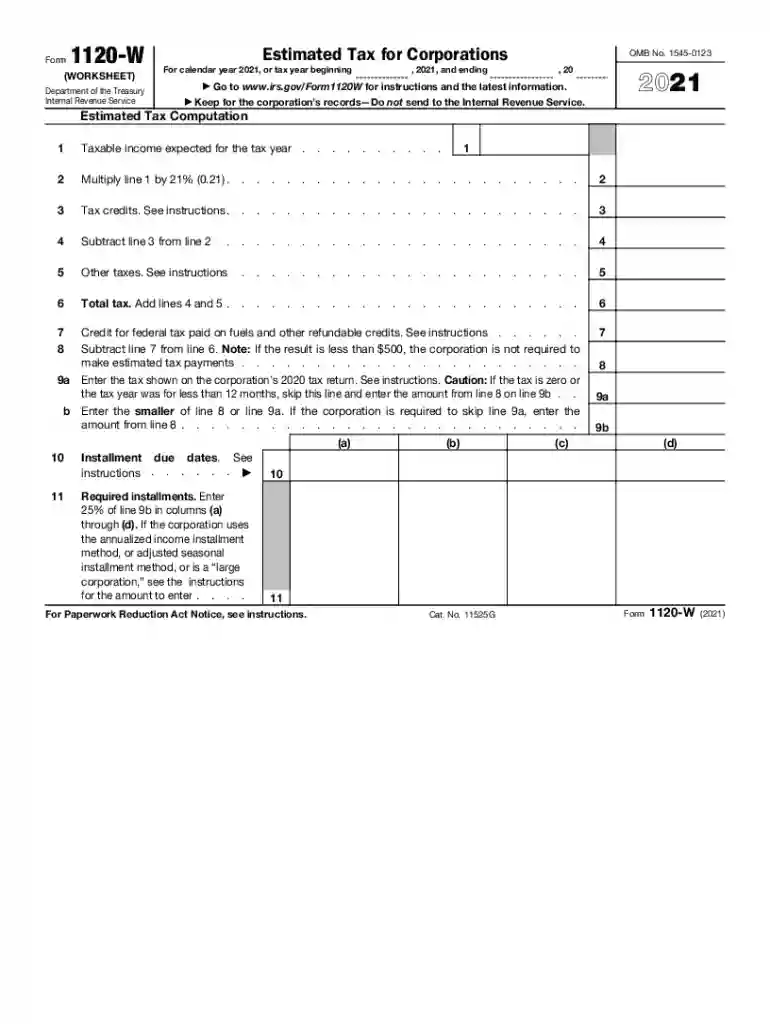
According to IRS guidelines, Form 1120 must be filed by the 15th day of the fourth month after the end of a corporation’s tax year. Corporations must follow all instructions carefully for each component of the form, including specifics about income reporting and applicable deductions. The IRS guidelines also dictate conditions under which estimated tax payments must be made throughout the year, ensuring compliance and reducing potential penalties for underpayment.
For most corporations, the filing deadline for Form 1120 is April 15 following the end of the tax year. If the corporation operates on a fiscal tax year rather than a calendar year, the filing deadline shifts to the 15th day of the fourth month post fiscal year-end. Corporations can apply for an extension if necessary, but this only delays the filing time, not the payment of any taxes due.
Corporations that fail to file Form 1120 by the deadline may face penalties. The standard penalty is 5% of the unpaid tax for each month the return is late, not exceeding 25% of the unpaid total. Failing to pay the tax due by the original filing date, regardless of an extension, may incur additional interest charges and penalties. Negligent or intentional disregard for tax filing requirements can lead to more severe financial consequences and legal repercussions.
We've got more versions of the ca 100 instructions 2021 form. Select the right ca 100 instructions 2021 version from the list and start editing it straight away!
| Versions | Form popularity | Fillable & printable |
|---|---|---|
| 2022 | 4.7 Satisfied (138 Votes) | |
| 2021 | 4.8 Satisfied (971 Votes) | |
| 2020 | 4.2 Satisfied (119 Votes) | |
| 2019 | 4.4 Satisfied (205 Votes) | |
| 2018 | 4.3 Satisfied (62 Votes) | |
| 2017 | 4.4 Satisfied (115 Votes) | |
| 2016 | 4.3 Satisfied (141 Votes) | |
| 2015 | 4 Satisfied (60 Votes) | |
| 2014 | 4.3 Satisfied (67 Votes) | |
| 2013 | 4 Satisfied (51 Votes) | |
| 2012 | 4.2 Satisfied (74 Votes) | |
| 2011 | 4 Satisfied (30 Votes) | |
| 2010 | 4.2 Satisfied (56 Votes) |
At DocHub, your data security is our priority. We follow HIPAA, SOC2, GDPR, and other standards, so you can work on your documents with confidence.
Sep 26, 2025 5. At the end of the tax year, did the corporation: a Own directly 20% or more, or own, directly or indirectly, 50% or more of the total votingRead more
May 18, 2022 Form 1120 (2020). Page 3. Check if the corporation is a member of a controlled group (attach Schedule O (Form 1120)). See instructions. IncomeRead more
Utah statutes include taxable income from federal form 1120-REIT before the net operating loss deduction and the deduction for dividends paid. A Utah deductionRead more


