







Definition and Meaning
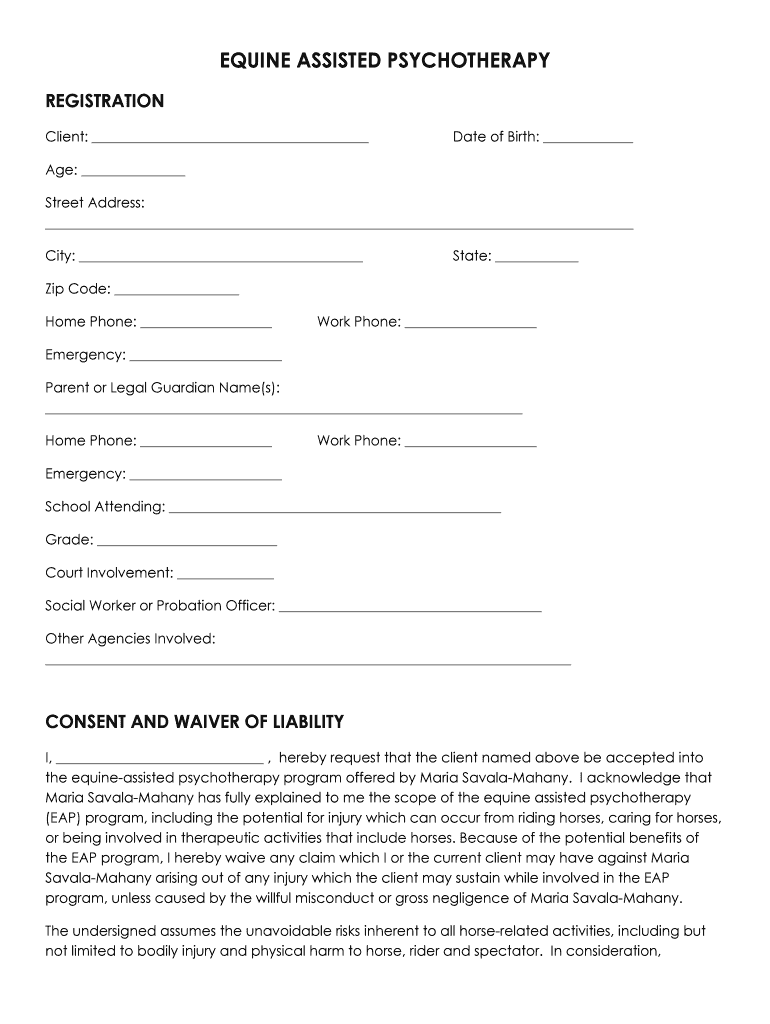
Equine Assisted Psychotherapy (EAP) is a therapeutic approach that involves interactions with horses to help individuals address and improve emotional and psychological well-being. This specific form titled "EQUINE ASSISTED PSYCHOTHERAPY - TherapySites," provides detailed guidelines on registration, consent, and participation in a program led by Maria Savala-Mahany. The form highlights elements such as client information, a waiver of liability, therapist qualifications, and the therapeutic process.
Core Components
- Client Information: Essential for identifying and contacting participants.
- Waiver of Liability: Acknowledges inherent risks in equine activities.
- Therapist Qualifications: Details Maria Savala-Mahany's expertise and approach.
Steps to Complete the EQUINE ASSISTED PSYCHOTHERAPY - TherapySites
Completing this form involves several steps to ensure all legal and procedural requirements are met. These steps guide participants through the vital areas necessary for enrollment and ongoing participation in the EAP program.
Step-by-Step Process
- Personal Details: Fill in essential personal information, including name, address, and contact details.
- Consent and Permissions: Read and acknowledge consent sections, ensuring understanding of participation requirements and program nature.
- Review Waiver: Carefully review and sign the waiver of liability to recognize the risks involved with horse-related activities.
- Agreement to Policies: Agree to the detailed appointment and fee policies outlined within the form.
Legal Use of the EQUINE ASSISTED PSYCHOTHERAPY - TherapySites
Use of this form is governed by specific legal protocols that ensure the protection of both participants and providers within the EAP framework. Understanding these legal implications is crucial for compliance and ethical practice.
Compliance Requirements
- Informed Consent: Participants must fully understand their involvement and associated risks.
- Confidentiality: Respect for privacy and data protection as outlined in the form's policies.
- Therapist Credentials: Verification of the therapist's qualifications and therapeutic approach.
Important Terms Related to EQUINE ASSISTED PSYCHOTHERAPY - TherapySites
Understanding specific terms used in this form aids in accurate completion and comprehension of roles, responsibilities, and expectations in the EAP program.
Key Terminology
- Informed Consent: An agreement detailing understanding of therapy nature and risks.
- Waiver of Liability: A legal acknowledgment of risks and release of liability for the therapy provider.
- Therapeutic Approach: Specific methods and practices employed by the therapist.
Key Elements of the EQUINE ASSISTED PSYCHOTHERAPY - TherapySites
The form is comprehensive and includes critical elements that guide both participants and therapists through the EAP process, ensuring all necessary details are captured and understood.
Essential Details
- Client Background: Information about the participant's mental health background and therapy goals.
- Appointment Policies: Detailed scheduling and attendance requirements, including cancellation policies.
- Fee Structure: Detailed information on the cost of services and payment methods accepted.
Who Typically Uses the EQUINE ASSISTED PSYCHOTHERAPY - TherapySites
Understanding the demographic that benefits from this form enhances its application and highlights those who can effectively utilize the EAP program.


Target Audience
- Individuals Seeking Therapy: Those exploring alternative therapeutic methods.
- Mental Health Professionals: Therapists and counselors integrating equine therapy in their practices.
- Educational Institutions: Schools seeking to incorporate EAP for student support.
Examples of Using the EQUINE ASSISTED PSYCHOTHERAPY - TherapySites
The form provides a structure for various scenarios where equine therapy is applicable, illustrating its flexibility and applicability in diverse settings.
Practical Use Cases
- Individual Counseling Sessions: Personal therapy sessions focusing on emotional regulation and self-awareness.
- Team Building Exercises: Using EAP principles to strengthen corporate team dynamics and cooperation.
- Therapeutic Groups: Small group therapy sessions aimed at collaborative healing and support.
State-Specific Rules for EQUINE ASSISTED PSYCHOTHERAPY - TherapySites
Regulations and practices may vary by state, impacting the administration and participation in EAP programs. Being aware of these differences ensures adherence to local laws and guidelines.
Regional Differences
- State Licensing: Variations in therapist licensing requirements and certifications for EAP practice.
- Insurance Regulations: Differences in liability insurance coverage across states.
- Therapy Regulations: State-specific laws governing alternative therapies and client protection.
By exploring these aspects, individuals and professionals can effectively engage with the "EQUINE ASSISTED PSYCHOTHERAPY - TherapySites" form, ensuring a comprehensive understanding and adherence to its guidelines.




