
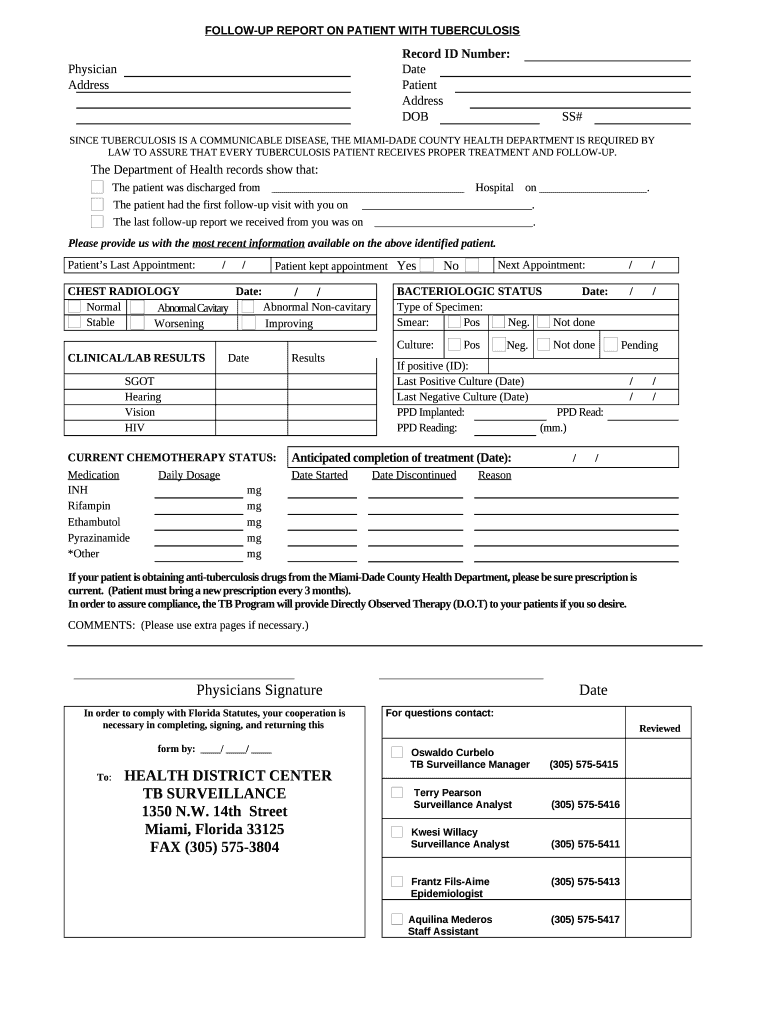







Definition and Purpose of the Follow-Up Report on Patient with Tuberculosis
The Follow-Up Report on Patient with Tuberculosis is a structured document aimed at tracking the treatment and monitoring of individuals diagnosed with tuberculosis. This report is essential for healthcare professionals to ensure compliance with Miami-Dade County Health Department regulations. The form documents clinical evaluations, lab results, and treatment adherence, essential components in controlling the spread of this highly communicable disease.
How to Complete the Follow-Up Report on Patient with Tuberculosis
To accurately fill out the follow-up report, healthcare providers should:
- Record Patient Details: Begin with patient identification information, including full name, date of birth, and patient ID.
- Document Clinical Results: Include detailed laboratory findings, such as chest X-rays and sputum test results.
- Update on Treatment Progress: Note current chemotherapy regimens and any changes in medication.
- Assess Compliance: Evaluate and record the patient's adherence to prescribed treatment protocols.
- Schedule Future Appointments: Plan and document future follow-up visits to ensure continuous monitoring.
Key Elements to Include in the Report
Several crucial components must be present in the follow-up report to ensure it is both comprehensive and effective:
- Patient Information: Full contact details and demographics.
- Clinical and Laboratory Results: Up-to-date tests, diagnostics, and evaluations.
- Current Treatment Details: Information on medication types and doses.
- Compliance and Education: Notes on patient’s understanding and adherence.
Why Timely Follow-Up Is Essential
Timely follow-ups are vital for controlling tuberculosis spread and preventing recurrence. Regular monitoring:
- Ensures Treatment Effectiveness: Adjustments can be made promptly if the current regimen is ineffective.
- Prevents Disease Spread: Continuous evaluation helps in managing contagion risk.
- Promotes Patient Health: Adherence to therapy results in a higher chance of complete recovery.
Who Uses the Follow-Up Report
The follow-up report is primarily used by:
- Healthcare Providers: Physicians and nurses who are overseeing a patient's tuberculosis treatment.
- Public Health Officials: Individuals monitoring the larger-scale control of tuberculosis.
- Compliance Officers: Ensuring adherence to public health regulations.
Legal and Compliance Considerations
In the U.S., particularly within the jurisdiction of Miami-Dade County, these reports are essential to compliance with local health laws. Healthcare providers must:
- Maintain Accurate Records: Complete and precise reporting is mandated by health regulations.
- Respect Patient Confidentiality: Ensure all reports are kept secure and confidential.
Common Scenarios for Submission
- Initial Diagnosis: When a patient is first diagnosed, initiating the report is crucial.
- Routine Monitoring: Regular updates ensure continued compliance and monitoring.
- Completion of Treatment: Final reports document the end of chemotherapy and patient recovery.
Examples of Effective Report Use
Real-world scenarios illustrate the report’s importance:
- Successful Public Health Campaigns: Reports contribute data for health initiatives aiming to reduce tuberculosis incidence.
- Enhancing Patient Outcomes: Timely updates lead to better-adjusted treatment plans and improved recovery rates.
Software Compatibility and Accessibility
Digital versions of the report can be managed through platforms like DocHub. Benefits include:
- Ease of Access: Online completion and submission streamline the reporting process.
- Enhanced Collaboration: Multiple healthcare providers can contribute to and update the report in real time.
- Secure Data Handling: Digital encryption helps protect sensitive patient information.
This comprehensive guide aids healthcare providers in effectively utilizing the Follow-Up Report on Patient with Tuberculosis, ensuring optimal patient care and adherence to health regulations.




