
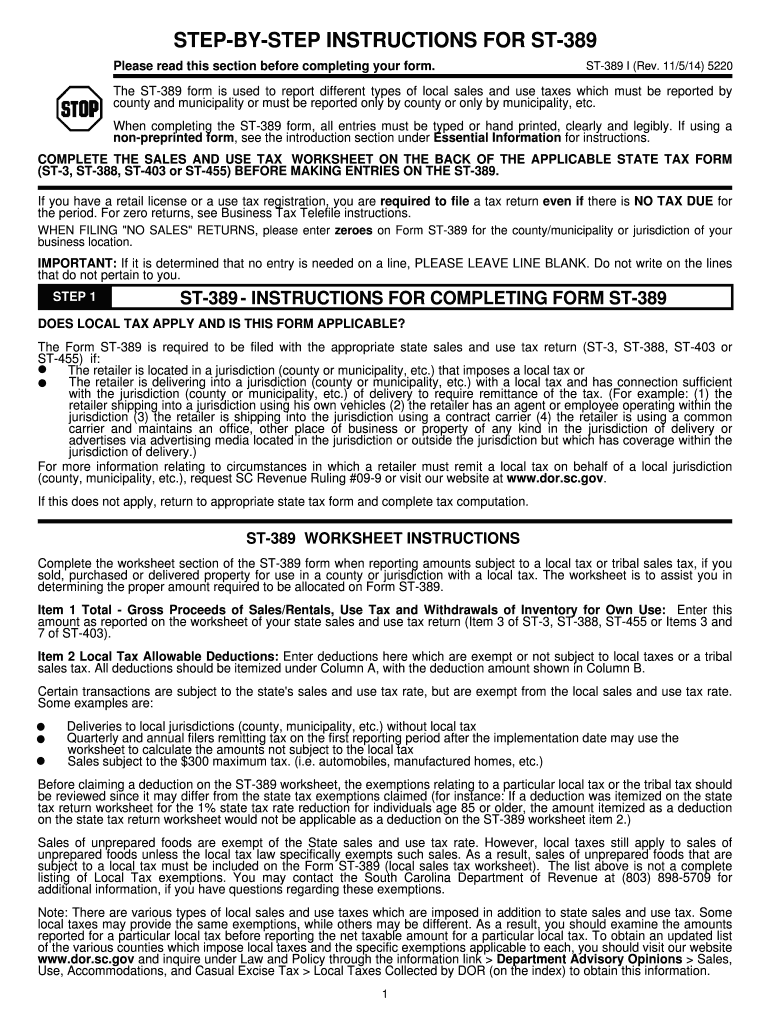







Definition and Purpose of the SC ST-389 Form
The SC ST-389 form is utilized for reporting local sales and use taxes by county and municipality in South Carolina. This form is integral for businesses and individuals that need to accurately document their sales transactions within specific locales. The primary purpose of the SC ST-389 is to ensure that all local taxes applicable to sales or use in different regions within the state are accurately reported. As such, the form serves a crucial role in maintaining compliance with South Carolina's tax regulations.
How to Obtain the SC ST-389 Form
Obtaining the SC ST-389 form is straightforward and can be done through several methods. The form is available online through the South Carolina Department of Revenue’s official website. Here, users can download the form in PDF format for print or electronic completion. Additionally, physical copies of the form may be obtained by visiting the department's offices in person or by requesting a mailed copy via their customer service hotline.
Steps to Complete the SC ST-389 Form
-
Gather Necessary Information: Start by collecting all relevant sales data, including sales amounts, tax rates, and any deductions applicable to your transactions.
-
Complete the Sales and Use Tax Worksheet: Follow the instructions on the worksheet to calculate the total taxable amounts for each municipality.
-
Enter Taxable Sales Data: Input the required data in the designated fields, ensuring accurate representation of your sales per county and municipality.
-
Deduction Entries: Carefully document any allowable deductions and ensure these are recorded in the appropriate sections of the form.
-
Calculate Total Local Taxes: Follow guidelines to determine the total local taxes due based on the entered sales information and deductions.
-
Review and Verify Entries: Cross-check all entries for accuracy and completeness. Correct any discrepancies before submission.
Key Elements of the SC ST-389 Form
- Taxpayer Information: This section requires basic details like the taxpayer's name, address, and identification number.
- Sales and Deductions: Clear fields for reporting total sales and accounting for allowable deductions.
- Municipal Tax Details: A breakdown of tax data per municipality to facilitate accurate local tax reporting.
- Signature Line: The form must be signed by an authorized representative to validate the submission.
Who Typically Uses the SC ST-389 Form
The SC ST-389 form is primarily used by businesses and individuals who sell goods within South Carolina that are subject to local sales or use tax. This includes:
- Retailers operating brick-and-mortar stores within various counties.
- Online Merchants who deliver goods to different locales in South Carolina.
- Service Providers whose services are subject to these taxes.


Legal Use of the SC ST-389 Form
Completing and submitting the SC ST-389 form is not merely procedural but a legal requirement for eligible taxpayers in South Carolina. The form ensures compliance with local tax laws and regulations. Failure to accurately report sales and use taxes can result in penalties, including fines and interest on overdue amounts. Therefore, adherence to form specifications and deadlines is legally essential.
Penalties for Non-Compliance
Non-compliance with the filing requirements for the SC ST-389 can result in significant penalties. These may include:
- Late Filing Penalties: If the form is not filed by the due date, penalties are assessed based on the amount of tax due.
- Interest Charges: Interest on unpaid taxes accumulates from the deadline until the taxes are fully paid.
- Audit Risks: Incorrect or incomplete submissions may increase the likelihood of a tax audit.
Required Documents for Submission
To complete and submit the SC ST-389 form accurately, certain documents are needed:
- Sales Records: Detailed accounts of all sales transactions subject to local taxes.
- Deductions Documentation: Receipts or records supporting any deductions claimed.
- Previous Tax Filings: Prior submissions may be useful for reference and verification.
Submission Methods for the SC ST-389 Form
The SC ST-389 form can be submitted through various methods:
- Online Submission: This is often the most efficient method and involves completing and submitting the form via the South Carolina Department of Revenue's online portal.
- Mail: Completed forms can also be sent through traditional mail to the department’s specified address.
- In-Person: Direct submission can be done at local Department of Revenue offices, which can be advantageous for immediate assistance or verification.
Digital vs. Paper Version
Taxpayers have the option to complete the SC ST-389 form in digital or paper format:
- Digital Versions: Allow for electronic completion, ease of corrections, and often provide immediate submission confirmation.
- Paper Versions: Suitable for individuals who prefer physical documentation and may be necessary for those without reliable internet access.
Examples of Using the SC ST-389 Form
Consider a retail store located in multiple municipalities within South Carolina. Each location requires the retailer to complete the SC ST-389 form to account for local sales taxes separately. By consolidating sales data and completing the form accurately, the retailer ensures compliance and avoids penalties.
State-Specific Rules for the SC ST-389 Form
The SC ST-389 form must adhere to rules unique to South Carolina’s tax legislation:
- Local Tax Rates: These may vary by municipality, necessitating precise calculation for each location.
- Filing Deadlines: South Carolina imposes specific filing deadlines that must be adhered to avoid late penalties.
- Acceptable Deductions: Only certain deductions are permissible and must align with state regulations.
Understanding these specifics ensures correct and lawful reporting.


