







Definition & Meaning
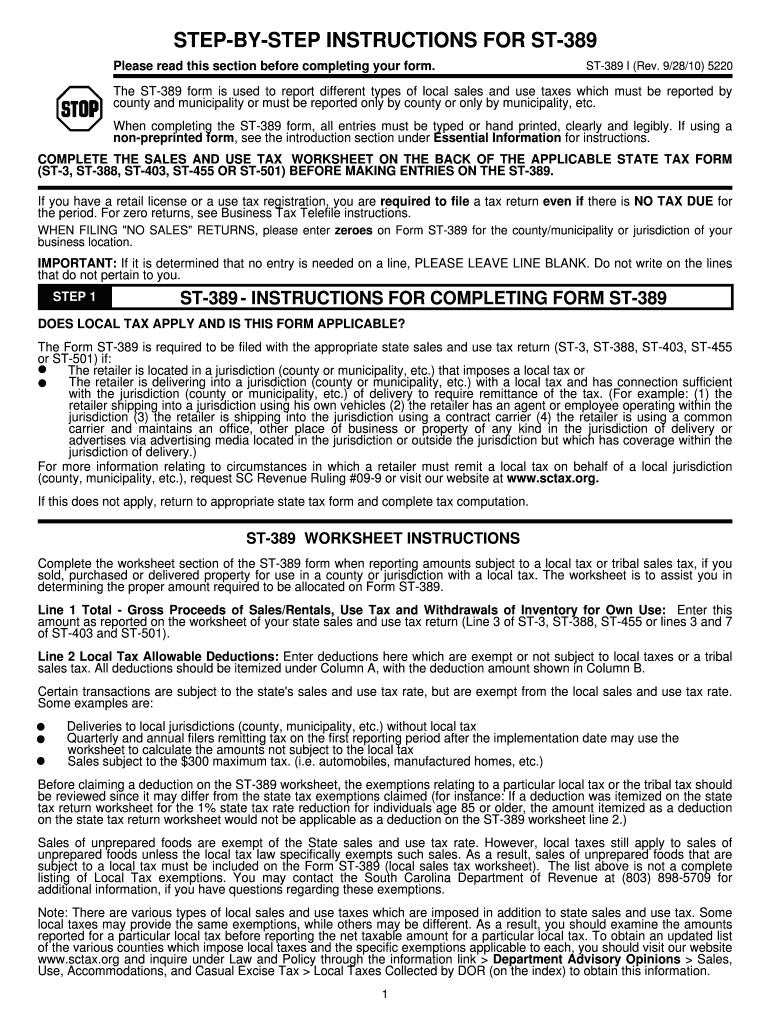
The SC ST-389 form, officially known as the "State Sales and Use Tax Return," is a critical tax document used in South Carolina. It facilitates the reporting of local sales and use taxes by county and municipality. Businesses operating within South Carolina use this form to ensure they adhere to state and local tax obligations, enabling the calculation, collection, and remittance of the correct amount of taxes to the respective authorities.
How to Use the SC ST Form
To use the SC ST form effectively, it's essential to gather complete records of sales transactions conducted within different municipalities. Businesses need to detail gross sales receipts, taxable sales, and applicable exemptions. Using these figures, accurate tax calculations must be made according to the rates specified for each jurisdiction. The form should be filled out meticulously, ensuring accuracy to prevent any possible penalties for errors or non-compliance.
Steps to Complete the SC ST Form
- Gather Sales Data: Compile all transaction records for the reporting period.
- Determine Tax Jurisdictions: Identify the counties and municipalities where sales were made.
- Calculate Taxable Sales: Subtract exempt sales from total sales to determine the taxable amount.
- Apply Correct Tax Rates: Use the specified tax rates for each jurisdiction to compute the tax due.
- Total the Taxes: Add all local taxes to arrive at the total tax liability.
- Complete Form Fields: Enter the required details accurately in the corresponding sections of the form.
- Review and Verify: Double-check entries for any errors or omissions.
- Submit the Form: File the completed form as per the specified submission methods.
Who Typically Uses the SC ST Form
The SC ST-389 form is primarily used by business owners and operators in South Carolina who are responsible for collecting and remitting sales and use taxes. This includes retail establishments, service providers, and any other entities engaging in transactions subject to sales tax within the state. Tax preparers and accountants who assist businesses with tax compliance also frequently interact with this form.


State-Specific Rules for the SC ST Form
South Carolina imposes various tax rates that can differ across counties and municipalities, necessitating familiarity with local tax regulations. Each jurisdiction may have specific exemptions, like those for certain goods or services, which must be correctly applied. Understanding these distinctions is crucial for correctly completing the SC ST-389 form and aligning with the state's compliance requirements.
Key Elements of the SC ST Form
- Taxpayer Information: Includes business name, address, and tax identification number.
- Sales Data: Detailed recording of gross sales, exempt sales, and taxable sales.
- Jurisdiction Codes: Specific codes related to each county or municipality's tax regulations.
- Computed Taxes: Accurate calculation of taxes due for each jurisdiction.
- Declaration: Authorized signature confirming the accuracy and completeness of the form.
Penalties for Non-Compliance
Failing to file the SC ST-389 form correctly or on time can result in significant penalties. These may include fines for late submissions or misreported sales data, as well as interest charges on unpaid taxes. In extreme cases, persistent non-compliance could lead to audits or legal actions by state tax authorities.
Filing Deadlines / Important Dates
Filing deadlines for the SC ST-389 form are typically aligned with South Carolina's tax filing calendar, often requiring monthly or quarterly submissions depending on the business size and activity level. Businesses must be attentive to these dates to avoid late filing penalties and ensure timely compliance with their tax obligations. Staying informed about any changes to deadlines is also essential.
Required Documents
To complete the SC ST-389 form accurately, businesses need access to comprehensive sales records, exemption certificates where applicable, and any prior filings that can aid in cross-referencing and verification. Maintaining organized records ensures efficient form completion and reduces the risk of errors.
Form Submission Methods
Businesses can submit the SC ST-389 form via different methods, including online filing through the state's electronic services, mail submissions, or in-person delivery to designated tax offices. Online submission is often preferred due to its convenience and immediate confirmation of receipt.


