




01. Edit your form online
Type text, add images, blackout confidential details, add comments, highlights and more.

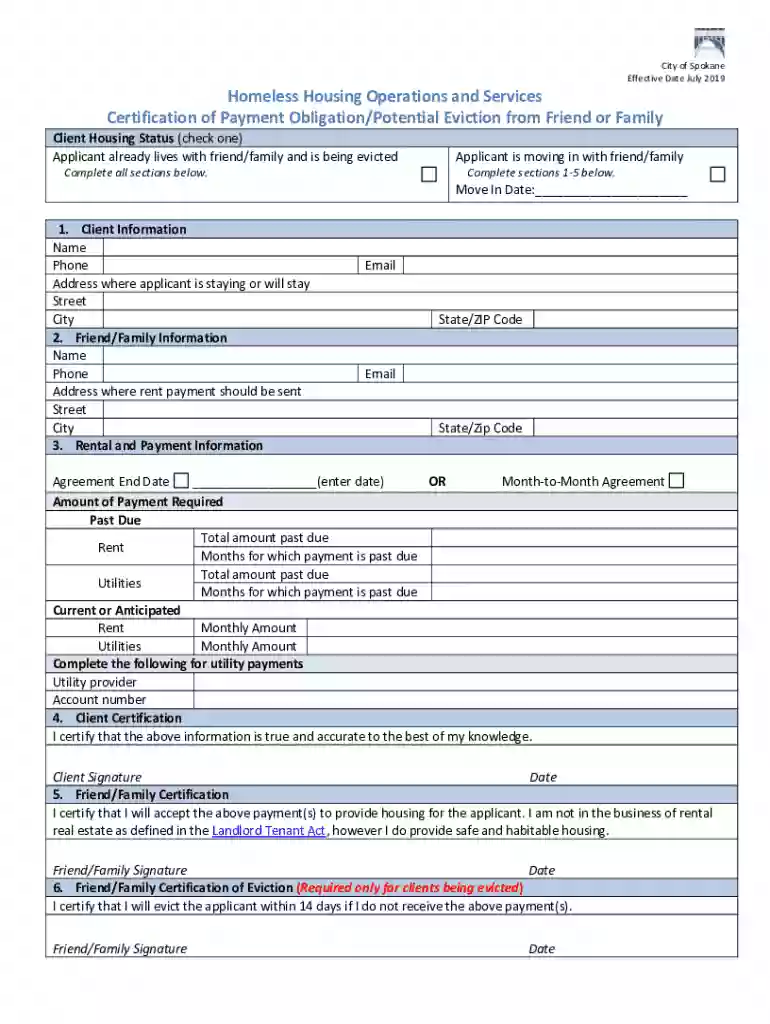
Type text, add images, blackout confidential details, add comments, highlights and more.

Draw your signature, type it, upload its image, or use your mobile device as a signature pad.

Send it via email, link, or fax. You can also download it, export it or print it out.
The "Utility Shutoff Moratorium Ends On Sept 30 - City of Spokane" refers to the conclusion of a temporary prohibition on utility service disconnections for non-payment by utility companies in Spokane. This measure, often enacted during emergencies such as the COVID-19 pandemic, aims to protect residents from losing essential services like electricity and water when they are unable to pay their bills. Its ending signals that utility providers can resume standard disconnection practices.
Understanding the utility shutoff moratorium's role is crucial for residents who may have relied on this protection during financial hardships. It ensured access to essential utilities during times of crisis, allowing households to maintain stability. The end of the moratorium requires affected individuals to seek financial assistance or payment plans to avoid disconnection.
The moratorium's primary components included various regulations that utility providers had to follow. Knowing these elements helps residents understand what protections were in place and what changes to expect.
The moratorium was a legal measure enacted by municipal or state authorities to address public health and economic stability. It was not open to personal interpretation but followed legal stipulations.
As the moratorium ends, residents should prepare for the transition to regular utility billing and payment requirements. Following these steps can help manage the change smoothly.
Understanding Spokane-specific regulations around utility services can impact how residents respond to the moratorium's end. Local policies may provide additional support or guidelines.
The moratorium primarily supported households and individuals facing economic hardships, but its scope also extended to small businesses affected by crises.


Failure to adhere to the terms of the utility shutoff moratorium, whether by individuals or utility companies, could result in consequences determined by local regulations.
Although the moratorium itself does not require an application, residents seeking assistance due to its end must navigate specific application processes for help.
Proficiency in these related terms can enrich understanding of the moratorium's implications and inform future interactions with utility providers.
Practical scenarios where the moratorium played a key role can illustrate the real-world impact it had on residents' lives.
By understanding the various aspects and implications of the utility shutoff moratorium, Spokane residents can better manage their utility services and plan for a smooth transition following its conclusion.
We've got more versions of the Utility Shutoff Moratorium Ends On Sept 30 - City of Spokane form. Select the right Utility Shutoff Moratorium Ends On Sept 30 - City of Spokane version from the list and start editing it straight away!
| Versions | Form popularity | Fillable & printable |
|---|---|---|
| 2025 | 4 Satisfied (34 Votes) | |
| 2025 | 4.8 Satisfied (31 Votes) | |
| 2025 | 4.3 Satisfied (34 Votes) | |
| 2025 | 4.2 Satisfied (34 Votes) | |
| 2025 | 4.6 Satisfied (55 Votes) | |
| 2025 | 4.5 Satisfied (44 Votes) | |
| 2025 | 4.2 Satisfied (37 Votes) | |
| 2025 | 4.7 Satisfied (34 Votes) | |
| 2024 | 4.3 Satisfied (21 Votes) | |
| 2024 | 4.6 Satisfied (51 Votes) | |
| 2024 | 4.5 Satisfied (23 Votes) | |
| 2024 | 4.8 Satisfied (29 Votes) | |
| 2024 | 4.1 Satisfied (28 Votes) | |
| 2024 | 4.9 Satisfied (51 Votes) | |
| 2024 | 4.4 Satisfied (31 Votes) |
At DocHub, your data security is our priority. We follow HIPAA, SOC2, GDPR, and other standards, so you can work on your documents with confidence.
Sep 30, 2021 The proclamation prohibited charging late fees until September 30, 2021. The guidance on customer assistance programs states that utilities, at
11 The state legislature, focused on the short-term local coal industry, has taken steps as far as introducing bills to impose a. reverse-Renewable Portfolio


