







Definition & Meaning
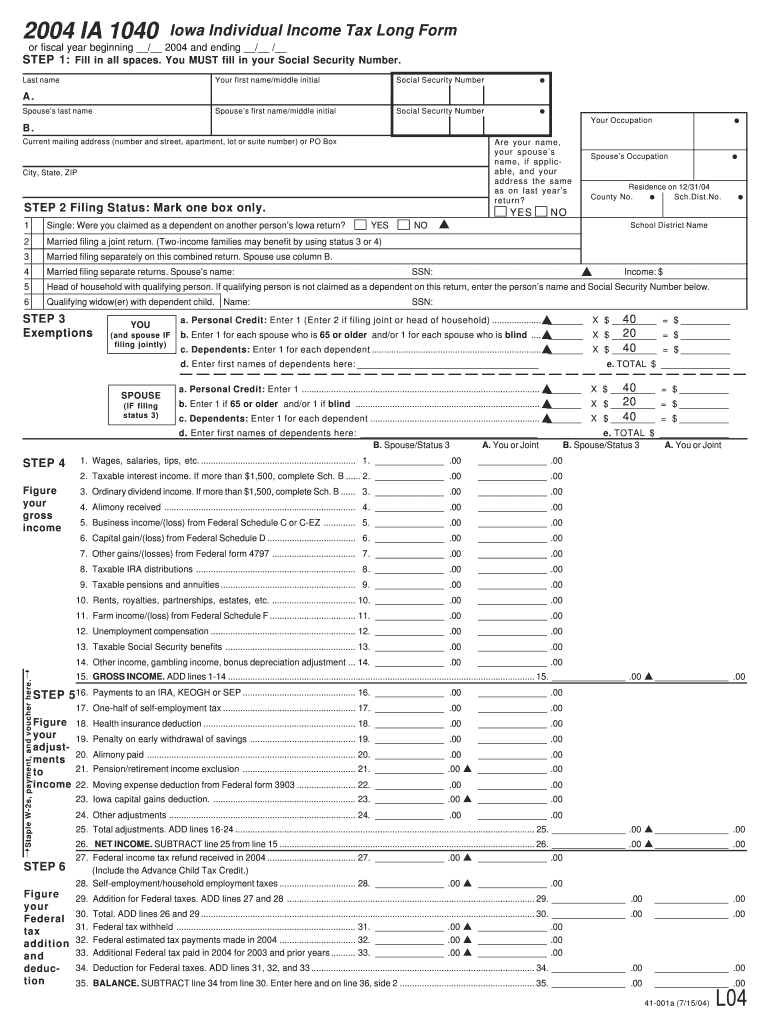
The 2004 Iowa Individual Income Tax Long Form, also known as IA 1040, is used by Iowa residents to accurately report their income, deductions, and credits for the 2004 tax year. This comprehensive document collects detailed financial data to determine taxable income and calculate either the final tax liability or refund amount. It plays a crucial role in ensuring residents comply with state income tax obligations by documenting important information such as filing status, personal information, income sources, exemptions, and tax credits.
How to Use the Iowa Tax Forms 2004
To correctly use the 2004 Iowa tax forms, taxpayers should follow a systematic approach:
- Gather Required Documents: Collect financial statements, W-2s, 1099 forms, and other relevant financial records.
- Fill Personal Information: Include personal details like name, address, Social Security Number, and tax filing status.
- Report Income Sources: Accurately list earnings from wages, investments, rental properties, and other income streams.
- Claim Deductions and Credits: Identify applicable exemptions, deductions, and credits to reduce taxable income.
- Calculate Tax Liability: Use the tax tables available with the form to compute payable taxes or potential refunds.
- Review and Submit: Double-check all information for accuracy and completeness before submission.
Utilizing organized documentation and understanding form instructions are critical steps in successfully filing your tax return.
How to Obtain the Iowa Tax Forms 2004
Obtaining the 2004 Iowa tax forms can be done through multiple avenues:
- Online Access: Search the Iowa Department of Revenue's official website for downloadable and printable forms.
- Local Libraries: Some libraries may carry physical copies of tax forms during the tax season.
- Local Tax Offices: Contact or visit local tax offices for physical copies or inquiries about the IA 1040.
- Tax Assistance Programs: Seek support from tax assistance programs or tax professionals who might provide necessary forms and instructions.
Ensure the authenticity and correctness of the forms by sourcing them from legitimate providers.
Steps to Complete the Iowa Tax Forms 2004
Completing the Iowa tax forms involves a step-by-step method:
- Identify Filing Status: Choose the appropriate option (single, married filing jointly, etc.).
- Enter Personal Data: Include all necessary personal information.
- Report Total Income: Sum up all sources of income and enter them in the designated sections.
- Apply Deductions/Credits: Carefully apply any eligible state deductions and credits to reduce the total tax burden.
- Calculate Adjusted Gross Income: After entering additional deductions, calculate the adjusted gross income.
- Determine Tax Owed or Refund: Use calculations to determine the final amount payable or the refund owed.
- Complete Signature Section: Sign and date the form to affirm the accuracy of information provided.
- Submit the Form: Send completed forms to the appropriate address, either electronically or by mail, ensuring they are postmarked by the deadline.
Each section must be carefully reviewed to avoid errors that could delay processing.
Key Elements of the Iowa Tax Forms 2004
Key components within the 2004 IA 1040 include:
- Identification Sections: Captures taxpayer information and elected filing status.
- Income Reporting Sections: Details about different types of income earned throughout the year.
- Adjustments and Deductions: Lists eligible adjustments such as student loan interest and tuition fees.
- Tax Credit Area: Where applicable credits are detailed to offset the total tax bill.
- Tax Calculation Table: A guide to computing the tax owed based on the adjusted income level.
- Refund and Payment Instructions: Information on how to handle owed taxes or receive refunds.
Each section requires specific details and calculations to accurately reflect financial situations.
Filing Deadlines / Important Dates
For the 2004 tax year, the Iowa tax forms were required to be filed by May 2, 2005. Filing extensions could be requested under specific conditions, usually by submitting a formal application to both the state and federal tax authorities. Missing the deadline without an approved extension can lead to penalties or interest on any unpaid tax amounts. Timely submission is essential to avoid late fees and ensure compliance with state tax laws.
Required Documents
Preparation for completing the IA 1040 necessitates gathering crucial documents:
- W-2 Forms: For reporting wages and salaries from employment.
- 1099 Forms: Detailing income from freelancing, investments, or independent contracting.
- Previous Year’s Tax Returns: Useful for reference and continuity in tax reporting.
- Investment Statements: Any documentation related to dividends, interest, and capital gains.
- Deduction Documentation: Proof of deductible expenses like mortgage interest, property taxes, and charitable contributions.
Accurate financial records enhance the precision of tax form entries and overall processing efficiency.
Form Submission Methods (Online / Mail / In-Person)
Taxpayers can choose from multiple submission methods for the 2004 IA 1040:
- Online Filing: Utilizing state-endorsed electronic filing systems to submit completed documents.
- Mail: Sending physical forms to the designated state tax office address before the deadline.
- In-Person Submission: Delivering forms directly to local tax office locations for validation and submission.
Each method has unique advantages, with electronic submissions often guaranteeing faster processing times.




