






Definition & Meaning
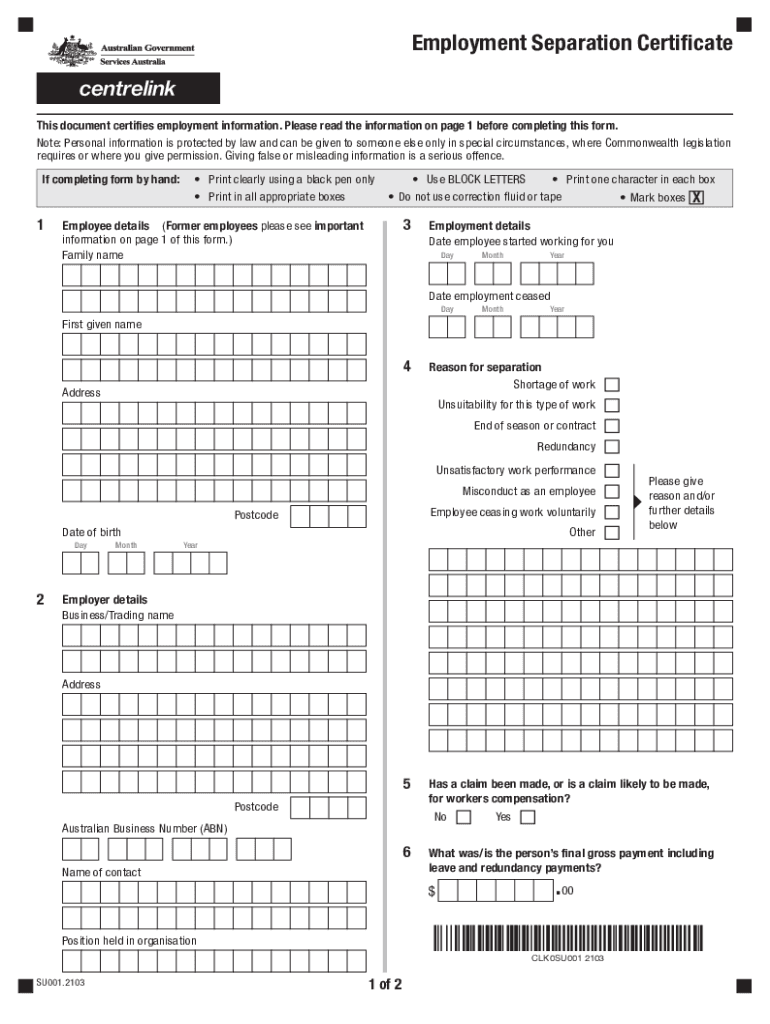
The Employment Separation Certificate serves as a crucial document for former employees seeking to claim income support payments from Centrelink. This form provides essential information about the termination of employment, such as the reason for separation, the last working day, and the final payment details. Employers are responsible for completing and issuing this certificate upon an employee's departure. Aside from serving as proof of employment status, the separation certificate facilitates the assessment process for government assistance.
How to Obtain the Separation Certificate
Obtaining a separation certificate involves a straightforward process primarily initiated by the employee. Once employment is terminated, the former employee should request the certificate from their employer. Employers are usually obligated to provide the document promptly. While some organizations may have predefined procedures for this request, it's always advisable for the employee to make a formal written request if one doesn't exist. The certificate is typically delivered either electronically or in paper form, depending on the company's practices and the recipient's preference.
Steps to Complete the Separation Certificate
- Gather Necessary Information: Before completing the certificate, employers must collect relevant data, including the employee's personal details, employment duration, and final payout information.
- Complete Employer Details: This section requires the employer to fill out their business information, such as the company name, address, and contact numbers.
- Employee Specifics: Enter the former employee's name, job title, and employment details, including start and end dates.
- Separation Details: Clearly state the reason for employment termination, whether it was voluntary or involuntary.
- Income Details: Include information about the last payment, any outstanding pay, and note details of unused leave entitlements.
- Employer Declaration: The form concludes with a section for employer authorization, requiring a signature and date.
Who Typically Uses the Separation Certificate
The primary users of the separation certificate are former employees and employers. Employees utilize the document to facilitate claims for income support from government agencies, assuring these bodies of the individual's unemployment status. Employers, on the other hand, use the certificate to document and formalize the termination of an employee's contract, maintaining compliance with legal obligations. Government bodies like Centrelink also rely on this certificate to verify benefit eligibility.

Legal Use of the Separation Certificate
The separation certificate is a legally recognized document primarily employed in the context of welfare support. It confirms the end of an employment relationship and helps government agencies determine an individual's eligibility for specific financial benefits. Legal compliance requires employers to provide accurate and timely information. Failure to supply this document can result in legal penalties and hinder the former employee's capacity to secure financial assistance.
Key Elements of the Separation Certificate
- Employer and Employee Information: Basic details such as names, addresses, and contact numbers.
- Employment Dates: Start and end dates to verify employment duration.
- Reason for Separation: Explanation of the employment termination, whether due to redundancy, resignation, or other factors.
- Final Payments and Entitlements: Detailed final financial settlements, including wages, leave, and any severance payments.
- Signature and Date: Official endorsement from the employer confirming the accuracy of the provided information.
Form Submission Methods
The submission of the separation certificate can occur through various channels:
- Online Submission: Many modern systems allow for the upload of electronic documents directly to government portals.
- Mail: Traditional mailing remains an option, particularly when neither party favors digital transactions.
- In-Person: In some cases, especially when documents need to be verified immediately, hand-delivered submissions to a relevant government office might be necessary.
Digital vs. Paper Version
The separation certificate can exist in both digital and paper forms. Digital versions streamline the completion and submission processes, offering efficiency and reducing errors through software checks. They are easily stored and accessed via digital systems. Conversely, the paper version remains relevant and necessary for parties who prefer or require a physical copy for legal or personal reasons. The choice between these versions often depends on accessibility, convenience, and the specific needs of employers and employees.
Eligibility Criteria
Not every employee is entitled to a separation certificate upon leaving a job. Teachers, freelancers, and contractors, for example, might not receive one unless their specific terms of employment warrant it. Standard eligibility typically covers permanently employed individuals experiencing redundancy, dismissal, or contract expiration that prevents continued employment. Employees should review their contracts or consult with HR to determine eligibility for this document upon employment termination.