




01. Edit your form 1065x instructions online
Type text, add images, blackout confidential details, add comments, highlights and more.

Type text, add images, blackout confidential details, add comments, highlights and more.

Draw your signature, type it, upload its image, or use your mobile device as a signature pad.

Send it via email, link, or fax. You can also download it, export it or print it out.
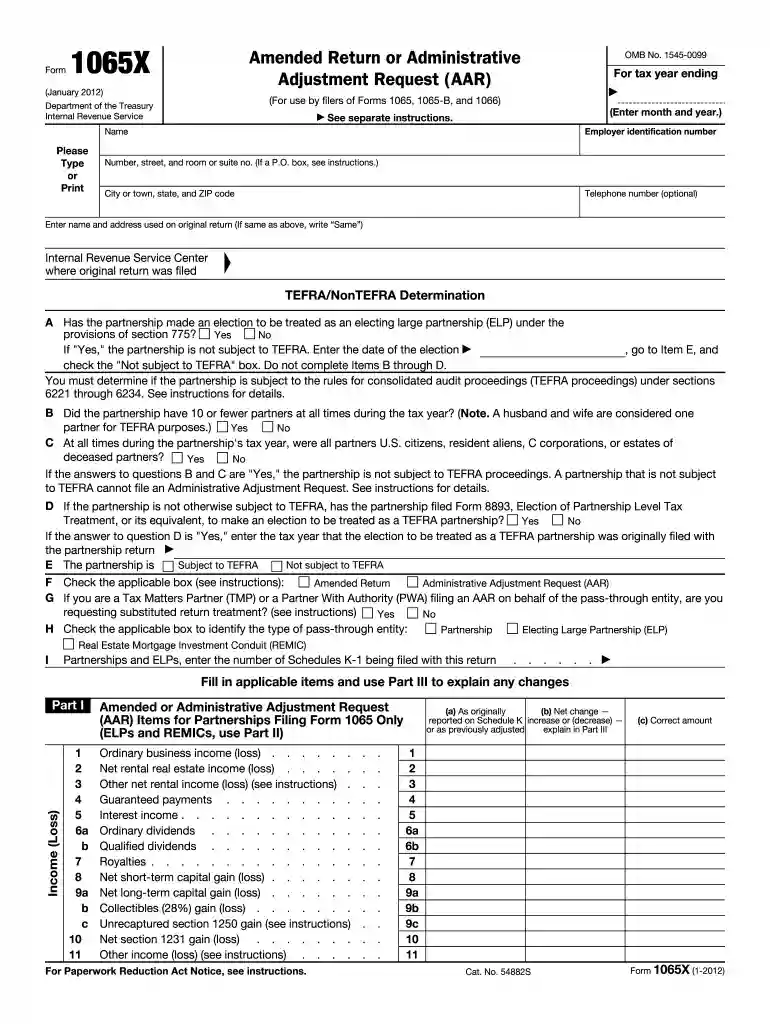
Form 1065X, the Amended Return or Administrative Adjustment Request (AAR), is a tax document used by partnerships to make modifications to their originally filed tax returns. This form is critical for partnerships that need to adjust details from their initial Form 1065, 1065-B, or 1066 submissions. The adjustments may involve income, deductions, credits, or partner-related information. Understanding the purpose and structure of Form 1065X helps ensure accurate and compliant amendments within the partnership tax framework, abiding by IRS regulations.
To access the 1065X 2012 Form, you can visit the IRS website, where downloadable PDF versions are available. The form can also be acquired through authorized tax software providers like TurboTax or QuickBooks, which streamline the retrieval and filing process. Tax consultants or advisors often provide this form as a service to partnerships that require professional assistance. Additionally, hard copies are accessible upon request at IRS offices for those who prefer or require physical documentation.
The IRS provides specific guidelines that detail how and when the 1065X should be filed. The instructions on the IRS website recommend filing this form as early as possible after discovering an error. Being aware of these guidelines ensures compliance and minimizes potential penalties. The IRS also specifies documentation that should accompany the form to support any changes, such as financial statements or partner consent forms, ensuring the amendments are substantiated.
Although there is no statutory deadline to file an amended tax return, partnerships are encouraged to file Form 1065X promptly upon discovering an error to avoid potential interest or penalties. Timeliness is especially crucial if the changes result in tax liabilities. Notably, adjustments impacting a partner's return must be submitted before the partners file their respective returns. Staying informed about key tax periods ensures better financial planning and compliance.
Supporting documentation is crucial when amending a return using Form 1065X. This generally includes:
Maintaining these records is vital for validation and any follow-up interactions with the IRS.
Failing to file an accurate Form 1065X can result in significant penalties from the IRS. These can include monetary fines or interest charges on unpaid balances. Late filings can additionally attract penalties unless documented reasonable cause is provided. Prompt and precise filing of the 1065X, along with transparent communication with partners, helps in minimizing these risks and ensuring total compliance with tax mandates.
State regulations may influence how the 1065X is recognized or filed. Certain states require additional documentation or notifications separate from federal requirements. Understanding the nuances and variations in each state’s tax legislation is crucial for partnerships that operate or have partners residing in multiple states. Consulting a tax professional knowledgeable about multi-state operations can greatly aid in meeting both federal and state obligations effectively.
We've got more versions of the form 1065x instructions form. Select the right form 1065x instructions version from the list and start editing it straight away!
At DocHub, your data security is our priority. We follow HIPAA, SOC2, GDPR, and other standards, so you can work on your documents with confidence.
Amended Schedules K-1: File amended Schedules K-1 with Form 1065X. If the partnership is filing Form 1065X for an administrative adjustment request (AAR),Read more
A partnership required to electronically file Form 1065 should not file Form 1065X but instead must e-file an amended Form 1065.115. If the corrected amountRead more
This publication discusses common business expenses and explains what is and is not de ductible. The general rules for deducting busi.


