







Definition & Meaning
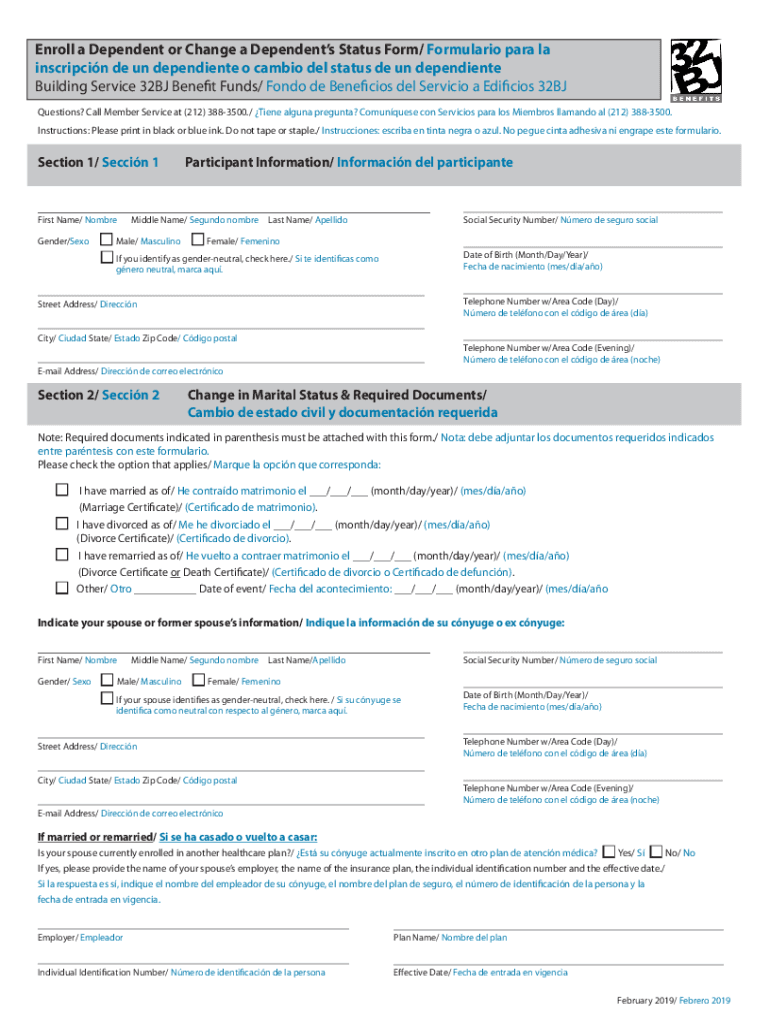
The "Enroll a Dependent or Change a Dependents Status Form" is designed to facilitate the process of adding dependents to a benefits plan or altering the current status of dependents in existing plans. This form typically applies to scenarios involving changes in family structure, such as marriage, divorce, birth, or adoption, impacting benefits eligibility. Understanding its purpose allows employees to maintain accurate benefit coverage for their household, ensuring all eligible individuals are included based on their current familial status.
Eligibility Criteria
To successfully use the "Enroll a Dependent or Change a Dependents Status Form," certain eligibility criteria must be met. Generally, eligible dependents include spouses, domestic partners, and children under 26 years old. It’s important to recognize that eligibility might be determined by specific guidelines set by the issuing organization or insurance provider. For example, children may be eligible until age 26, but different rules could apply for special needs dependents. Always review the detailed eligibility provisions carefully to prevent coverage issues.

Required Documents
When completing the "Enroll a Dependent or Change a Dependents Status Form," it is imperative to provide necessary documentation that supports the changes or additions being made. Documents typically required include marriage or birth certificates, adoption records, or court orders for guardianship. Ensuring all required documents are included helps prevent processing delays and confirms that benefit changes are based on verified life events.
Steps to Complete the Form
Completing the "Enroll a Dependent or Change a Dependents Status Form" involves several structured steps.
-
Gather Personal Information: Begin by collecting all essential participant and dependent details, such as Social Security numbers and dates of birth.
-
Document Family Changes: Clearly outline any recent changes in marital status, adoption, birth, or dependent eligibility that necessitate a change in enrollment.
-
Attach Supporting Documents: Include all relevant legal documents to validate the changes reported. Ensure these documents are updated and accurately reflect current circumstances.
-
Review and Submit: Double-check the form for completeness and accuracy before submission. If submitted online, confirmation of receipt should be requested. For paper submissions, maintain a copy for personal records.
Important Terms Related to the Form
Familiarity with specific terms aids in accurately completing the form. Common terms include "participant," referring to the insured individual; "dependent," encompassing family members eligible for coverage; and "qualifying event," which signifies a life change such as marriage or birth that affects enrollment. Clear understanding of these terms helps avoid misinterpretation and ensures compliance with the form’s requirements.
Form Submission Methods
The "Enroll a Dependent or Change a Dependents Status Form" can typically be submitted via multiple methods, accommodating different user preferences.
- Online Submission: Many benefit providers offer a portal for electronic submission, facilitating quicker processing and confirmation of receipt.
- Mail Submission: For those preferring traditional methods, forms can be sent via mail, though this may result in longer processing times.
- In-Person Submission: Some organizations allow or require forms to be physically submitted at designated offices, ensuring direct interaction and support if needed during submission.
Key Elements of the Form
Certain sections of the "Enroll a Dependent or Change a Dependents Status Form" are vital for accurate processing. The participant information section requires detailed personal and employment data. Marital status changes, another critical section, must accurately document any alterations in legal standing. Finally, dependent enrollment data outlines each individual's details for whom coverage is being altered or added. This division ensures the form is comprehensive and facilitates clear communication with benefits providers.
Examples of Using the Form
Consider common scenarios illustrating the need for this form. An employee getting married would use the form to add their new spouse to existing insurance coverage. Similarly, following the birth of a child, the form allows new-born enrollment in health and financial plans. Each example underscores the form’s role in aligning benefit plans with current life circumstances.
Penalties for Non-Compliance
Failing to submit the "Enroll a Dependent or Change a Dependents Status Form" within stipulated deadlines can lead to gaps in coverage. Dependents might lose out on benefits eligibility if not correctly added following a significant life event. In some cases, late submissions can incur added fees or restrictions on adjusting coverage until the next enrollment period. Understanding these penalties emphasizes the importance of timely and accurate submissions to maintain continuous benefits coverage.




