







Definition & Meaning
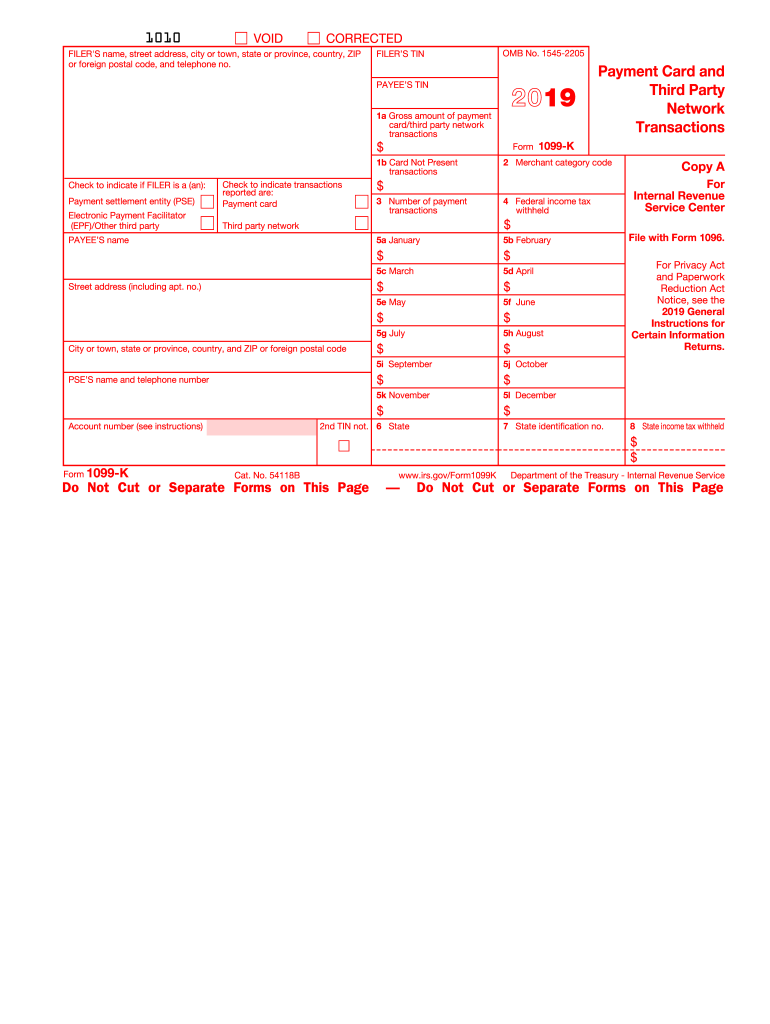
Form 1099-K is an IRS document used to report transactions from payment cards and third-party networks. It provides a detailed account of transactions during a calendar year, primarily focusing on credit card payments and payments made through services like PayPal and Venmo. Businesses and individuals receiving card payments through these platforms will receive a 1099-K if their transactions exceed $20,000 and number more than 200 annually. This form helps ensure accurate reporting of income, supporting the IRS in tracking taxpayer liabilities.
How to Use the 1099-K
Understanding the 1099-K is essential for businesses and self-employed individuals. Its primary use is to report income from electronic payments, ensuring that all applicable income is taxed accurately. Taxpayers must compare the amounts on the 1099-K with their own records to verify consistency. Discrepancies should be addressed promptly, potentially requiring contact with the payment settlement entity for clarification or correction. This due diligence helps prevent underreporting of income, avoiding potential penalties.
How to Obtain the 1099-K
The 1099-K form is usually issued automatically by payment settlement entities, such as credit card processing companies and third-party payment networks, by January 31. Businesses should receive the form via mail or electronic delivery. If you have not received a 1099-K by mid-February, it would be prudent to reach out to the issuing entity. Additionally, checking any online portals or accounts you have with payment processors might provide access to download your 1099-K.
Steps to Complete the 1099-K
Completing the 1099-K form involves verification more than active input. Here’s what should be done:
- Receive the Form: Obtain the 1099-K from each payment settlement entity you used.
- Verification: Cross-check the gross amount of reported income with your records to ensure accuracy.
- Adjust Errors: Contact issuers to correct discrepancies.
- Tax Filing: Integrate this information into your tax return, using tools like TurboTax or consulting with a tax professional.
Important Terms Related to 1099-K
Several terms are central to understanding the 1099-K:
- Payment Settlement Entity: The entity responsible for capturing payments, facilitating the transfer of funds, and issuing the 1099-K.
- Gross Amount: The total income amount stated on the form, not factoring in any deductions or fees.
- Third-party Network: Platforms that process payments on behalf of businesses, such as Etsy or Amazon.
- Threshold Amount: The minimum annual transaction level ($20,000 and over 200 transactions) to be issued a 1099-K.
IRS Guidelines
The IRS provides clear guidelines on how the 1099-K should be used. It mandates that payment settlement entities report all transactions meeting the threshold requirements. The IRS uses this information to corroborate income declarations by businesses and individuals. It is crucial to file the 1099-K as part of the annual tax return to avoid audits, and keeping accurate records throughout the year is advised for future reference during tax preparation.
Filing Deadlines / Important Dates
The critical date associated with the 1099-K is January 31, the deadline for entities to send out the form. Businesses must report and file this form along with their tax returns by April 15 to avoid penalties. Prompt filing ensures compliance and facilitates smooth tax operations without unnecessary delays or audits.
Penalties for Non-Compliance
Failing to report the information on a 1099-K can result in significant IRS penalties. A penalty under IRC 6721 may be assessed for failure to file correct information returns by the due date, depending on when you file the correct information return. Fines can range from $50 per return up to $270 per return, with a maximum of $1,113,000 per year. This underscores the importance of accuracy and timely filing to avoid financial consequences.




