




01. Edit your ny apartment lease agreement online
Type text, add images, blackout confidential details, add comments, highlights and more.

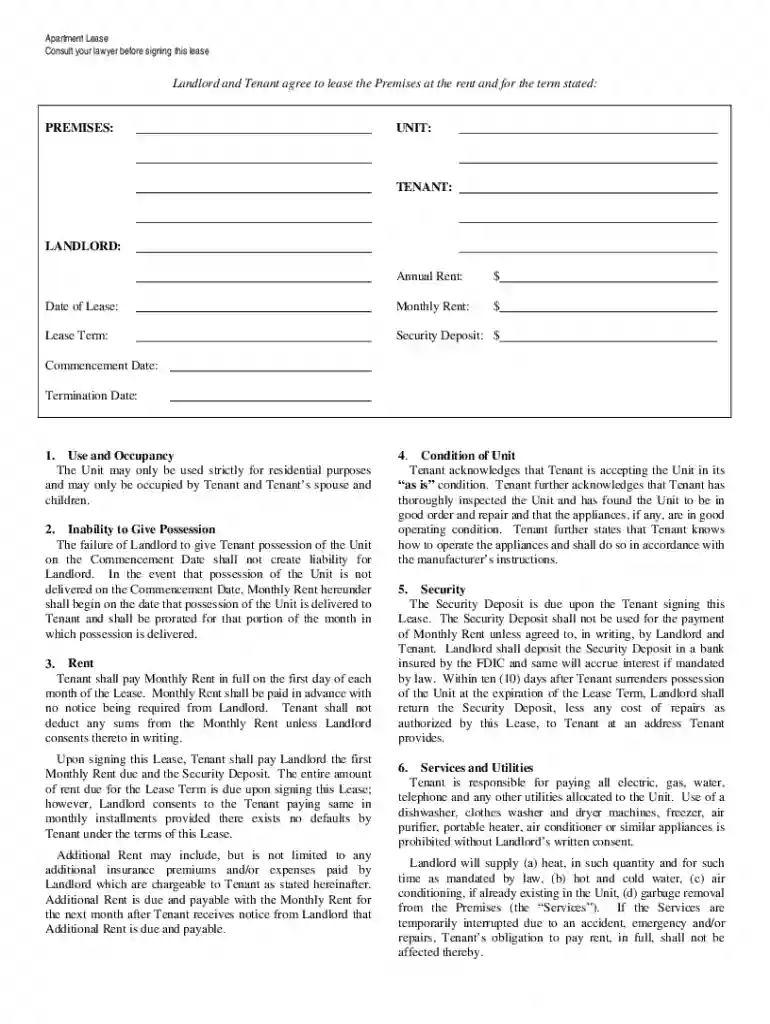
Type text, add images, blackout confidential details, add comments, highlights and more.

Draw your signature, type it, upload its image, or use your mobile device as a signature pad.

Send new york apartment lease pdf via email, link, or fax. You can also download it, export it or print it out.
Advantage Title is recognized as an industry leader in New York and nationwide, indicating its prominence and reputation in the title insurance market. Title insurance is crucial for protecting property owners and lenders against potential disputes or legal issues pertaining to the property's title, such as liens, encumbrances, or ownership claims. Advantage Title stands out by offering comprehensive services tailored to varying client needs, ensuring smooth and secure real estate transactions across diverse settings.
Initial Contact: Reach out to Advantage Title to discuss your needs, whether it's for residential or commercial property.
Title Search: Advantage Title performs a detailed title search to uncover any existing issues that may affect ownership or the property's value.
Title Examination: A thorough examination of public records determines the legitimacy of the property's history, identifying potential risks or claims.
Resolution of Issues: Should any discrepancies or encumbrances be discovered, Advantage Title works to resolve these before closing to ensure a clear title.
Issuing Title Insurance: Once the title is deemed clear, Advantage Title issues a title insurance policy to safeguard against future claims.
Closing Services: They provide closing and escrow services, finalizing transactions and ensuring that funds are properly distributed.
The primary users of Advantage Title include home buyers, real estate investors, mortgage lenders, and developers.
Home Buyers: Individuals purchasing residential property rely on Advantage Title to ensure that their investment in a home is protected from past title disputes.
Real Estate Investors: Investors with portfolios across New York and the nation benefit from Advantage Title's expertise in handling complex or high-value transactions.
Mortgage Lenders: Financial institutions require title insurance policies to protect their interests in the financed properties.
Developers: Those involved in property development projects use Advantage Title to ensure clear, insurable titles before proceeding with construction or sales.
The use of Advantage Title is governed by legal standards set forth in title insurance regulations.
While Advantage Title operates nationwide, specific state laws impact its operations:
Residential Purchase: A first-time homebuyer in New York uses Advantage Title to verify clear property ownership and purchase a title insurance policy against future claims.
Commercial Real Estate Transaction: A business looking to expand into different states seeks Advantage Title for its seamless handling of multi-state property acquisitions.
Refinancing: Homeowners wishing to refinance their homes rely on Advantage Title for updated title searches to facilitate the refinancing process.
Real Estate Firms: These businesses regularly rely on title insurance to mitigate risks in transactions.
Financial Institutions: Lenders require title assurance to protect loans secured against properties.
Construction Companies: Ensuring clear titles before breaking ground on new projects is crucial.
There are multiple ways to engage in transactions with Advantage Title, including:
Essential documentation includes:
Advantage Title services are available to individuals and entities involved in real estate transactions. Eligibility may depend on creditworthiness, financial stability, and compliance with relevant legal standards.


We've got more versions of the ny apartment lease agreement form. Select the right ny apartment lease agreement version from the list and start editing it straight away!
At DocHub, your data security is our priority. We follow HIPAA, SOC2, GDPR, and other standards, so you can work on your documents with confidence.
Oct 18, 2024 As of December 31, 2023, the Company has established a custodian agreement with a qualified custodian, Principle Bank. This new custodianRead more
We are a full service record company distributed by Universal Music Entertainment. We perform sophisticated company and industry-wide analysis


