
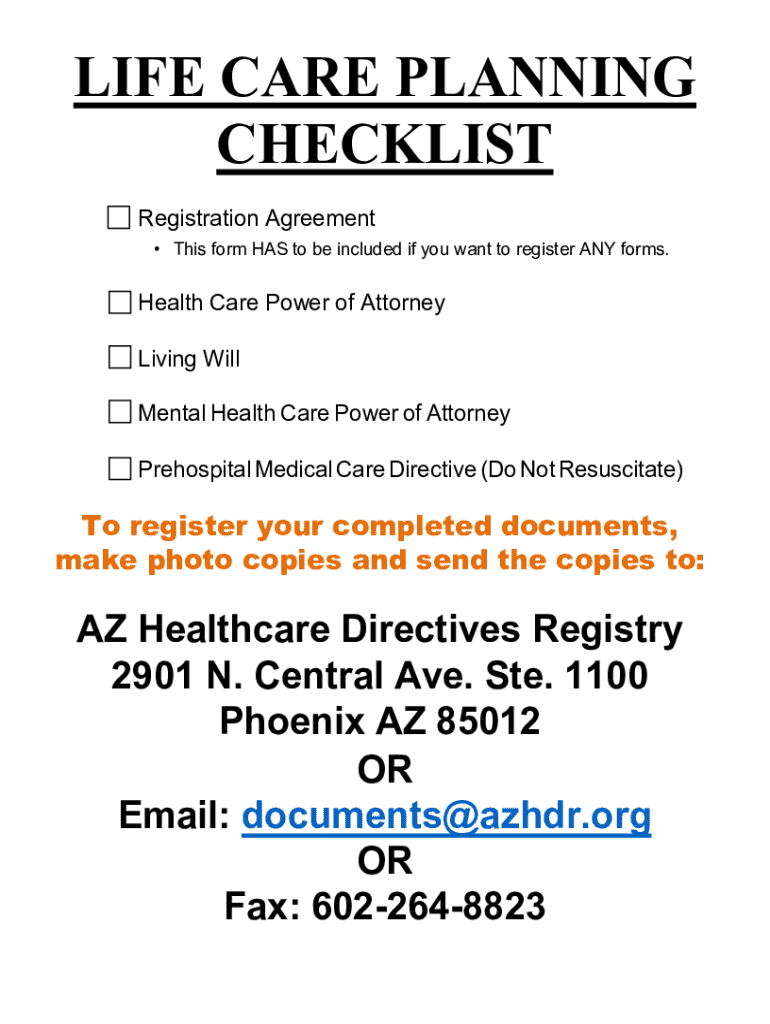







Definition and Meaning of Arizona Life Care Planning
Arizona life care planning is a critical process designed to ensure that an individual's healthcare preferences are respected and adhered to when they are unable to communicate their decisions. This planning typically involves the creation of advance directives, such as Health Care Power of Attorney, Living Will, Mental Health Care Power of Attorney, and Do Not Resuscitate (DNR) directives. These documents are vital for conveying an individual's wishes regarding medical treatment and interventions, serving as a guide for healthcare providers and family members when critical decisions must be made.
How to Obtain the Arizona Life Care Planning
Acquiring the essential forms for Arizona life care planning is a straightforward process. These documents can often be downloaded online from the Arizona Secretary of State's website or obtained from healthcare facilities and legal service providers. Individuals may also choose to work with an attorney who specializes in estate planning to ensure that their documents are correctly completed and legally sound. It's important to ensure that all forms are filled out accurately and signed in the presence of required witnesses to secure their validity.
Steps to Complete the Arizona Life Care Planning
- Gather Information: Begin by collecting essential personal and medical information required for the forms, such as names, addresses, and contact details.
- Discuss with Family: Engage in detailed discussions with family members or designated decision-makers about personal healthcare preferences.
- Fill Out Forms: Complete all necessary advance directive forms, ensuring that each section aligns with the individual's specific wishes.
- Legal Review: Consider having an attorney review the completed documents to ensure they comply with Arizona state laws.
- Notarization and Witnesses: Some forms may require notarization or the presence of witnesses during signing to be legally binding.
- Register with State: Submit the completed forms to the Arizona Health Care Directives Registry for official registration, if desired.
- Distribute Copies: Provide copies to family members, healthcare providers, and any appointed agents to ensure easy access during emergencies.
Key Elements of the Arizona Life Care Planning
- Health Care Power of Attorney: Appoints a trusted individual to make healthcare decisions on one's behalf.
- Living Will: Specifies personal preferences for life-sustaining treatments in the event of terminal illness or incapacitation.
- Mental Health Care Power of Attorney: Addresses decisions specific to mental health treatment, including medication preferences and psychiatric interventions.
- Do Not Resuscitate (DNR) Directive: Communicates one’s wish to avoid resuscitation in cases of cardiac or respiratory arrest.
Importance and Purpose of Arizona Life Care Planning
The primary purpose of Arizona life care planning is to ensure that individuals maintain control over their healthcare decisions, even in situations where they cannot verbally express their preferences. This proactive approach reduces the burden on family members during difficult times and helps prevent conflicts over medical care decisions. It provides clarity, guiding healthcare providers with a clear understanding of the patient’s end-of-life care preferences, leading to more compassionate and personalized care.
Legal Use of the Arizona Life Care Planning
Arizona life care planning forms must comply with specific state laws to be legally enforceable. It's crucial that all documents are properly executed, following the outlined legal requirements concerning signatures, notarization, and witness validations. Complying with these mandates guarantees that the person's healthcare directives will be honored by medical professionals and institutions throughout Arizona.
Who Typically Uses the Arizona Life Care Planning
- Elderly Individuals: Those who want to ensure their healthcare preferences are honored as they age.
- Individuals with Chronic Illnesses: People managing long-term health conditions can clearly communicate their treatment desires.
- Young Adults: Those who want to have control over unexpected medical situations.
- Military Personnel: Individuals in high-risk professions may utilize these directives to prepare for potential incapacitation.


State-Specific Rules for the Arizona Life Care Planning
Arizona has unique regulations regarding life care planning, which include specific execution and witnessing protocols. For example, certain documents require the presence of two adult witnesses or a notary public to be valid. Additionally, Arizona law stipulates that a Health Care Power of Attorney is not effective unless certain statutory language is included in the document. It's essential for individuals to familiarize themselves with these state-specific requirements to ensure that their documents meet all legal criteria.
Examples of Using the Arizona Life Care Planning
- Case Study 1: An elderly woman suffering from dementia uses the Health Care Power of Attorney to designate her daughter as her healthcare decision-maker.
- Case Study 2: A terminally ill cancer patient completes a Living Will to express her wish to avoid life-prolonging treatments.
- Case Study 3: A military officer executes a Mental Health Care Power of Attorney before deployment to address potential mental health issues upon return.
Each of these scenarios demonstrates the practical application of life care planning in safeguarding personal healthcare preferences, providing peace of mind to both the individual and their family.




