
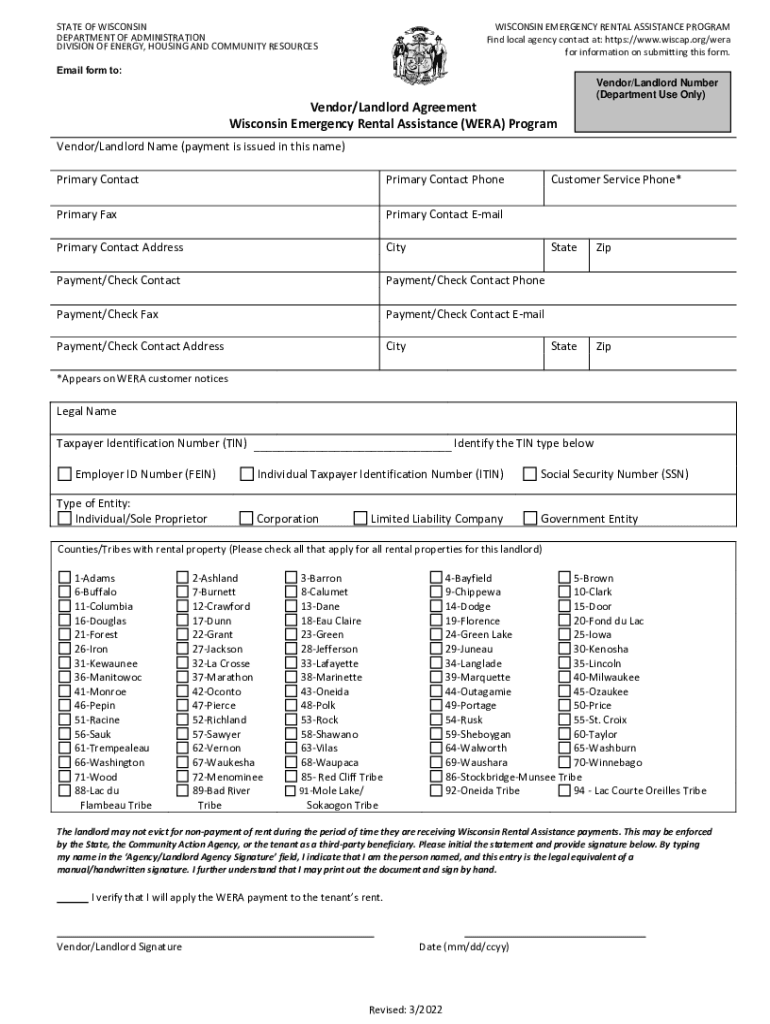







Definition and Purpose of the Wisconsin Emergency Rental Assistance Program
The Wisconsin Emergency Rental Assistance Program (WERA) is a state-initiated effort designed to offer financial support to tenants struggling to pay rent due to unforeseen circumstances, such as the COVID-19 pandemic. This initiative ensures housing stability by assisting eligible renters with covering their rental expenses, thus preventing eviction and its associated hardships. The program aims to safeguard vulnerable communities while ensuring landlords can maintain their rental income, fostering a balanced support system.
Core Objectives
- Provide Financial Relief: WERA offers significant financial assistance to tenants who face challenges in meeting their rental obligations, addressing overdue rent and future payments.
- Prevent Evictions: By ensuring that landlords receive timely rental payments, the program helps prevent tenant evictions, thereby protecting tenant rights.
- Stabilize Housing Market: Supporting both tenants and landlords contributes to a more stable housing market and community well-being.
Eligibility Criteria for the Wisconsin Emergency Rental Assistance Program
To qualify for WERA, applicants must meet specific eligibility criteria, ensuring aid is directed towards those in genuine need. Understanding these requirements is crucial for both tenants and landlords to benefit from the program.


Primary Eligibility Conditions
- Income Level: Applicants must demonstrate that their household income does not exceed 80% of the median income for their area.
- Risk of Homelessness: Priority is often given to individuals or families at immediate risk of eviction or experiencing housing instability.
- Pandemic Impact: The applicant should have faced a significant financial hardship due to the pandemic, affecting their ability to meet rental obligations.
Required Documents for Application
When applying for WERA, applicants must provide particular documents to verify their identity and financial situation. Accurate documentation facilitates a smooth application process and timely assistance delivery.
Essential Documentation
- Proof of Income: Recent pay stubs, tax returns, or other income-related documents to verify income levels.
- Rental Agreement: A current lease agreement demonstrating the rental terms and landlord details.
- Proof of Residency: Documents such as a utility bill or identification that corroborates the applicant's residency in the rental unit.
- Impact Evidence: Documentation or statements that show the economic impact of COVID-19 on the applicant's financial status.
Application Process for the Wisconsin Emergency Rental Assistance Program
Completing the WERA application involves several key steps, each requiring attention to detail and accuracy.
Step-by-Step Application Process
- Collect Documentation: Gather all necessary documents, such as proof of income and residency.
- Complete the Application Form: Fill out the WERA application form with accurate information. Ensure each section is thoroughly completed to avoid delays.
- Submit the Application: Depending on the available methods, submit the application online, via mail, or in person.
- Await Confirmation: Once submitted, the application will be reviewed, and eligible applicants will receive confirmation with details of the assistance provided.
Important Terms Associated with WERA
Familiarity with essential terms associated with WERA can enhance understanding and facilitate effective communication during the application process.
Key Terms and Definitions
- Landlord: The property owner or their representative who receives payments on behalf of tenants through WERA.
- Tenant: The individual or family renting the property, eligible for receiving rental assistance.
- Eviction Moratorium: Temporary measures preventing evictions during the pandemic, which WERA supports by providing rental payment assistance.
Role of Landlords in the Wisconsin Emergency Rental Assistance Program
Landlords play a significant role in the WERA framework, ensuring that the program's benefits reach the eligible tenants while maintaining their rental income.
Key Responsibilities of Landlords
- Cooperation with Tenants: Landlords must support tenants in the application process by providing necessary documentation and lease agreements.
- Vendor Landlord Agreement (VLA): Landlords must complete this agreement to be eligible to receive payments directly from the program.
- No Eviction Clause: Landlords agree not to evict tenants whose rental arrears are covered by WERA funds, supporting community housing stability.
State-Specific Rules and Nuances in Wisconsin
WERA operates under guidelines specific to the state of Wisconsin, which applicants must understand to ensure compliance and maximize benefits.
Unique Wisconsin Regulations
- Program Funding Limits: Funding availability might vary over time, depending on state budget allocations and federal support.
- Eviction Suspension Provisions: Additional state-level eviction protections complement the assistance provided by WERA, benefiting tenants who qualify for the program.
Impact and Real-World Outcomes of WERA
The implementation of WERA has tangible effects on both tenants and landlords, contributing to the overall stability of the housing market in Wisconsin.
Real-World Examples of Impact
- Tenant Relief: Numerous tenants have maintained stable housing situations due to timely WERA assistance, avoiding the stress and consequences of eviction.
- Landlord Stability: Landlords benefit from a consistent rental income stream, even during economic downturns, due to the program's structured support measures.
- Community Benefits: By safeguarding the interests of both parties, WERA promotes community stability and economic resilience across Wisconsin.
Through the Wisconsin Emergency Rental Assistance Program, both tenants and landlords receive crucial support, ensuring that communities in Wisconsin navigate financial difficulties with dignity and security.




