




01. Edit your form 8822 online
Type text, add images, blackout confidential details, add comments, highlights and more.

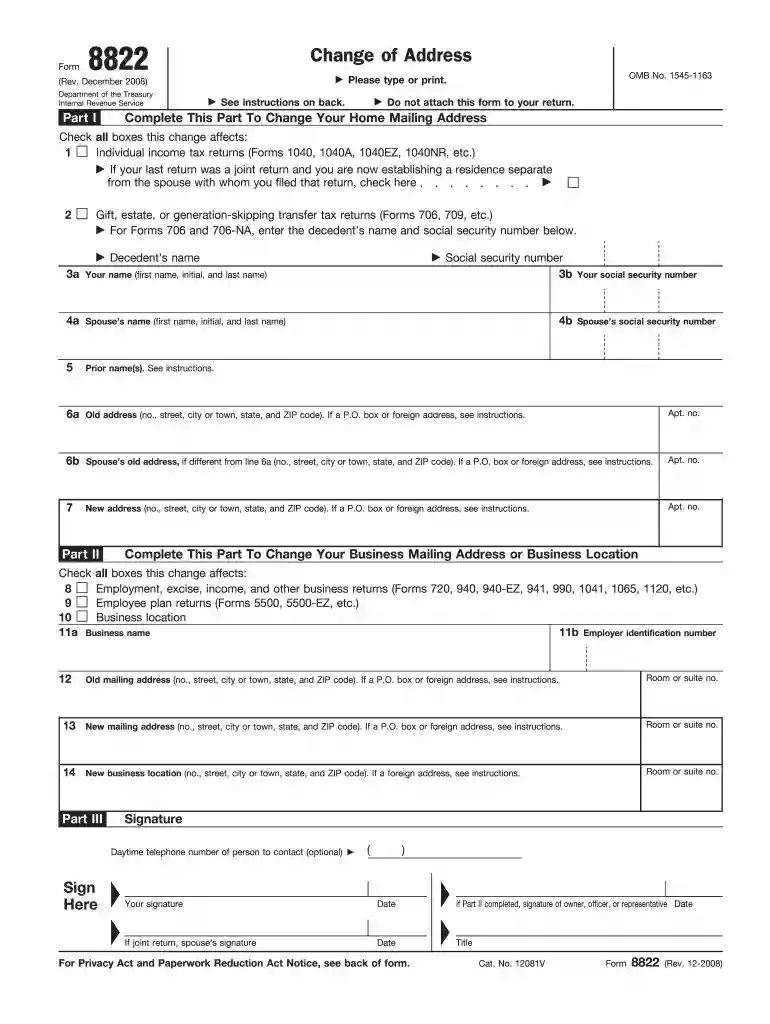
Type text, add images, blackout confidential details, add comments, highlights and more.

Draw your signature, type it, upload its image, or use your mobile device as a signature pad.

Send nhtsa sfst clues via email, link, or fax. You can also download it, export it or print it out.
Form 8822 is employed by individuals and businesses to inform the Internal Revenue Service (IRS) of any changes to their mailing address. Maintaining up-to-date contact details with the IRS is essential to avoid interruptions in communication, such as receiving tax notices and other important documents. Though the form might seem straightforward, ensuring its proper completion and submission is crucial for uninterrupted correspondence with the IRS.
Identify the Section to Complete: The form is divided into sections based on the address type you wish to update—home or business. Ensure you fill out the section that relates to your needs.
Enter Personal Information: Provide the full name and Social Security Number (SSN) or Employer Identification Number (EIN) for the records being updated. Accurate entry of these details prevents issues with processing.
Filling Out the Current and New Address: Enter your previous address that needs updating followed by the new address. Double-check for errors, as any discrepancies can lead to processing delays.
Sign and Date the Form: Both the taxpayer and spouse, if applicable, must sign the form. Without signatures, the form is considered incomplete.
Send the Completed Form: Refer to the instructions for mailing addresses. The destination depends on your location and the circumstances of your filing.
Online Access: Download the form directly from the IRS website. A PDF version is available, which you can print or fill out digitally if you have the right tools.
Local IRS Office: Visit your nearest IRS office to get a physical copy. This method ensures you have the most updated form version.
Third-party Software: Certain tax preparation software programs may offer direct integration with IRS forms and allow you to access and fill out Form 8822 seamlessly.
Submitting Form 8822 is a proactive step to prevent miscommunications with the IRS. Changing your address without notifying the IRS can lead to:
Form 8822 is primarily used by:
Individual Taxpayers: Those who have changed their residential address.
Business Owners: Entities moving their business operations to a new physical location.
Estate Executors: Responsible for managing an estate that has experienced changes related to the deceased’s address.
Taxpayer Identification Number (TIN): Includes Social Security Numbers (SSNs) and Employer Identification Numbers (EINs), crucial for correct processing.
Mailing Address vs. Physical Address: The form distinguishes between different address types, key in determining IRS processing needs.
Filing Status: Whether you are filing jointly or individually can impact the information needed on the form.
Submission Timeline: While there are no strict deadlines for submitting Form 8822, it's advisable to update your address as soon as possible following a change to prevent lost correspondence.
Official Channels: Only submit the form to authorized IRS mailing addresses as listed in the instructions.
Follow-up Contacts: After form submission, look out for potential correspondence confirming the address update was received and processed.
Mail: The traditional and most common method for submitting Form 8822. It requires careful attention to the correct mailing address based on your state and tax situation.
In-person: While less common, submissions can be made directly at local IRS offices. This can ensure immediate receipt confirmation, though might not expedite processing.
Digital Submission: Though not available directly through the IRS for Form 8822, third-party integration services might allow uploads via secured platforms.
Failing to submit Form 8822 when necessary can lead to several issues, including:
Delayed communications from the IRS, resulting in potential penalties or additional interest on tax liabilities.
Greater difficulty in defending oneself against IRS audits or other legal proceedings due to inaccurate files.
Consider a taxpayer moving to start a new job. They must update their address with the IRS using Form 8822 to ensure their tax refund for that year goes to the correct location. Business owners shifting their operations curb costly mail redirections by timely submissions, maintaining operational continuity. Robust examples underline the imperative nature of accurate address updates to facilitate seamless tax-related interactions.
We've got more versions of the form 8822 form. Select the right form 8822 version from the list and start editing it straight away!
At DocHub, your data security is our priority. We follow HIPAA, SOC2, GDPR, and other standards, so you can work on your documents with confidence.
Form 990-T, Part IV, line 42. SIMPLEs, Roth IRAs, Coverdell IRAs, the return is filed, use Form 8822, and Archer MSAs. Change of Address, to notify the. LineRead more
You can use Form 8822 to notify the Internal. Revenue Service if you changed your home or business mailing address or your business location. If this changeRead more
Jan 30, 2018 If you didnt receive any federal mortgage subsidies, you must file Form 8828 with your tax return whether you sold your home at a loss or aRead more


