






Definition & Meaning
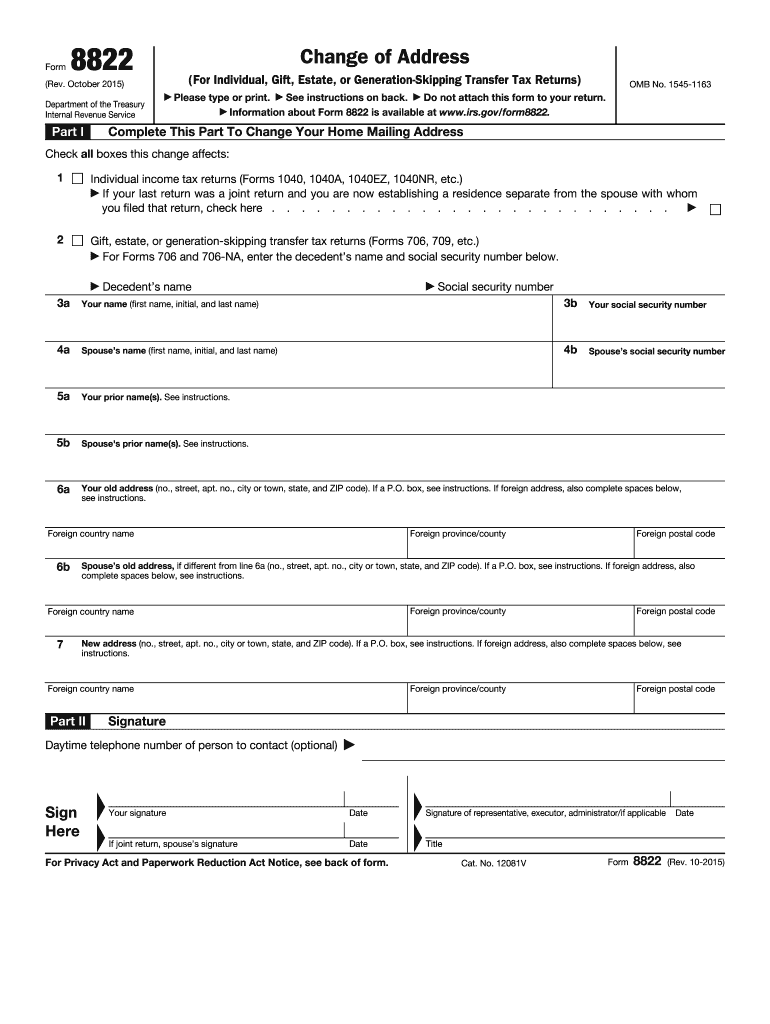
The IRS change of address form, officially known as Form 8822, allows taxpayers to update their home mailing address with the Internal Revenue Service. This is pertinent for individuals, and those handling gift, estate, or generation-skipping transfer tax returns, ensuring timely receipt of tax documents. The form requires personal details such as names, social security numbers, and old and new addresses. It also provides guidance on handling name changes and foreign addresses. Addressing these changes promptly helps avoid delays in receiving essential correspondence from the IRS.
Steps to Complete the IRS Change of Address
- Download Form 8822: Obtain the form from the IRS website or request a paper copy if internet access is limited.
- Fill in Personal Information: Provide full name, social security number, and previous address. Ensure accuracy to avoid processing delays.
- Input New Address: Clearly enter the new address where you wish to receive IRS correspondence.
- Additional Details: Include spouse's information if applicable. Check the box for address changes related to employment, business, or corporate tax returns.
- Signature: Sign and date the form. A spouse’s signature is also needed if filing jointly.
- Mail the Completed Form: Send the filled form to the address specified in the instructions, based on your location.
Why You Should Update Your Address with the IRS
- Timely Receipt of Notices: An accurate address ensures you receive tax notices and refunds without delays.
- Avoid Penalties: Maintaining current information with the IRS minimizes risks of missing deadlines or crucial information that might incur penalties.
- Financial Security: Prevents sensitive information from being sent to an old address, reducing the risk of identity theft.
Important Terms Related to IRS Change of Address
- Taxpayer Identification Number (TIN): Essential for individual identification on the form.
- Primary Address: The address tied to your tax records for receiving official IRS correspondence.
- Form 8822-B: Used specifically for business entities needing to change their address.
- ESIGN Act: Legislation that allows electronic signatures to be legally recognized, relevant if the form submission method is digital.
Eligibility Criteria
- Individuals: Taxpayers who have changed their residence within the U.S. and need to inform the IRS.
- Authorized Representatives: Individuals or tax professionals with authorization may submit the form on a taxpayer's behalf.
- Business Changes: Use Form 8822-B for businesses changing their mailing or business location address.


IRS Guidelines
- Use of Form 8822: Applicable for individuals making changes related to personal, estate, or gift tax addresses.
- Additional Requirements: If you're moving internationally, additional disclosures may be required.
- Timely Notification: Promptly submit the change to avoid complications with future correspondence or filings.
Form Submission Methods
- Mail: Traditional method where the completed form is sent to the IRS address indicated for your state.
- In-Person: Option available at select IRS offices, though less common due to the convenience of mail submissions.
- Digital Availability: As of now, this form primarily requires paper filing, although electronic options may exist for certain scenarios or through tax software platforms.
Penalties for Non-Compliance
- Missed Communication: Failure to update your address can result in missed notices, potentially leading to penalties for late payments or filings.
- Incorrect Tax Assessments: Incorrect communication can lead to improper tax assessments, necessitating amendments that could have been avoided with up-to-date contact information.
- Legal Repercussions: In extreme cases, ignoring IRS correspondence due to an outdated address can lead to significant legal issues.
By understanding and utilizing the IRS change of address process through Form 8822, taxpayers can ensure smooth communication with the tax agency, thereby minimizing potential disruptions or issues related to their tax obligations.