
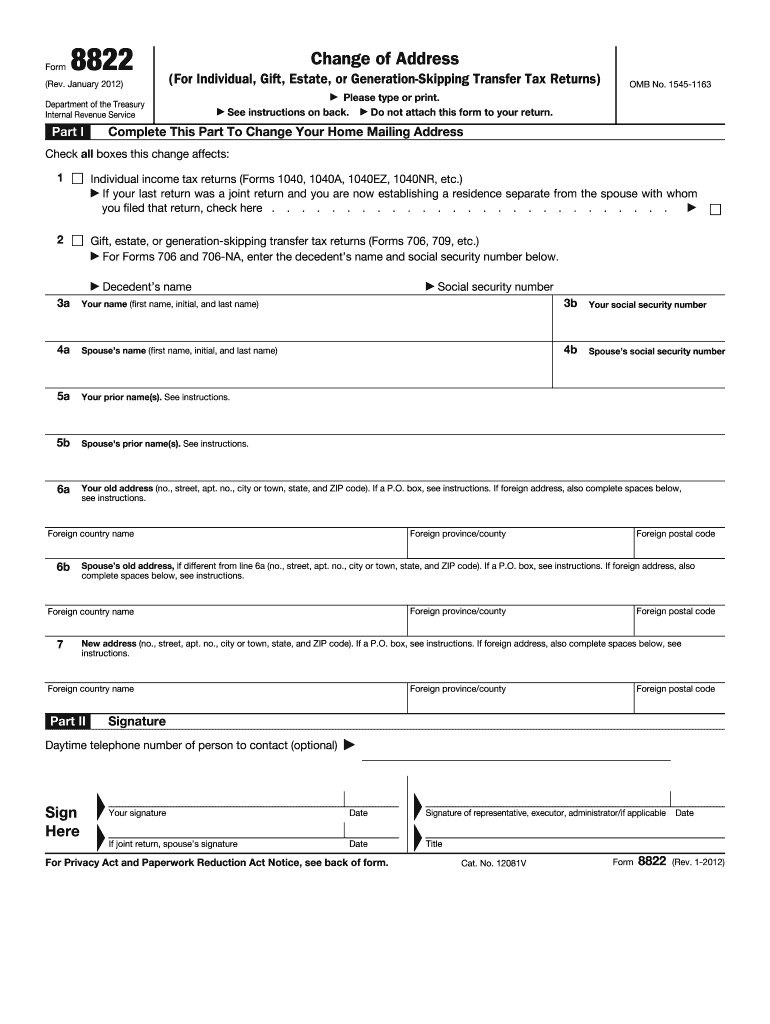







Definition & Purpose of the 2012 IRS Address Form
The 2012 IRS address form is used by individuals and businesses to notify the Internal Revenue Service (IRS) of a change in mailing address. This ensures that all tax-related correspondence, including notices and refunds, reach the correct destination. The form is essential to maintain current communication channels between taxpayers and the IRS.
How to Obtain the 2012 IRS Address Form
To acquire the 2012 IRS address form, you can download it directly from the IRS official website or request a paper copy by contacting the IRS customer service. Libraries and tax preparation offices might also have copies available. Additionally, some tax software platforms may offer electronic versions of this form.
Steps to Complete the 2012 IRS Address Form
-
Personal Information:
- Enter your full name, social security number, and previous address.
- Include your spouse’s information if applicable.
-
New Address:
- Provide the complete new address where you wish to receive IRS communications.
-
Signatures:
- Ensure you, and your spouse if filing jointly, sign and date the form.
-
Submission:
- Mail the completed form to the address specified in the form's instructions, which varies by location.
Who Typically Uses the 2012 IRS Address Form
- Individual Taxpayers: Those who have changed their primary residence.
- Businesses: When changing their registered mailing address.
- Students and Retirees: To update their address to ensure uninterrupted receipt of tax information and refunds.


Important Terms Related to the Form
- Permanent Address: The long-term domicile where the taxpayer intends to return.
- Temporary Address: A short-term mailing solution that should not be used for the form.
Legal Use and Importance of the Form
Submitting a change of address form ensures compliance with IRS requirements to maintain updated taxpayer information. Not updating your address can lead to missed notices, which might result in penalties or delayed refunds. Timely submission can prevent such issues and ensure efficient tax administration.
Key Elements of the Form
- Name and Social Security Number: Primary identifiers for the IRS to update taxpayer profiles.
- Old and New Addresses: Critical to ensuring correspondences are redirected correctly.
- Signature: A legal necessity that validates the form.
Filing Deadlines and Important Dates
While there is no strict deadline for submitting an address change form, it is advisable to file it as soon as a move occurs. This ensures that any mid-tax cycle correspondence is not missed. The IRS recommends updating the address at least four to six weeks before needing any tax document.
Form Submission Methods: Online, Mail, and In-Person
- Online: Through the IRS portal, which offers a quick and trackable method.
- Mail: Send the completed form to the specified IRS address provided in the instructions.
- In-Person: At local IRS offices, although less common, this method guarantees receipt.
Form Variants and Alternatives
While the 2012 version was specific for that year, newer versions of the form, specifically Form 8822, now serve the same purpose. Taxpayers should confirm if a more current form version is recommended for their needs.
Real-World Examples of Using the Form
- Self-Employed Individuals: Who relocate and need to update their business address with the IRS.
- Recently Divorced Taxpayers: When one spouse moves and needs separate IRS correspondence.
- Students Moving for College: If they decide to change their residence to campus housing.




