Type text, add images, blackout confidential details, add comments, highlights and more.
02. Sign it in a few clicks
Draw your signature, type it, upload its image, or use your mobile device as a signature pad.
03. Share your form with others
Send non binding form via email, link, or fax. You can also download it, export it or print it out.
How to use or fill out Non-Binding Beneficiary Nomination Form
Ease of Setup
DocHub User Ratings on G2
Ease of Use
DocHub User Ratings on G2
Click ‘Get Form’ to open it in the editor.
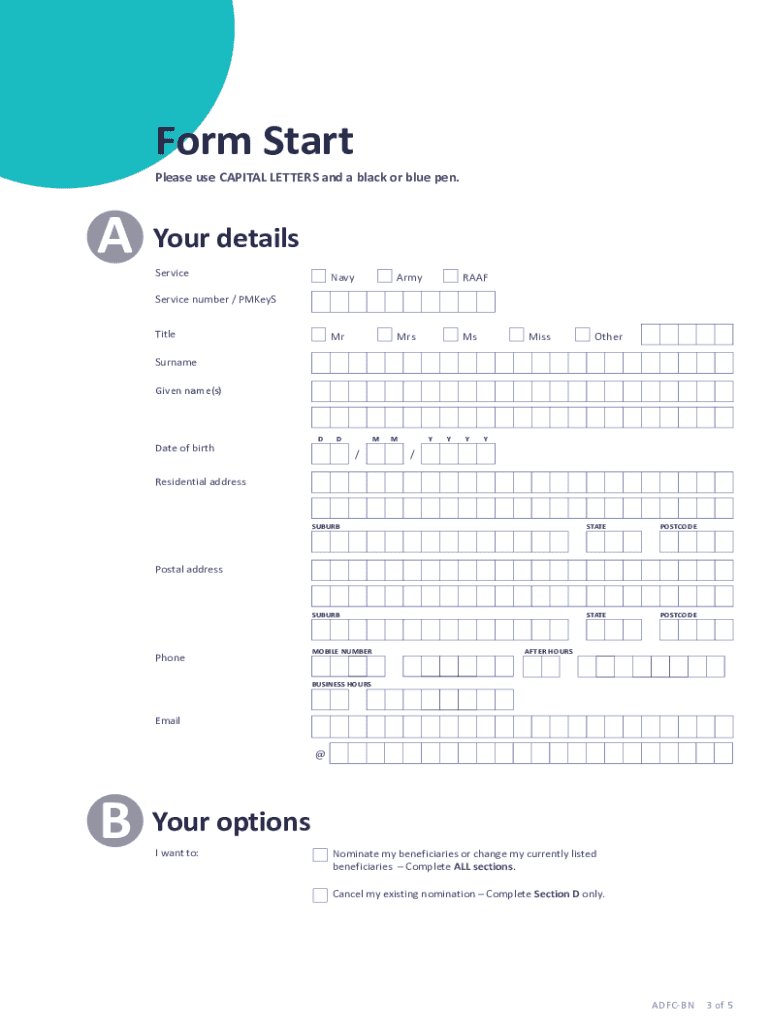
Begin with Section A, where you will enter your personal details. Use CAPITAL LETTERS and a black or blue pen. Fill in your service type, title, surname, given names, date of birth, residential address, postal address, phone numbers, and email.
In Section B, choose whether you want to nominate beneficiaries or cancel an existing nomination. If nominating, proceed to complete all sections.
Move to Section C to list your beneficiaries. Provide their surnames and given names, indicate if they are dependent on you, and specify the percentage of your benefit allocated to each. Remember that percentages must be whole numbers.
In Section D, read the declaration carefully. Sign and date the form where indicated to confirm that all information is correct.
Finally, submit your completed form along with any required documents via mail or email as instructed at the end of the form.
Start using our platform today for free and streamline your document completion process!
Non binding form templateNon binding form exampleNon binding form pdfBinding vs non binding beneficiary superNon lapsing binding nominationBinding beneficiary meaningWhat is a non binding beneficiary in superannuationNon lapsing binding death benefit nomination form
Security and compliance
At DocHub, your data security is our priority. We follow HIPAA, SOC2, GDPR, and other standards, so you can work on your documents with confidence.
Cookie consent notice
This site uses cookies to enhance site navigation and personalize your experience.
By using this site you agree to our use of cookies as described in our Privacy Notice.
You can modify your selections by visiting our Cookie and Advertising Notice.