
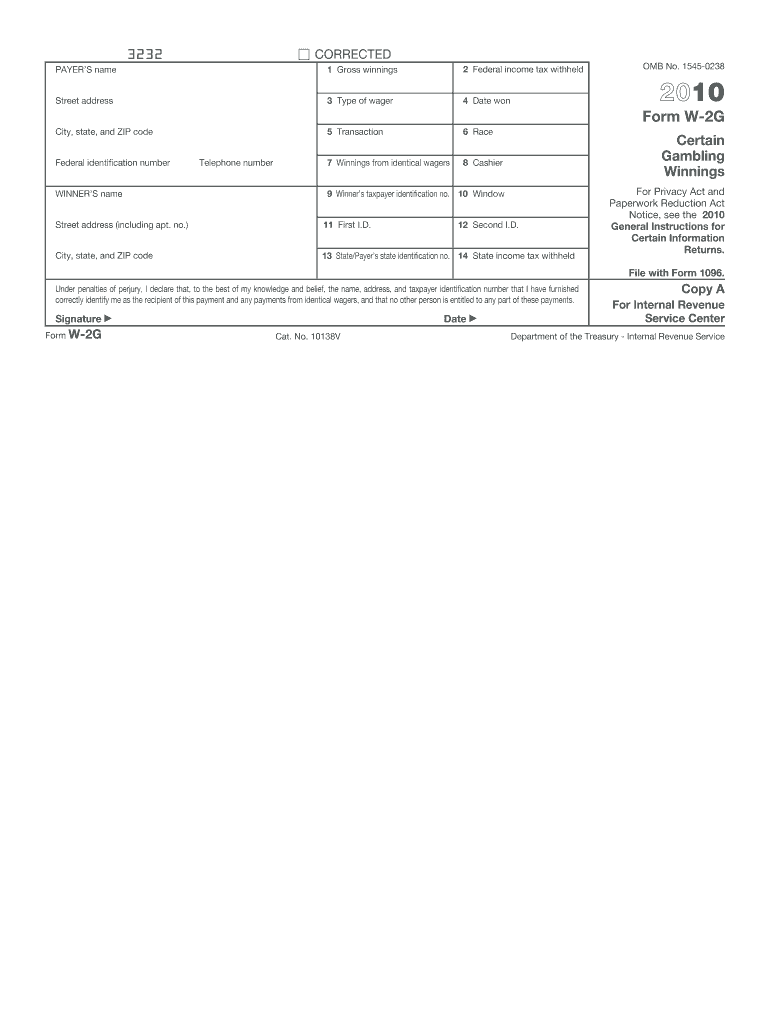







Definition & Meaning
The 2010 Form W is a variant of IRS tax forms used for specific reporting purposes related to income and taxes. Typically, "W" forms, like the W-2 or W-9, serve to report income types or confirm taxpayer information. For instance, the W-2G form, a counterpart closely associated with the subject form, reports gambling winnings and taxes withheld. Each form under this category has its unique purpose, aimed at capturing financial activities or identity verification for tax-related matters. Understanding the specific role and requirements of the 2010 Form W is crucial for taxpayers and businesses to ensure compliance with federal tax laws.
How to Obtain the 2010 Form W
Accessing the 2010 Form W generally involves visiting the IRS official website or contacting a local IRS office. Taxpayers can also get this form through tax software that partners with IRS-approved e-filing providers. While online access remains the most convenient, individuals who prefer physical copies can request them by mail. Ensuring that the retrieved version is the correct form and corresponds to the year 2010 is important to avoid discrepancies during tax filing and documentation processes. Always checking the IRS's updated forms repository helps maintain compliance with current regulations.
Steps to Complete the 2010 Form W
-
Gather Necessary Documents:
- Include pay stubs, identification details, and any relevant tax documents that provide income information.
-
Fill Out Personal Information:
- Accurately record your Name, Social Security Number, and address as reflected in other tax documents.
-
Input Income Details:
- Provide precise figures related to the specific income category the form targets, such as gambling winnings.
-
Review Withholding Information:
- Review any federal income tax withholding sections, ensuring they align with reported income.
-
Sign and Date the Form:
- Double-check all entries for accuracy, signing and dating the form as necessary.
-
Submit the Completed Form:
- File according to IRS guidelines, using either mail or online submission where applicable.
Delving into the above steps and understanding each part ensures an accurately completed form, avoiding potential errors and complications during tax processing.
Important Terms Related to 2010 Form W
-
Payer Information: Details of the entity providing the income or prizes to the recipient.
-
Federal Income Tax Withholding: Amount withheld from winnings or earnings as prepayment of federal taxes.
-
Thresholds for Reporting: Specific amounts of income that necessitate reporting to the IRS, applicable to gambling and other earning forms.
-
Recipient Identification: Usually involves the Social Security Number or Employer Identification Number for proper taxpayer identification and verification.
Having a firm grasp of these terms facilitates better comprehension and accurate completion of the form, ensuring compliance with reporting requirements.
IRS Guidelines
IRS guidelines for forms like the 2010 Form W outline the criteria for reporting income accurately, including threshold amounts and withholding requirements. These guidelines are periodically updated, ensuring taxpayers remain informed about their obligations. Consulting the IRS's official documentation or a tax professional can provide additional clarity on how these rules apply to individual circumstances. Proper adherence prevents potential penalties and ensures the taxpayer remains in good standing with federal requirements.
Filing Deadlines / Important Dates
Timely filing of the 2010 Form W is essential. Generally, for tax forms associated with income reporting, critical dates align with the federal tax return deadline, typically April 15th, unless the date falls on a holiday or weekend, extending it to the next business day. Deadlines for issuing these forms to recipients might also be set earlier in the year, often by January 31st. Keeping track of these dates ensures all submitted paperwork is timely and any obligations are met without incurring late fees or interest penalties.
Required Documents
Completing the 2010 Form W mandates having:
- Proof of earnings like gambling payout slips or payment summaries.
- Identification documents such as a Social Security card.
- Previous tax returns for reference.
- Any correspondence from the IRS regarding similar filings or tax obligations.
These documents provide the necessary background and data to accurately fill out the form, thereby ensuring that all information submitted is correct and verified.
Penalties for Non-Compliance
Failing to file or inaccurately completing the 2010 Form W can lead to penalties, including fines or interest charges on unpaid taxes. The IRS has established penalty structures based on the delay's duration or the nature of inaccuracies, incentivizing prompt and correct filing. Ensuring familiarity with requirements and guidelines—or seeking professional advice—can help mitigate these risks. Compliance remains key to avoiding potential legal and financial repercussions associated with non-compliance.




