
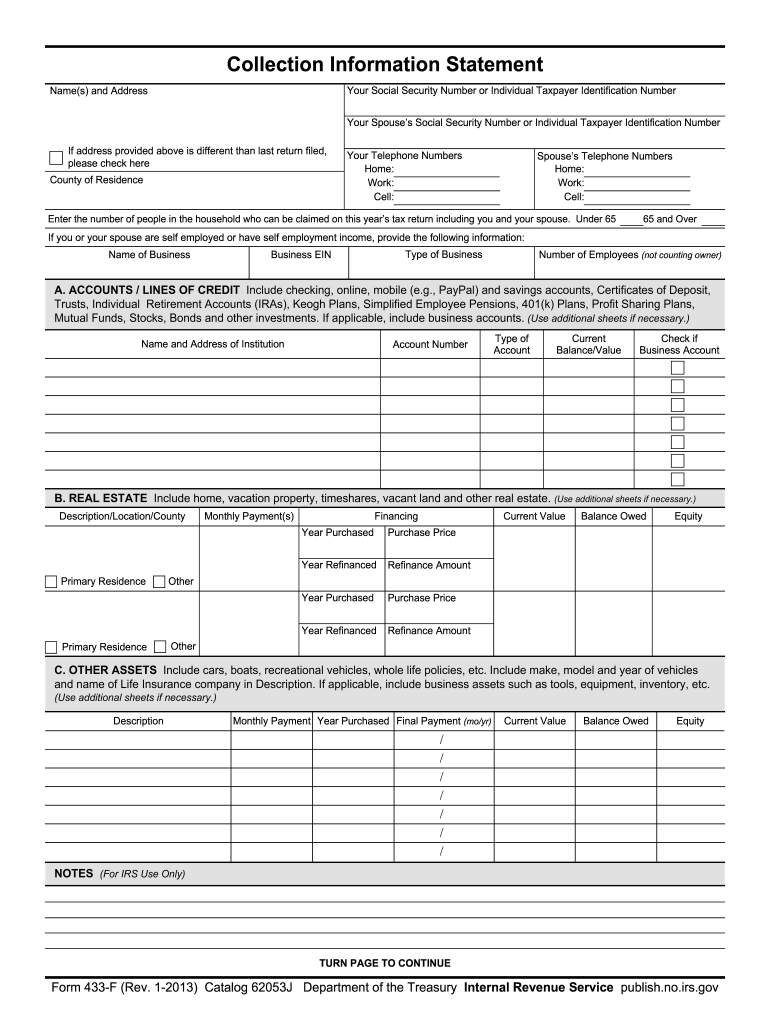







Overview of IRS Form 433-F
IRS Form 433-F, also known as the "Collection Information Statement," is required by the Internal Revenue Service to collect detailed financial information from individuals or self-employed persons. The information is used to assess an individual's ability to pay outstanding tax liabilities. The form includes sections for personal identification details, household composition, sources of income, and a detailed listing of assets and expenses.
How to Obtain IRS Form 433-F
Individuals looking to obtain IRS Form 433-F for the year 2012 can visit the IRS website or use document management platforms like DocHub. These platforms offer digital access to various forms, allowing users to download, edit, and complete the form using their suite of tools. Documents can be imported from a computer or cloud storage services such as Google Drive and Dropbox, facilitating easy access and management.
Steps to Complete IRS Form 433-F
Understanding Form Sections
-
Personal Information: Provide specific details like your name, address, and social security number. It's crucial to ensure all information is accurate to avoid processing delays.
-
Financial Overview: Outline your household size, any dependents you claim, and any other pertinent residential details.
-
Income Details: Document all sources of income, including wages, interests, dividends, and self-employment earnings.
-
Asset Declaration: Include bank account balances, investments, real estate holdings, and any other valuable property.
-
Expense Reporting: List monthly living expenses such as rent, utilities, transportation, insurance, and health care costs.
Submitting the Completed Form
Once completed, you can submit the form online through secure platforms or mail it directly to the IRS. Ensure precise submission information based on your location or the IRS instructions for the tax year in question.
Who Typically Uses IRS Form 433-F
Form 433-F is generally used by individuals or self-employed taxpayers who need to communicate financial difficulty or negotiate payment arrangements with the IRS. It helps establish eligibility for payment plans or other collection alternatives, benefitting those unable to pay their tax obligations in full immediately.
Key Elements of IRS Form 433-F
Financial Data Required
- Assets and Liabilities: Accurate accounting of all financial interests and debts.
- Income Streams: Comprehensive listing of all household income sources.
- Monthly Expenses: Detailed analysis of regular expenditures to ascertain disposable income.
Important Considerations
- Accuracy is Critical: The IRS relies on the accuracy of this form to decide on payment arrangements, thus double-check all entries.
- Timeliness: Meeting deadlines reduces potential penalties and expedites processing.
IRS Guidelines for Form 433-F
Outlined by the IRS, these guidelines ensure taxpayers provide thorough and truthful records when completing form 433-F. Following IRS instructions correctly can aid in faster determination of payment plans or compromises. Documenting unusual financial situations or changes since your last filing is also advisable.
Filing Deadlines and Important Dates
While IRS Form 433-F does not have a strict deadline like tax filing forms, submitting it promptly after receiving an IRS request is crucial. The form is typically required when negotiating payment plans; thus, filing timely can prevent enforcement actions like wage garnishments or bank levies.
Penalties for Non-Compliance
Failure to submit IRS Form 433-F when required can lead to enforced collections, including wage garnishments and federal tax liens. Taxpayers may also incur interest and additional penalties on their outstanding tax balances, underscoring the importance of compliance.
Form Variants and Alternatives
While Form 433-F is standard for individual and self-employed taxpayers, businesses may be required to submit similar forms like Form 433-B, designed for business entities. Exploring these alternatives is crucial for accurately addressing one's tax scenario.
Software Compatibility with Form 433-F
For efficiency, taxpayers can utilize software tools like TurboTax and QuickBooks to help manage and submit financial data required by Form 433-F. Many of these services offer integration with document platforms like DocHub, further simplifying the process of completing and submitting this form.




