







Definition & Meaning
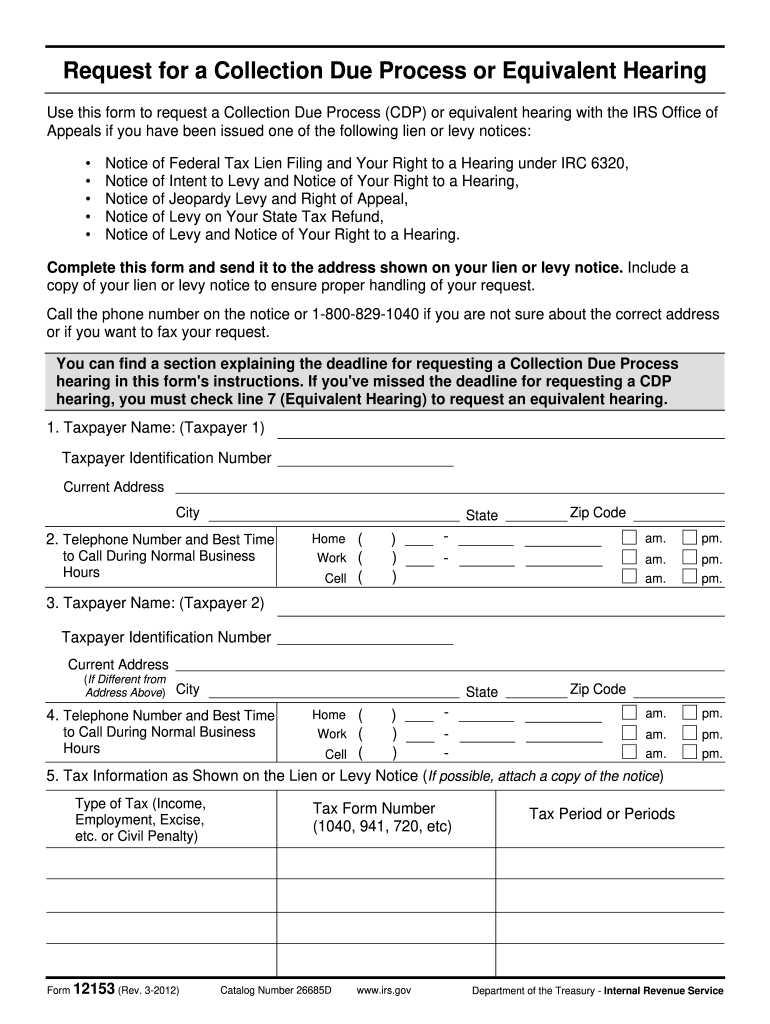
The "us 12153 model answers 2012 form" primarily functions as a tool for taxpayers to request a Collection Due Process (CDP) or equivalent hearing with the IRS Office of Appeals. This form is pivotal in disputes where the taxpayer challenges actions such as liens or levies imposed by the IRS. The form outlines crucial information, including the type of notices eligible for such a hearing and the procedural steps necessary for submission. By filling out this form, the taxpayer can present their case to an impartial party within the IRS to negotiate or dispute their current collection status.
How to Use the Us 12153 Model Answers 2012 Form
Using this form involves several critical steps:
- Identify the Need: Determine whether you have received a lien or levy notice that qualifies you to request a CDP or equivalent hearing.
- Gather Necessary Information: Collect the required personal and notice details, such as your taxpayer identification number and a description of the notice received.
- Complete the Form: Fill out the form accurately, ensuring that all relevant sections are addressed. This includes sections where you specify your reasons for contesting the IRS's actions.
- Submit the Form: Submit the completed form to the designated IRS office, either through mail or electronically, as specified in the instructions.
Steps to Complete the Us 12153 Model Answers 2012 Form
When completing the form, follow these detailed steps:
- Section I: Enter personal information, including your name, taxpayer ID, and contact details.
- Section II: Specify the type of IRS notice being appealed by selecting from the listed categories.
- Section III: Provide a detailed explanation of why you are requesting a hearing. Outline the dispute's basis, whether it's incorrect application of tax regulations or altered circumstances affecting your tax liability.
- Section IV: List any collection alternatives you propose, such as installment agreements or offers in compromise.
Important Terms Related to Us 12153 Model Answers 2012 Form
Understanding certain key terms is vital:
- Collection Due Process (CDP): A legal process allowing taxpayers to challenge IRS collection activities.
- Lien: A legal claim against assets for unpaid tax debts.
- Levy: The legal seizure of property to satisfy taxes owed.
- Office of Appeals: Independent IRS office that conducts hearings and resolves tax disputes impartially.
IRS Guidelines
The IRS provides stringent guidelines on the procedural use of this form:
- Timeliness: Submit the form within thirty days after the first notice of intent to levy, or within the time frame specified for other types of notices.
- Content Accuracy: Provide accurate and truthful information, as misleading data can result in penalties or dismissal of the hearing request.
Filing Deadlines / Important Dates
Key deadlines to note:
- The form must be submitted within the initial thirty-day period from the receipt of notice.
- Missing the deadline might limit your ability to contest the IRS actions or require you to seek equivalent hearing options.
Required Documents
Ensure you gather the following:
- Tax Notice: The official IRS notice that you received, which outlines the lien or levy.
- Supporting Evidence: Any documents that support your case, such as financial statements, correspondence with the IRS, or previous tax filings.
Form Submission Methods (Online / Mail / In-Person)
Form 12153 can be submitted through different channels:
- Online: Utilize the IRS's online submission tools for quicker processing.
- Mail: Send the completed form to the address specified on the notice you received.
- In-Person: Visit a local IRS office to submit the form directly for immediate confirmation of receipt.
Penalties for Non-Compliance
Failing to submit the form correctly and in a timely manner can lead to several consequences:
- Loss of Appeal Rights: You might forfeit the chance to challenge the IRS's collection methods.
- Immediate Action: The IRS could proceed with liens or levies without further hearings.
- Additional Accrued Interest and Fees: Continued inaction may result in added financial liability.


