
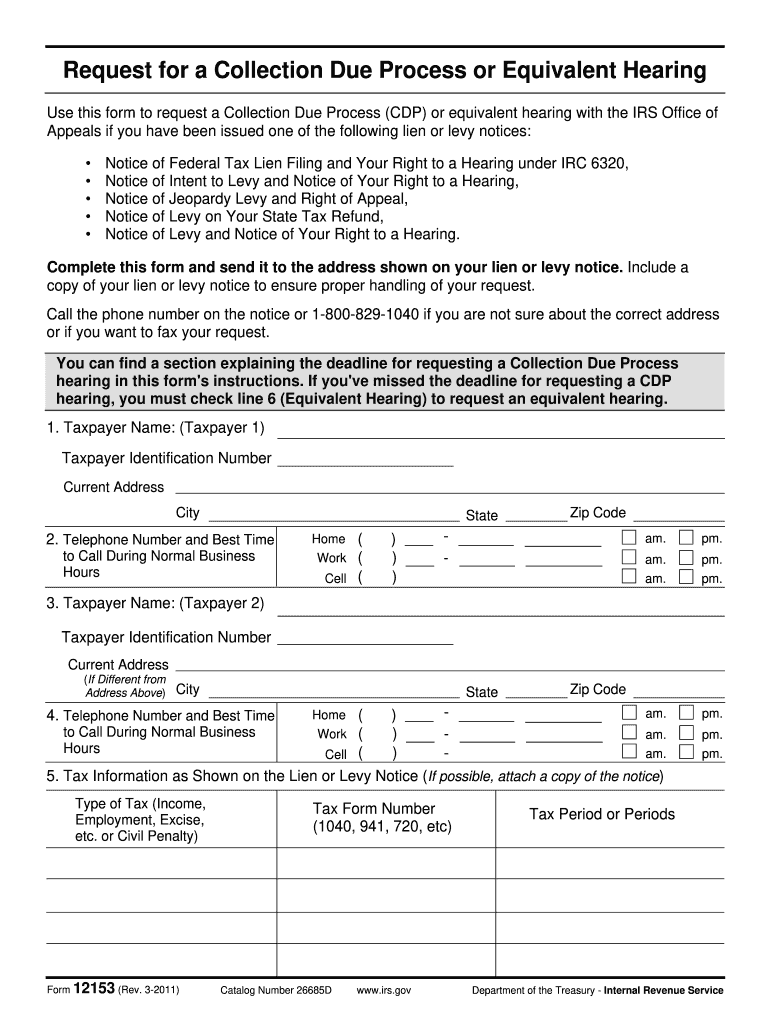







Definition and Purpose of IRS Form 12153
IRS Form 12153 is a formal request used by taxpayers to apply for a Collection Due Process (CDP) or equivalent hearing with the IRS Office of Appeals. This form becomes necessity when taxpayers receive notifications related to liens or levies on their assets. It provides the taxpayer an opportunity to appeal against collection actions, negotiate payment terms, or propose alternatives like installment agreements or offers in compromise. Understanding its purpose ensures taxpayers can effectively utilize their rights to contest IRS collection activities within the regulated framework.
Steps to Complete IRS Form 12153
Completing Form 12153 accurately is crucial for ensuring it is processed without delays. Here’s a step-by-step guide:
-
Provide Your Personal Information:
- Fill out sections with your full legal name, address, and Social Security Number (or Taxpayer Identification Number).
-
Detail the Type of Request:
- Specify whether you are requesting a hearing for a lien or levy notice.
-
Outline Your Reasons for Request:
- Clearly articulate the reasons for disputing the collection action. Include alternatives that you propose, such as installment plans or payment reductions.
-
Attach Supporting Documentation:
- Attach additional documentation that supports your case for appeal. This might include financial statements, payment records, or any correspondence with the IRS.
-
Submit the Form:
- Mail the form to the address specified on the lien or levy notice, ensuring it is done within 30 days from the date of the notice.
How to Obtain IRS Form 12153
Accessing IRS Form 12153 can be efficiently done through several methods:
-
Direct Download: Visit the IRS official website to download a fillable PDF version. This ensures you have the most current form available.
-
IRS Local Office: Collect a physical copy from an IRS local office. This option is helpful if personal assistance is necessary.
-
Request by Phone: Call the IRS and request a form to be mailed to your address.
Importance of Using IRS Form 12153
Filing IRS Form 12153 is vital for protecting your rights. It halts collection activities until your hearing, providing you time to prepare your case and ensure fair treatment. This process not only potentially prevents financial harm from inappropriate collection actions but also facilitates negotiation over feasible payment alternatives.
Key Elements of IRS Form 12153
Form 12153 comprises components that must be meticulously completed:
- Personal and Tax Information: Ensures the IRS can correctly identify your account.
- Notice Details: Provides context for the request, based on the underlying lien or levy.
- Request and Reasoning: Specifies why a hearing is sought and outlines proposed solutions.
Penalties for Not Filing IRS Form 12153
Failing to file Form 12153 within the designated period forfeits your right to a CDP hearing. This can result in uncontested liens or levies, compounding financial difficulties. It may also lead to IRS enforced collections, such as wage garnishments, without further opportunity to appeal.
Who Typically Uses IRS Form 12153
Form 12153 is primarily utilized by individuals or businesses disputing IRS actions related to liens or levies. It is particularly relevant for:
- Sole Proprietors: Who need to negotiate IRS debts without affecting business operations.
- Partnerships and Corporations: Where tax disputes impact broader economic obligations and business continuity.
Filing Deadlines and Important Dates
Timeliness is crucial with Form 12153. The deadline is generally 30 days after receiving a notice of lien or levy. This deadline ensures a swift response preventing enforcement actions. Missing this period implies you lose formal review opportunities and negotiation leverage with the IRS.
IRS Guidelines for Utilizing IRS Form 12153
Adhering to IRS outlined procedures ensures your Form 12153 is processed correctly:
- Review Eligibility: Ensure the notices received are eligible for a CDP hearing.
- Insightful Documentation: Include all relevant documentation that could substantively support your case.
- Follow Up: After submission, following up with the IRS ensures no interim actions occur unexpectedly.
Each block within the document framework ensures comprehensive coverage of IRS Form 12153, providing necessary insights for taxpayers navigating IRS collection disputes.




