
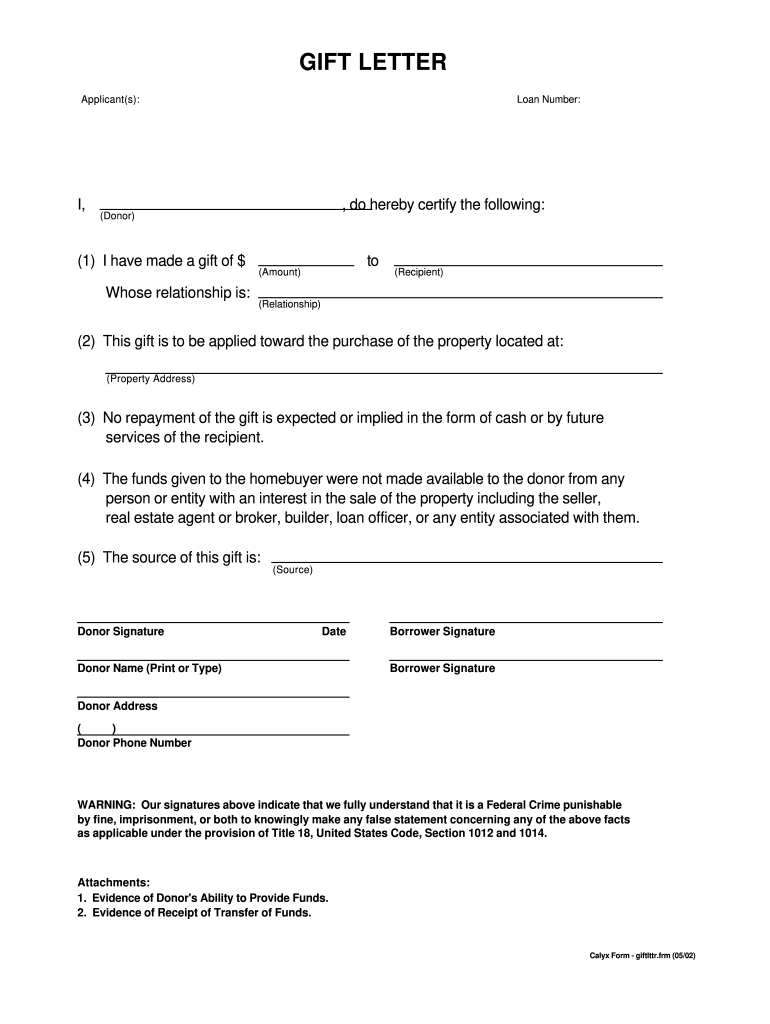







Definition and Significance of a Gift Letter for Mortgage
A gift letter for mortgage serves as an official document, certifying that a monetary gift has been provided to a person to aid in purchasing property. This letter plays a crucial role in the mortgage process by clarifying the nature of the funds being used for a down payment or associated costs.
- Purpose: The primary purpose of the gift letter is to confirm that the donor does not expect any repayment. This distinction is essential to comply with mortgage lending guidelines, ensuring that the recipient's financial situation is accurately represented.
- Importance in Mortgage Applications: Lenders require this letter to prevent the misrepresentation of financial stability on mortgage applications. By outlining that the funds are a gift and not a loan, the letter contributes to a smoother loan approval process.
- Legal Implications: It is vital to stress that false statements made in a gift letter can have serious consequences, including legal repercussions for both the donor and the recipient.
The letter typically includes the donor's and recipient's names, the amount of money gifted, a statement about non-repayment, and the donor's relationship to the recipient.
Key Elements of a Gift Letter for Mortgage
A well-structured gift letter contains several critical components, ensuring clarity and compliance with lender requirements. A clear outline of these elements helps both donors and recipients prepare an effective document.
- Donor Information: This includes the donor's full name, address, and contact details. It is important to establish a clear identity of the individual providing the gift.
- Recipient Information: The recipient's name and relationship with the donor must be explicitly stated to confirm their connection.
- Gift Amount: The letter must specify the exact monetary amount being gifted. This transparency aids in validating the financial transaction during the mortgage process.
- Statement of Non-Repayment: A crucial element is a statement indicating that the funds are gifted without any expectation of repayment. This is vital for lenders to differentiate between gifts and loans.
- Donor's Ability to Provide Funds: Including evidence or a statement regarding the donor's finances can strengthen the letter's credibility. This can include bank account statements or financial documents that verify the donor has the capacity to provide the gift.
This structure ensures that the gift letter meets lender requirements and effectively communicates the nature and purpose of the funds.
Procedures for Completing a Gift Letter for Mortgage
To facilitate a seamless mortgage application process, adhering to specific steps for completing the gift letter is beneficial.
- Gather Necessary Information: Collect both donor and recipient details, including names, addresses, and relationship descriptions, as well as the gift amount.
- Draft the Letter: Begin with the donor's information, followed by the recipient's information, and clearly outline the amount gifted. Include a statement confirming that there is no expectation of repayment.
- Review Legal Requirements: Ensure that the letter fulfills any state-specific and lender-specific requirements. Some lenders may have template guidelines that should be followed closely.
- Signature: Both the donor and recipient should sign and date the letter. This step is crucial as it denotes agreement and provides legality to the document's contents.
- Submitting the Letter: Attach the completed gift letter to the mortgage application. Keeping a copy for personal records is also advisable.
Following these steps helps mitigate any issues that could arise during the mortgage approval process related to the source of down payment funds.
Practical Examples of Utilizing a Gift Letter for Mortgage
Understanding real-world scenarios can clarify the application of a gift letter for mortgage purposes. Here are illustrative examples:
- Family Support: A parent provides financial assistance to their child who is purchasing their first home. The parent writes a gift letter stating the amount given, confirming the family relationship and the non-repayable nature of the gift. This helps the child secure a mortgage with fewer funds from their own income.
- Grandparent Contribution: A grandparent gifts money to help a grandchild buy a property. The grandparent writes a detailed gift letter explaining their relationship, the amount gifted, and reiterating that the funds do not need to be repaid. This enhances the grandchild’s mortgage approval chances by showcasing financial support.
- Friends Assisting Friends: In some cases, close friends may provide monetary gifts to assist with a down payment. A well-prepared gift letter documenting this transaction ensures that mortgage lenders recognize the funds as non-repayable assistance.
These examples emphasize the importance of transparent documentation in aligning with lender expectations while securing financial assistance for property purchases.
IRS Guidelines on Gift Tax Implications
When preparing a gift letter for mortgage purposes, understanding IRS guidelines on gift taxes is essential for both the donor and recipient.
- Annual Exclusion: For 2023, the IRS allows individuals to gift up to $17,000 annually to each recipient without triggering gift tax considerations. If the amount gifted exceeds this threshold, the donor may need to file a gift tax return using Form 709, although tax liability may not be owed right away.
- Lifetime Exemption: Donors are permitted a lifetime exclusion of $12.92 million (as of 2023) for gifts, meaning they may not owe taxes unless their combined lifetime gifts exceed this amount.
- Documentation: While the gift letter serves as proof of the transaction for mortgage purposes, it may also be beneficial for tax purposes if the donor exceeds the annual exclusion limit or wishes to track their gifts.
Awareness of the IRS guidelines helps ensure proper adherence to tax laws while facilitating the financial support necessary for a mortgage.
State-Specific Considerations for Gift Letters
Different states may have varying rules regarding the usage and acceptance of gift letters in the mortgage process. Being cognizant of these state-specific differences can save time and prevent potential complications.
- Documentation Requirements: Certain states might have specific formats or additional requirements for the gift letter, necessitating consultation with a local mortgage lender to ensure compliance.
- Gift Tax Rules: States also vary in how they handle gift taxes. Some may have their own thresholds distinct from federal guidelines, and donors should be informed on these nuanced rules.
- Loans and Ethical Considerations: In some states, lenders may have ethical guidelines about how gifts are treated concerning the borrower's debt-to-income ratio, placing additional scrutiny on large gifts.
Understanding these variations is vital for both donors and recipients to avoid delays or rejections in their mortgage applications based on misunderstanding state guidelines.







