






Definition and Purpose of the Subcontractor Warranty Form
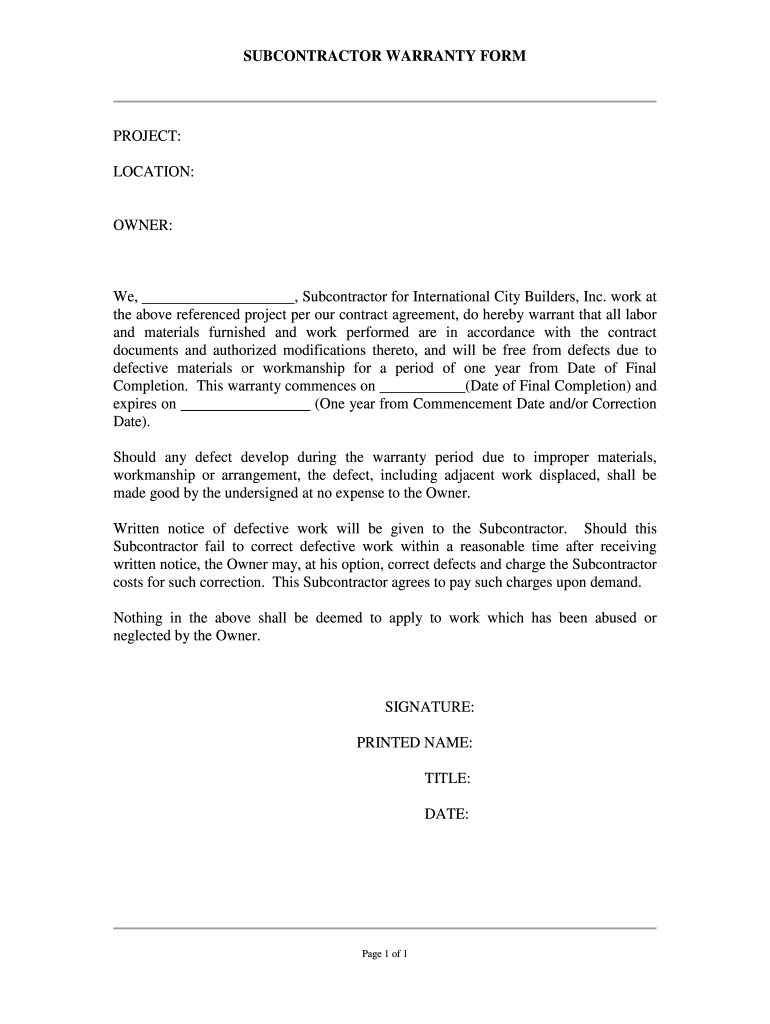
A subcontractor warranty form serves as a legal agreement between a subcontractor and the project owner, detailing the warranty on labor and materials used in a construction project. Typically, this warranty states that the work will be defect-free for one year from the date of final completion. If any defects arise during this period, the subcontractor is responsible for correcting them at no additional cost to the owner. This form safeguards the interests of the project owner by ensuring that the subcontractor adheres to quality standards and is accountable for any errors or deficiencies.
How to Use the Subcontractor Warranty Form
To effectively utilize a subcontractor warranty form, it is crucial to understand its components fully and ensure accurate completion. Begin by identifying the parties involved—the subcontractor and the project owner—as well as stating the scope of work covered under the warranty. The form should include a detailed description of labor and materials supplied, along with any terms and conditions specific to the project. Once completed, both parties must sign the document to formalize the warranty agreement. This form can be presented at project completion or attached to the initial contract as part of the project's terms.
Common Sections for Completion
- Identification of Parties: Explicitly name the subcontractor and project owner.
- Scope of Work: Explain the specific construction work and materials that the warranty covers.
- Warranty Period: Clearly define the start and end dates of the warranty.
- Procedures for Notification: Describe how and when the owner should notify the subcontractor of any defects.
- Correction of Defects: Outline the subcontractor's responsibility in correcting any identified defects.
Obtaining the Subcontractor Warranty Form
Subcontractors can obtain this form through several methods, tailored to match the project's requirements. Common sources include legal templates available online, construction law offices, or professional associations related to construction and subcontracting. These resources offer customizable templates to ensure the form adheres to specific project needs and states' legal stipulations. Always verify the form's compliance with local laws and any industry regulations to ensure its enforceability.
Steps to Complete the Subcontractor Warranty Form
Completing a subcontractor warranty form involves a series of steps designed to formalize the warranty process:
- Gather Necessary Information: Collect details related to the project, including scope, duration, and specific materials utilized.
- Fill Out the Form: Accurately input all data related to the work scope, ensuring clarity and precision in the descriptions provided.
- Review Terms and Conditions: Double-check the legal language for completeness and ensure that it reflects the interests of both parties.
- Sign the Form: Arrange for signatures from both the subcontractor and the project owner, officially establishing the warranty agreement.
- Distribute Copies: Provide copies to all involved parties for record-keeping and future reference, preserving the integrity of the warranty agreement.
Legal Use of the Subcontractor Warranty Form
A subcontractor warranty form is a legally binding document that sets the expectations for quality and accountability between the subcontractor and the owner. The form outlines the subcontractor's obligation to remedy any defects discovered in the work performed under the contract. It is essential that the form aligns with contract law principles and construction industry standards. Different states may have varying legal requirements, which necessitates consulting with a legal professional to ensure full compliance.
Key Elements of the Subcontractor Warranty Form
The subcontractor warranty form should incorporate several critical elements to serve its purpose effectively:
- Duration and Coverage: Clearly define the period during which the warranty is valid and what specific work or materials are covered.
- Defects and Repairs: Specify what constitutes a defect and the procedures for addressing and repairing such defects.
- Exclusions and Limitations: Outline any conditions or circumstances that may void the warranty and any limitations on liability.
- Obligations: State any obligations the owner may have in maintaining the warranty's validity, such as maintenance procedures.
Importance of the Subcontractor Warranty Form
The subcontractor warranty form acts as a crucial protective measure for construction project owners. It provides a clear pathway to remedy any defects in workmanship or materials, ensuring that subcontractors adhere to quality standards. By establishing the responsibilities of both parties from the outset, it helps prevent disputes and fosters a clear understanding of expectations. This form is an essential component of risk management in construction projects, reducing potential financial losses and contributing to smooth project completion.
Examples of Using the Subcontractor Warranty Form
In practical scenarios, the subcontractor warranty form is frequently utilized across various construction projects to guarantee the quality and reliability of subcontracted work. For instance, in residential construction, this form ensures that any deficiencies in craftsmanship or materials used in building a house are promptly addressed by the subcontractor at no cost to the homeowner. In commercial projects, such as the construction of office buildings or retail spaces, it ensures all installed systems, such as electrical or HVAC, perform as expected without faults or failures within the warranty period.
By following these structured guidelines and incorporating comprehensive, detailed information, stakeholders can effectively leverage the subcontractor warranty form to ensure quality and accountability in their construction projects.