




01. Edit your form online
Type text, add images, blackout confidential details, add comments, highlights and more.

Type text, add images, blackout confidential details, add comments, highlights and more.

Draw your signature, type it, upload its image, or use your mobile device as a signature pad.

Send it via email, link, or fax. You can also download it, export it or print it out.
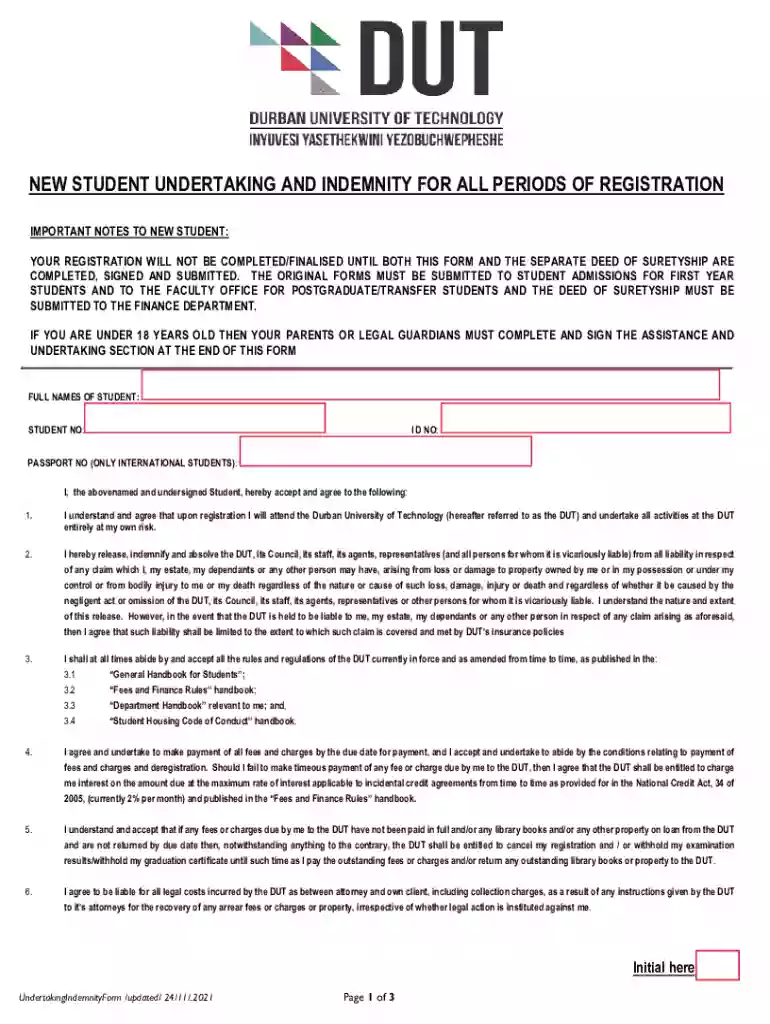
The "Undertaking, Indemnity and a Deed of Suretyship All Periods of Registration" is a comprehensive legal document used in specific contexts such as educational institutions. It serves multiple purposes, including outlining the responsibilities and obligations of individuals engaging in certain activities or enrolling in programs. This form typically includes an undertaking, which is a promise to fulfill certain duties. The indemnity aspect provides protection against potential losses or damages, and the suretyship portion involves a third party guaranteeing the performance or obligations of another party. It is crucial in ensuring that all parties involved understand their roles and the legal implications of their commitments.
The use of this document is heavily tied to the legal frameworks applicable in the United States. The form serves as a legally binding agreement under federal and state regulations, ensuring compliance with required legal standards in various fields, such as higher education, where liability and obligation need clear demarcation. Thorough understanding and compliance with these legal standards are vital to avoid potential legal ramifications.
Eligibility for completing this form largely depends on the nature of the agreement. For educational contexts, criteria may include enrollment status, parental consent for minors, and financial clearance. Other scenarios might require organizational or personal financial assessments to ensure capability to fulfill attached responsibilities.


We've got more versions of the UNDERTAKING, INDEMNITY AND A DEED OF SURETYSHIP ALL PERIODS OF REGISTRATION form. Select the right UNDERTAKING, INDEMNITY AND A DEED OF SURETYSHIP ALL PERIODS OF REGISTRATION version from the list and start editing it straight away!
| Versions | Form popularity | Fillable & printable |
|---|---|---|
| 2025 | 4 Satisfied (34 Votes) | |
| 2025 | 4.8 Satisfied (31 Votes) | |
| 2025 | 4.3 Satisfied (34 Votes) | |
| 2025 | 4.2 Satisfied (34 Votes) | |
| 2025 | 4.6 Satisfied (55 Votes) | |
| 2025 | 4.5 Satisfied (44 Votes) | |
| 2025 | 4.2 Satisfied (37 Votes) | |
| 2025 | 4.7 Satisfied (34 Votes) | |
| 2024 | 4.3 Satisfied (21 Votes) | |
| 2024 | 4.6 Satisfied (51 Votes) | |
| 2024 | 4.5 Satisfied (23 Votes) | |
| 2024 | 4.8 Satisfied (29 Votes) | |
| 2024 | 4.1 Satisfied (28 Votes) | |
| 2024 | 4.9 Satisfied (51 Votes) | |
| 2024 | 4.4 Satisfied (31 Votes) |
At DocHub, your data security is our priority. We follow HIPAA, SOC2, GDPR, and other standards, so you can work on your documents with confidence.
The Undersigned shall and will at all times defend, when requested by the Surety to do so, and shall and will indemnify, an keep indemnified, and hold and saveRead more
May 14, 1992 Previous amendments to regulations dealing with oil and hazardous substances pollution control are found at Register 45, 4/15/73; Register 62, 4Read more


