




01. Edit your dp 10 form online
Type text, add images, blackout confidential details, add comments, highlights and more.

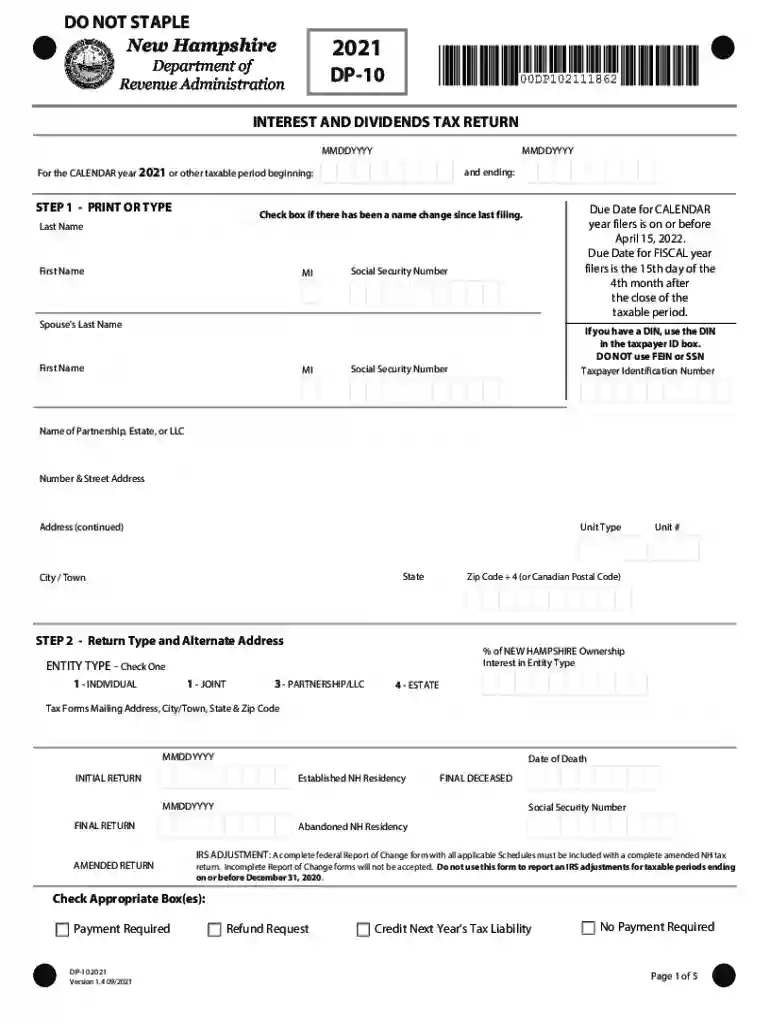
Type text, add images, blackout confidential details, add comments, highlights and more.

Draw your signature, type it, upload its image, or use your mobile device as a signature pad.

Send form dp10 via email, link, or fax. You can also download it, export it or print it out.
The New Hampshire DP-10 form is the Interest and Dividends Tax Return that allows individuals in New Hampshire to report income earned from interest and dividends. It is specifically designed for taxpayers residing in New Hampshire who derive income from these sources, which are typically tax-exempt at the federal level but subject to taxation at the state level. Understanding the definition and purpose of this form is essential for accurately reporting taxable amounts and calculating any owed taxes or potential refunds.
Completing the DP-10 requires attention to detail and an accurate report of all necessary financial information. Below are the general steps for filling out this form.
Examples of common pitfalls include underreporting income or misunderstanding exemption qualifications, both of which could lead to errors or penalties.
Familiarity with key terms is crucial when working with the DP-10 form. Below are several important terms you should understand.
Understanding these terms will aid in accurately completing the DP-10 and ensuring compliance with New Hampshire tax laws.
Filing the DP-10 involves adherence to legal guidelines set forth by New Hampshire's tax authorities. The form ensures that taxpayers accurately report income subject to state taxation, aligning with legal mandates.
Failure to comply with these legal requirements could result in fines or additional scrutiny from tax authorities.
Timely submission of the DP-10 is critical to avoiding late fees and interest charges. Understanding the deadlines associated with this form is essential.
Marking these deadlines on your calendar or setting reminders can prevent unnecessary financial burdens.
Having the right documents on hand simplifies the process of completing the DP-10 and ensures accuracy in reporting.
Ensuring all documents are organized and accessible will streamline the completion process.
New Hampshire offers multiple methods for submitting the DP-10, accommodating various preferences.
Choosing the most convenient method will reduce hassle and aid in timely submission.
While the DP-10 is primarily for individual taxpayers, understanding who most commonly needs to use this form can clarify its purpose.
Recognizing if you fall into these categories can prompt you to seek out and correctly complete this important tax document.


We've got more versions of the dp 10 form form. Select the right dp 10 form version from the list and start editing it straight away!
| Versions | Form popularity | Fillable & printable |
|---|---|---|
| 2024 | 4.8 Satisfied (40 Votes) | |
| 2023 | 4.2 Satisfied (48 Votes) | |
| 2023 | 4.3 Satisfied (31 Votes) | |
| 2022 | 4.1 Satisfied (57 Votes) | |
| 2021 | 4.7 Satisfied (119 Votes) | |
| 2020 | 4.3 Satisfied (33 Votes) | |
| 2019 | 4 Satisfied (32 Votes) | |
| 2018 | 4.2 Satisfied (27 Votes) | |
| 2017 | 4.2 Satisfied (35 Votes) | |
| 2016 | 4 Satisfied (35 Votes) | |
| 2015 | 4 Satisfied (62 Votes) | |
| 2014 | 4 Satisfied (35 Votes) | |
| 2013 | 4.2 Satisfied (49 Votes) | |
| 2012 | 4.4 Satisfied (55 Votes) | |
| 2011 | 4.3 Satisfied (43 Votes) |
At DocHub, your data security is our priority. We follow HIPAA, SOC2, GDPR, and other standards, so you can work on your documents with confidence.
No specific guidance for Direct Push wells was found in the New Hampshire regulations. Minimum annular space requirements effectively preclude their use. TheRead more
Form DP-10, interest and dividends tax return, shall be completed and filed by taxpayers subject to the interest and dividends tax to report their income


