
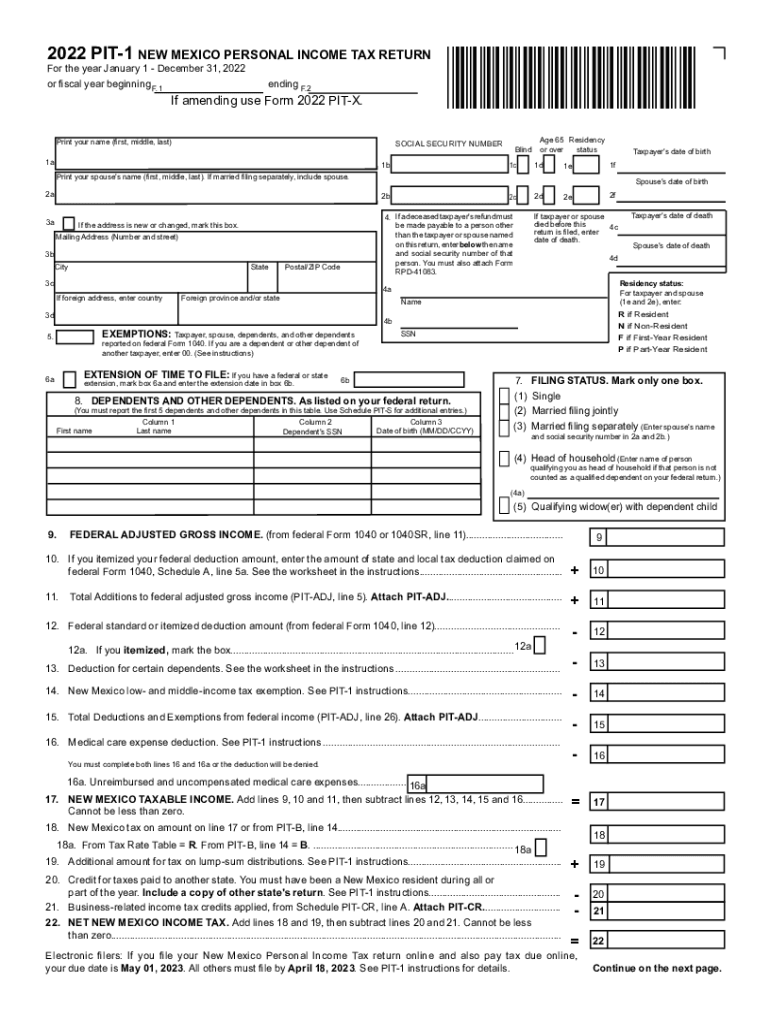







Definition and Purpose of the PIT-1 Form
The PIT-1, officially known as the New Mexico Personal Income Tax Return Form, is used by New Mexico residents to report their income and calculate the taxes owed for a particular tax year. Similar to its federal counterparts, this form requires taxpayers to detail their income sources, claim applicable deductions and credits, and ultimately determine their tax liability. The PIT-1 form is essential for complying with New Mexico state tax laws, ensuring that all income earned within the state is correctly reported and taxed.
How to Access the PIT-1 Form
Taxpayers can obtain the PIT-1 form online from the New Mexico Taxation and Revenue Department's website or through tax software platforms, such as TurboTax and QuickBooks, that offer state tax form support. Additionally, physical copies of the form may be available at public libraries or by directly contacting the state’s taxation office. Accessing the form online is convenient, allowing users to download and fill it out digitally, which can streamline the filing process.
Steps to Complete the PIT-1 Form
- Gather Required Information: Collect all necessary financial documents, such as W-2 forms, 1099s, and records of any deductions or credits.
- Enter Personal Information: Fill in your name, Social Security number, and filing status.
- Report Income: Clearly list all income sources, including wages, dividends, and any other taxable income.
- Calculate Deductions and Credits: Apply any eligible deductions, like the standard deduction, and credits to reduce taxable income.
- Calculate Tax Owed: Use the form's worksheets to determine your total tax owed.
- Sign and Date: Ensure authenticity by signing and dating the form.
- Submit the Form: Submit the completed PIT-1, either via mail or electronically through an approved e-filing platform.
Why the PIT-1 Form is Important
Filing the PIT-1 form is crucial for New Mexico residents as it ensures compliance with state tax laws and accurate calculation of tax obligations. Proper filing helps avoid penalties and interest for late or incorrect submissions. Additionally, the form provides an opportunity for taxpayers to claim various state-specific tax credits and deductions that can decrease their overall tax burden, ultimately supporting financial planning and budgeting.
Who Typically Uses the PIT-1 Form
The PIT-1 form is primarily used by New Mexico residents who have income to report for state tax purposes. This includes employees, self-employed individuals, retirees, and students who earn income within the state. Non-residents who earn income in New Mexico may also need to file a variation of this form, depending on their specific circumstances and residency status.


Key Elements of the PIT-1 Form
- Taxpayer Details: Name, address, and Social Security number of the filer.
- Filing Status: Single, married filing jointly, married filing separately, and head of household.
- Income Information: Detailed reporting of all income earned.
- Deductions and Credits: Options available to reduce taxable income.
- Tax Computation: Worksheets and tables for calculating taxes owed or refunds due.
- Signature Section: Area for official validation by the taxpayer.
Important Terms Related to the PIT-1 Form
- Adjusted Gross Income (AGI): Total income minus specific deductions.
- Standard Deduction: A fixed dollar amount that reduces taxable income.
- Tax Credits: Deductions from the total tax owed, including credits for children or education.
- Non-Resident Income: Income earned in New Mexico by people residing in other states.
Filing Deadlines and Important Dates
For most individual taxpayers, the deadline for filing the PIT-1 form aligns with the federal tax filing deadline, typically on April 15th. Extensions may be requested, and specific deadlines might vary based on individual circumstances. Taxpayers should stay informed about any changes to these dates as announced by the New Mexico Taxation and Revenue Department to ensure timely filing and avoid penalties.
Penalties for Non-Compliance
Failure to file the PIT-1 form on time, or filing inaccurately, can result in fines, interest on unpaid taxes, and potential legal consequences. New Mexico imposes penalties that increase with the duration of non-compliance, making it essential for taxpayers to file accurately and promptly. Understanding and adhering to the filing requirements helps safeguard against these penalties, ensuring compliance with state tax regulations.
Comparisons with Federal Tax Forms
While the PIT-1 is similar in structure to federal tax forms, there are distinctions such as state-specific credits and deductions. Taxpayers should be diligent in understanding these differences to accurately complete both state and federal filings. Using tax preparation software can help navigate these complexities, providing comparison tools that highlight variances between state and federal requirements.
Potential Scenarios for PIT-1 Filers
Self-Employed Individuals
Self-employed taxpayers must report all business income and expenses on their PIT-1 form. The New Mexico form provides specific sections to accommodate income from freelance work or small businesses, ensuring comprehensive coverage and compliance.
Retirees
Retirees in New Mexico who receive pensions or other retirement income must include this in their PIT-1 filing. Retirement income may be subject to differing rules compared to earned income, and understanding these distinctions is vital for accurate reporting.
Students with Part-Time Jobs
Students working part-time jobs in New Mexico must report their earnings on the PIT-1 form. Even if their income falls below the federal filing threshold, state tax obligations might still require them to submit this form to document their earnings officially.
Conclusion
The New Mexico Personal Income Tax Return Form, or PIT-1, is an integral tool for state residents in managing their tax responsibilities. Through comprehensive instructions and guidance, the form assists taxpayers in meeting their legal obligations while optimizing their potential tax savings through various deductions and credits. Understanding the intricacies of the PIT-1 form ensures not only compliance with state tax law but also facilitates more prudent financial planning for a wide array of taxpayers.




