






Definition & Meaning of the PIT-1 Form 2015
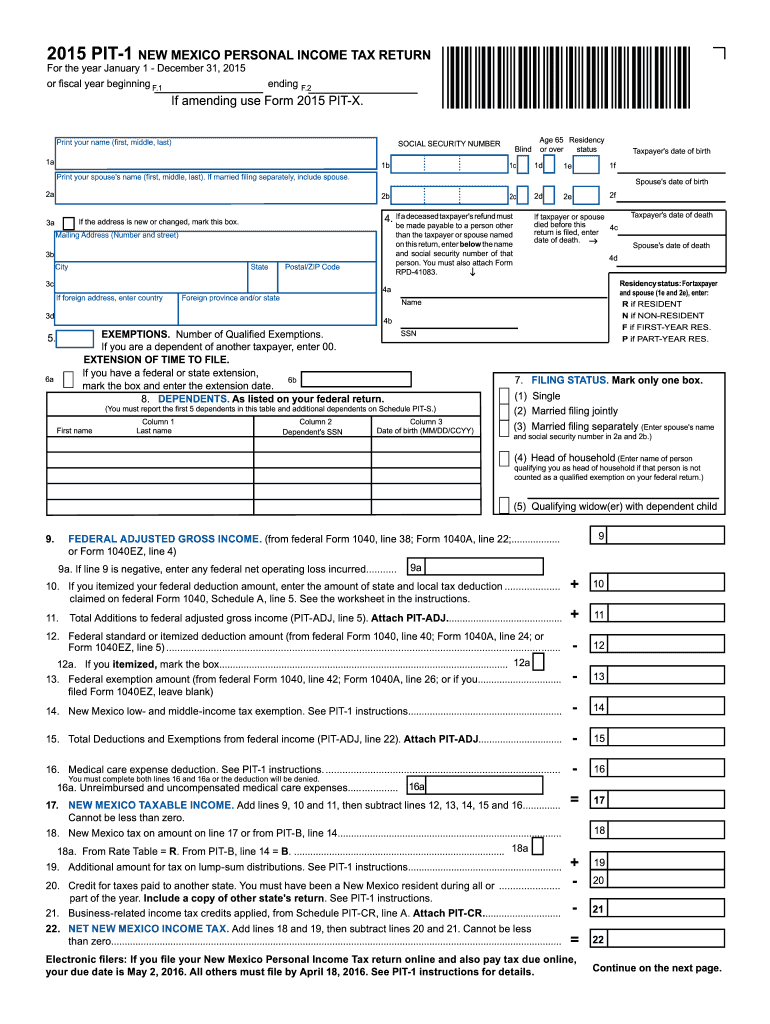
The 2015 New Mexico Personal Income Tax Return, known as Form PIT-1, is a document used by individuals to file their state income taxes for the year 2015. It encompasses various sections to report personal details, calculate income and tax liabilities, and claim any refunds or payments owed. The form is critical for ensuring taxpayers in New Mexico accurately report their earnings and adhere to state-specific tax laws.
How to Use the PIT-1 Form 2015
Efficiently completing the PIT-1 form requires a methodical approach to each section. Taxpayers should begin by filling out their personal identification details and residency status. The form then guides users through documenting their income levels, identifying applicable deductions and exemptions, and computing the total tax due. Each segment of the form must be meticulously reviewed to confirm accuracy before submission, ensuring compliance with New Mexico's tax regulations.
Obtaining the PIT-1 Form 2015
To secure a copy of the 2015 PIT-1 form, taxpayers can access it through various means. The New Mexico Taxation and Revenue Department's official website offers downloadable versions. Alternatively, forms are also available at local tax offices or can be requested via mail by contacting New Mexico's tax department. It's essential to use the correct year's form to avoid potential processing errors.
Steps to Complete the PIT-1 Form 2015
- Gather Required Documents: Ensure you have all necessary documentation, including W-2s, 1099s, and other income records.
- Fill Out Personal Information: Start by entering your name, address, and residency status.
- Report Income and Deductions: Carefully input all sources of income and applicable deductions.
- Calculate Tax Due: Use the form's guidelines to determine your tax liability.
- Review and Sign: Double-check all entered information for accuracy, then sign the form to validate it.
- Submit: File your completed form by the designated deadline either electronically or by mail.
Important Terms Related to PIT-1 Form 2015
Understanding specific terms related to the PIT-1 form enhances the accuracy of completion. Key terms include:
- Residency Status: Defines whether the filer is a resident, non-resident, or part-year resident.
- Exemptions: Allowances that reduce taxable income based on dependents or personal circumstances.
- Deductions: Specific expenses that can be subtracted from gross income to lower taxable income.
- Tax Liability: The total amount of tax owed to the state after all calculations.
Filing Deadlines / Important Dates
Timely filing of the PIT-1 form is vital. For the 2015 tax year, the form was due by April 15, 2016. Taxpayers who needed more time could apply for an extension, typically granting an additional six months. However, filing an extension only moves the deadline to submit the paperwork, not the payment date for any taxes owed.
Required Documents for the PIT-1 Form 2015
To accurately complete the PIT-1 form, certain documents are indispensable:
- W-2 Forms: Provided by employers, indicating annual earnings.
- 1099 Forms: For income earned outside traditional employment (e.g., freelance or investment income).
- Documentation for Deductions and Exemptions: Receipts for qualified expenses, proof of dependent status, etc.
Form Submission Methods
New Mexico provides several avenues for submitting the PIT-1 form:
- Online Filing: Using the state's official tax filing website provides a fast and efficient way to file securely.
- Mailing a Paper Form: Physical forms can be sent to the designated address listed on the New Mexico tax website.
- In-Person Submission: Some taxpayers prefer submitting forms directly at a local tax office for additional guidance and verification.
Penalties for Non-Compliance
Failing to file or pay due taxes by the deadline could result in penalties. These can include late filing fees, interest on unpaid taxes, and potential legal actions for persistent non-compliance. New Mexico's tax system emphasizes the importance of adhering to deadlines and filing requirements to avoid additional costs and complications.
Key Elements of the PIT-1 Form 2015
Several fundamental components constitute the PIT-1 form:
- Personal Information Section: Captures personal data like name, address, and social security number.
- Residency and Income Declaration: Outlines the type, source, and amount of earned income.
- Deductions and Exemptions: Space to declare tax-reducing expenditures and eligible allowances.
- Tax Calculation Methodology: Guides taxpayers through determining their tax liability.
Each element works cohesively to ensure that a comprehensive financial picture is presented to the New Mexico Taxation and Revenue Department.
Legal Use of the PIT-1 Form 2015
Legal compliance is critical when employing the PIT-1 form for tax reporting. By accurately recording income and deductions, taxpayers uphold their responsibility under state legislation. With electronic and paper submissions both considered legal when properly executed, familiarity with the legal standards and obligations is indispensable for all filers.